A slight, dapper man, with a small, neatly trimmed moustache, well turned out, sometimes carrying a cane and, more often than not, sporting plus fours and a natty pair of argyle socks, his eyes always staring directly into the camera. It’s difficult to escape the conclusion that his is a confident, out-going personality, that he’s someone who’s up for it, whatever ‘it’ might be; that his capacity for adventure and going just a little bit too far is boundless. There’s something bohemian about him, as if he’d stepped straight out of a P G Wodehouse short story, although he would have been one of Bertie Wooster’s less-well-off friends, who’d been forced to work in his uncle’s office as a junior clerk.
He’s such a ubiquitous presence in my grandma’s photos from the late 1920s and early 1930s that I’ve often wondered if there was some sort of romantic connection between them. So, who was he and how did my grandma (Margaret ‘Maggie’ Howland) come to know him? It’s a question I’ve wrestled with on numerous occasions over the 40 years or so since I first had access to my grandma’s extensive photo collection. I can easily recognise several of the recurring faces, in particular, those of her best friends, Mary Kinaird Miller and Christine Peace Hope. Mary (‘Mary Pancake’ to me and my brothers, thanks to her ability to make the best drop pancakes ever known to mankind) and ‘Ina’ are the two who appear most frequently in the photos and they both remained close to Maggie well in to their eighties.
Christine and my grandma seem to have been inseparable in their late teens and early 20s, always together, dressed slightly daringly in close-fitting dresses, and wearing their hair in styles that their parents surely wouldn’t have approved of. Mary’s husband, Duncan McKechnie, a man from the Western Isles who might, on the surface, have appeared quite stern but in reality was one of the most gentle, funny and kind men you could hope to meet, is a regular in the photos and as the 1920s turn into the 1930s, another man, William Annal, begins to appear more often. By 1931, he and Maggie were married.
I inherited my grandma’s photos when we cleared out her house in the late 1980s, after she moved into a care home. I treasure them, not just for the rich genealogical archive that they represent but also for the memories they provide of people that I knew when they were much older and the glimpses they give me of people who I never knew. My grandfather, for example, died in 1953, nearly eight years before I was born but there he is in the photos, a real, living, breathing person, with deep, thoughtful eyes and a friendly smile. I get the feeling he would have been a great grandad.
But let’s get back to the question of the identity of the dapper man in the plus fours and the argyle pattern socks. There’s no one alive today (at least not in my immediate family) that I can ask about him. Of course, I could have asked my grandma but I didn’t so there’s little point in dwelling on that, other than to say that it’s always a good idea to ask people these questions while they’re still alive…
I’d examined each of the photos featuring our bohemian friend for clues and there was only one that seemed at all likely to produce any useful diagnostic results. It’s one of my favourite family photos although it only features one family member – my grandma herself. Maggie is at the centre of the group, here seen sporting an Eton Crop-style haircut which must have tested her mother’s patience to the extreme. Three more of the subjects are known to me; Ina (of course) and Mary are both in the group, second and fourth from the left in the back row respectively. Duncan McKechnie is there at the back on the left, in a classic Duncan McKechnie pose; shoulders back, head up, staring at something unknown off to the right, hair blowing in the wind, with a hat, apparently hanging in the air above his left shoulder. In fact, on closer inspection, the flying hat is suspended on the top of a garden trellis and when we explore the rest of the image, we can quickly see that the photo was taken in a garden or an allotment.
The other four people in the photo have always been unknown to me; the man in the back row, third from the left, the woman with the fur stole and the young boy at the front on the left and finally the dapper man, leaning slightly forward in his deckchair, plus fours showing well, cane in hand and a gentle smile on his lips, all topped off by an outrageous hairstyle.
The whole thing is very ‘posed’ but in a tasteful, stylish way. There’s so much to take in but with our genealogical detective hat on, the key aspect of the photo is the distinctive building in the background. For years, I had no idea where it had been taken; the building meant nothing to me but after posting the image on a few Edinburgh Facebook Groups I got a response, from a second cousin of mine as it happens (William Annal’s sister’s grandson, Gordon Watson), who knows Edinburgh much better than I do. Gordon recognised the building as being on the east side of Lochend Road near Hermitage Park, in the northeast of Edinburgh, formerly part of the Burgh of Leith.
Screenshot from Google Maps showing the distinctive building on Lochend Road, Edinburgh identified by Gordon Watson
A quick glance at the area on Google Maps confirmed that Gordon was spot on and when I looked at a contemporary (1933) map of Lochend Road my reading of the photo’s setting was confirmed by the discovery that this part of the west side of the road was taken up with ‘Allotment Gardens’. I’d answered one major question regarding the photo but I hadn’t got any closer to identifying the mystery man. I wondered about the possibility of finding records listing the people who were renting the allotments in Lochend Road in the late 1920s to see if there was a name that I recognised but I didn’t get very far with that and once more I put the matter to the back of my mind.
Large Scale map, 1931 (1933). National Library of Scotland, Edinburghshire Map III.4 (detail)
That breakthrough occurred about two years ago and I hadn’t really given it much thought since but I’ve just spent the last week up in Edinburgh and it came to the surface once again following a remarkable discovery. My brothers and I have begun the long process of clearing my dad’s house (he’s just gone into a care home – can you see a pattern developing?) and while dealing with the hard practicalities of what to do with the accumulation of 40 years’ worth of clutter can be quite challenging, there’s always the possibility of coming across bundles of letters, old documents and, of course, family photos – or at least that’s what our inner family historians are always hoping for.
I wasn’t expecting much in the way of old photos – after all, I’d already inherited more than my fair share – but we came across the odd bundle, most of which were copies of ones that I’d seen before. So, when one of my brothers handed me a small pile that he’d just found in the bottom of a drawer, I didn’t hold my breath. The one at the top of the pile was instantly familiar to me; it was a studio portrait of my grandma and grandad on their wedding day (5 September 1931), flanked by the best man (my great uncle John Annal) and the maid of honour, yes, you’ve guessed it, Christine Peace Hope.
The next item was a small passport-sized photo of my grandad in later life which again, I’d seen before, but then my eyes fell on the final photo in the bundle. It was very similar to the wedding photo that I’d just been looking at – a sepia-toned, formal studio portrait of a wedding group – but it was one that I had definitely not seen before. The bride and groom I instantly recognised as Mary Kinnaird Miller and Duncan Robertson McKechnie and they were similarly flanked by their best man and maid of honour. I didn’t recognise the latter but the best man jumped out at me – a slight, dapper man with a small, neatly trimmed moustache! There was no doubt whatsoever that this was our mystery man although he was lacking the trademark plus fours and argyle pattern socks (a fiercely creased pair of Oxford bags almost covering the inevitable spats stood in for them).
I could now turn to Mary and Duncan’s wedding certificate (they were married on 29 December 1933) and discover the names of the two witnesses. I wasn’t surprised to see that the maid of honour was Mary’s sister, Margaret; the second witness signed his name as ‘Wm. A M Hope’. And it didn’t take me long to find out that William Andrew Melville Hope was Ina’s brother!
This then was our man. I found out that he worked as a shop assistant in a fashionable gents’ clothiers in Edinburgh (I’ve now got images in my head of Paul Whitehouse’s ‘Suit You’ character from the Fast Show). I also know that he moved to Sanday in Orkney, marrying in 1935, getting a job as the Registrar of Births, Marriages and Deaths for the island and dying there in 1963.
The final piece in the jigsaw came when I noticed that both Ina (in 1931) and William (in 1933) had given their address as 20 Woodbine Terrace, Leith. The Hope family, it turns out, had lived just a minute’s walk from the allotments in Lochend Road.
I’m fairly sure that the unknown man in the back row of the photo taken in the allotment is William and Ina’s brother, Andrew Cecil (he was a year younger than William) but I’d love to know who the woman and the young boy are. Give me another thirty years and I’ll see what I can find out…
The aim of this blog is to provide some background material relating to the issues raised in Episode 26 of my video series, Setting The Record Straight.
The video and this accompanying blog take a look at an online database that I’ve used a lot over the years but it’s only recently that I’ve discovered how really bad it is. I’m talking about the Westminster Rate Books database on Findmypast. The database itself dates back to the dim and distant days before Findmypast became Findmypast (who else remembers BrightSolid?) and unlike many of the databases that I’ve looked at previously, it’s not linked to digital images of the original documents. So, as far as online access is concerned, we are wholly reliant on the transcribed information.
Rate books and other similar records such as Land Tax registers, electoral rolls, directories, phone books, don’t generally, in themselves, provide us with a great deal of genealogical detail. Yet they are extremely useful sources for family historians for two main reasons. Firstly, when they’re indexed – particularly as part of a large database – they can help us to locate an ancestor in a particular place at a particular time. This can allow us to identify a potential place of origin for a ‘difficult’ ancestor.
Secondly, when we have access to a good run of records for the same place over a number of years, we can use them to look for changes – people appearing in the records (which might suggest a recent arrival in the area or that the person had recently qualified to be included – perhaps by becoming an adult or through inheritance of property) and people disappearing from the records (which might indicate that the person had left the area, that they had disposed of some qualifying property or, of course, that they had died). If we’re lucky the record might provide some additional clues to help us work out what’s going on.
Poor Rate (Collector’s Book), St Paul, Covent Garden, Westminster, May 1740. City of Westminster Archives Centre reference: STP/H/2/H47 p.22-23
One of the most useful characteristics of these records – particularly records of taxation relating to land and property ownership – is that the compilers of the records, tended to enter the information in a logical order – essentially, the route over which the person who was responsible for collecting the tax would walk, door-to-door, street-by-street. And that order would usually stay the same year after year. So we can use contemporaneous maps to plot the routes that the tax collectors followed and this can allow us (sometimes!) to identify the actual properties in which our ancestors lived.
The Westminster Rate Books database is huge. According to the brief notes attached to the Findmypast database it includes ‘over ten million names of tax payers from the early seventeenth century to the end of the nineteenth century’. Rate books by their very nature give rise to vast databases – lots of names in annual lists over a long period of time – and in the case of Westminster, we’re actually dealing with a variety of different rates: the Poor Rate, the Pavement Rate, the Highway Rate and, my personal favourite, the Scavengers Rate – essentially, the equivalent of today’s waste collectors. And the records in the database include many which, strictly speaking, aren’t Rate Books at all – Overseers’ Account Books, Land Tax Registers and many more. Collectively, they comprise an exceptionally useful set of records and the fact that they have been indexed and made available online should mean that we have exceptional access to them. But, unfortunately, this is not the case.
A few weeks ago, I was looking for someone who I knew to have been living in Westminster in the first half of the 18th century and I thought that he was likely to have been a rate payer. So I did a search in the Findmypast database, initially just entering his name – Benjamin Brett. And this is what I got…
My Benjamin had married in 1728 in the parish church of St James Piccadilly and was described in the parish register as ‘of St Ann’s Westminster’ so I was reasonably confident that this was my man. I was also interested to note that he was apparently in Soho, paying rates, three years before the date of his wedding, but also a bit surprised that there was no obvious record of him after 1725.
When I viewed the details I found that each of the four entries provided essentially the same information:
In fact, the only real difference (apart from a few minor differences in the spelling of Benjamin’s name) was that the third entry on the list recorded the ‘Folio number’ as 11 rather than 12.
But what was I actually looking at? What were these records telling me about Benjamin? Context is vital in all historical research and there was very little here. The ‘Address’ in all four records was given as ‘North’. Did this refer to a district in the parish of St Anne, Soho? Or was there a street called North Street? Without access to the documents themselves it was impossible to say.
And that’s when I discovered that the documents are available online – just not through Findmypast. I discovered that FamilySearch has a huge collection of records relating to Westminster and that they are freely available at home (not just at LDS Family History Centres). The challenge was to find a way of matching the unindexed records on FamilySearch to the indexed records on Findmypast.
It took me a while but I got there. And the key was the information recorded in the ‘Notes’ field of the results on Findmypast.
The FamilySearch website is a remarkable resource. Alongside the indexed records that many of us use regularly (parish registers, census returns etc.) there are thousands of collections of unindexed records. You can search the whole website by place and by keyword looking for potentially useful resources and in this case I was soon able to find a collection called England, Westminster rate books with covering dates of 1634-1900 – an exact match with the Findmypast database.
Scrolling down the list of ‘Microfilm Records in this Collection’ (don’t be fooled by the word ‘microfilm’ – what we’re dealing with here is ‘digital microfilm’) I quickly found what I was looking for: Public records of St. Anne’s Parish, Soho / St. Anne’s Parish (Soho, Westminster) and as soon as I saw the descriptions of the various ‘microfilms’ in the Note column, I knew that I’d found the link. The descriptions exactly matched the text in the ‘Notes’ field on the Findmypast results.
I was then able to browse through the relevant digital microfilm (Scavenger rates, 1725-1730; Highway rates, 1730; Land tax, 1729-1730; Poor rates, 1728-1729.) and what I found quickly gave me the answers to the questions I had about the results of my searches in the Findmypast database and equally quickly revealed the extent of the ineptitude involved in putting the database together.
The records it seems had been microfilmed in 1987 and later digitised to produce the browsable digital microfilms – in this case, Family History Library Film Number 005109341, which comprises 1056 digital images. The ability to look at records in this way, by digitally turning the pages, allows us to understand the structure of a document and provides us with essential context. Each separate document is preceded by a ‘title page’ recording the high level information which, if the work had been done properly’ would form part of the data attached to the individual records contained in the document itself.
In this case, on the right-hand side we get the name of the parish, the description of the specific document, an archival reference, and the date (i.e. the year) of the specific document.
And after a bit of browsing I was able to find the four references to Benjamin Brett. And not one of them dated from 1725. I’ve put together a table showing the information recorded for one of the entries on Findmypast alongside the information that’s actually recorded in the documents:
Other than the parish name, there’s really not a lot to be said in defence of the Findmypast results. The year is wrong (it’s clear that what they’ve done is captured the first year of the description of the digital microfilm and applied it to every individual record) falsely suggesting in this case that Benjamin was paying rates in St Anne’ Soho in 1725. The address recorded – ‘North’ – is meaningless; you need to go back a few pages to find out that Benjamin was paying rates on a property on the north side of Compton Street. And we now know that what we’re dealing with here is a Poor Rate book. We also have the archival reference (A114) and we can find the document listed in the City of Westminster Archives’ catalogue and view it in its correct archival context:
It’s not the first example of Really Bad Digitsation that I’ve come across and I’m sure that it won’t be the last, but it’s certainly one of the worst. Not only does it not give us the information that we need (is it too much to ask for correct, full addresses and accurate document descriptions?) but it actually gives us wrong information – i.e. the year/date – which can easily lead to us reaching false conclusions about our ancestors’ lives.
I’m not sure that it’s fixable and it might be argued that it’s better than not having an index of these records at all. But I think that it definitely needs to come with some sort of health warning and I feel that the people responsible for creating the database should hang their heads in shame…
31 microblogs written and published during the month of August 2024, each one focussing on a different discovery that I’ve made over the years in my own family history…
Thirty One
I’d always known that my Grandma was illegitimate and I’d always steered clear of asking her too much about her childhood. She was an only child and she’d been brought up by her mother, who lived with her until her death in 1958. About her father, there was complete silence…
So when, one day in the early-to-mid 1980s, as we were wandering around an Edinburgh cemetery looking for family gravestones, she suddenly asked me, ‘Did you know that I knew my father?‘, I knew instantly that my family history research had taken on a new dimension and that new opportunities were about to open up. If she hadn’t told what she knew, one eighth of my family tree would still be a mystery to me today, although I would have had some interesting DNA matches to follow up!
Forty years later, I’m still discovering new things about her father’s family and I am eternally grateful to my wonderful Grandma for trusting me with her remarkable story.
My Grandma, Margaret Annal (née Howland) (1906-1990)
Thirty
There can’t be many of us who have been able to identify the very day on which our ancestors first used their family name but my wife is fortunate enough to be able to do just that, thanks to a discovery we made a few years ago. We were aware that her German Jewish ancestors would have once used the Hebrew patronymic naming system and that at some stage they had ‘adopted’ the surname Schwarz. In fact, we discovered that they had been obliged (forced?) to use it.
In 1794, the ‘Palatinate’ territories on the west bank of the Rhine were occupied by French revolutionary forces. The occupation lasted until 1813 and during the intervening 20 years, French rule, and French legal and administrative systems were gradually introduced. One significant aspect of this was that all Jewish inhabitants were to use family names. And back in 2020 we found a remarkable document, recording my wife’s ancestors taking on the name Schwarz.
Before the Mayor of the Commune of Essingen, Canton of Landau, Arrondissement of Wisembourg, Department of Bas Rhin, it is presented Josephe Salomon, who said that he took the name of Schwarz for (his) family name, for (his) forename kept Joseph and signed with us the 25th October 1808.
Joseph(e) Salomon takes on the family name ‘Schwar(t)z)’ in Essingen, Pfalz, on 25 October 1808
Twenty Nine
I mentioned a few days ago, the Chancery documents which told me about My 3x Great Grandmother being sent to Buckingham in 1804 to live with Mrs Hutton, a friend of her mother’s (see Twenty Four). Mary Ann Port was then about 16 and it’s clear from other records that she had been sent to Buckingham to work as a governess to Henrietta Hutton’s four young daughters. The youngest, Jane Lucy, was born in 1804.
The four girls would have grown up with Mary Ann as a familiar figure but, without any specific sources available to me, it’s impossible to say anything about their relationship. I already knew that Henrietta had made provision for Mary Ann in her will – to my friend Miss Mary Ann Port during her life [an] annuity of twenty pounds – which suggested that this was more than just an employer/employee relationship but a discovery I made about four years ago, provided me with evidence that it may have been even more than that.
On New Year’s Day 1835 Mary Hutton, the second daughter of Henrietta and her husband, the wonderfully-named Reverend James Long Long, married the Reverend William Andrewes at the fashionable Westminster parish of church of St George Hanover Square – and Mary Ann was one of the witnesses! Seeing her signature in the parish register and knowing that she must have meant something to Mary Hutton, was one of the most moving experiences I have ever had in my many years as a family historian.
Marriage of Mary Hutton & William Andrewes, St George Hanover Square, Westminster, 1835 City of Westminster Archives Center ref: STA/PR/2/2 p/454
Twenty Eight
Amongst the many treasurers I inherited from my granny after she died in 1991 was a small, plain notebook. It was her father’s and it dates from the early 1890s at a time when he was trying to set himself up as chemist. There’s a beautifully decorative title page on which he wrote the words ‘Receipe Book’; it looks like he’d originally written ‘Receipt’ and (rather clumsily) changed the ‘t’ to an ‘e’ which, in the context made a bit more sense but suggests a lower standard of literacy than I believe he possessed.
My Great Grandfather, David John Davidson, (after whom I am named!) is a fascinating character and his ‘Receipe Book’, comprising 65 pages of medicinal ‘recipes’, remedies and cures for common diseases of the day, is one of my most precious family heirlooms. But the notebook took on a different meaning to me when I discovered, about three quarters of the way through, two pages written in shorthand. I’ve had it transcribed and, although a few words are unclear it tells a fascinating story of a relationship which seems to have been in trouble (‘No one will have to account for my misdeeds but myself…’ and ‘I think I have always treated you in a manner that was right, but if you are desirous of our engagement being brought to a termination I shall not withold [?] you…’). It’s signed by David and although no names are mentioned it seems to be addressed to his future wife, my Great Grandmother. It appears that they resolved whatever difficulties they had as they were married in July 1894.
‘Receipe Book’ formerly belonging to my Great Grandfather, David John Davidson (1873-1953)
Twenty Seven
As well as providing us with some fascinating research opportunities, my wife’s German ancestry, specifically the Jewish side, presents us with some emotionally difficult challenges. Confronting what happened relatively recently to some of my wife’s close ancestors, events which had a direct impact on people that she knew well, is never easy.
The experiences of her second cousin, Johanna Brandeis, for example, have the makings of a fascinating story, but it’s all too close to home. My wife knew her Aunty Jeanne well and she knew some of her story but over the years, as we’ve discovered more details, it’s become almost too much. Suffice it to say that she and her husband spent years trying to escape the reaches of the Nazi regime, and ultimately succeeded, but the lengths they went to…! They were aided by numerous friends, colleagues and family members and must have been particularly grateful to the person who made their fake ID cards. My daughter has written part of the story, which you can read here.
Fake ID card made for Johanna Stein (née Brandeis)
Twenty Six
We’ll come to the story of my grandma’s father soon. One of the most remarkable aspects of it was the discovery of the will of his wife. Edith Bushnell is a shadowy character; I know that she was born in Birmingham and that she married my Great Grandfather, Frederick Thomas Port, in 1872 in Harborne, Staffordshire but not much more.
Frederick and Edith moved to Edinburgh where in the early 1900s they employed a woman called Margaret Howland as a housekeeper – the story is that Edith was disabled but I have no evidence to support that. Margaret Howland was my Great Grandmother and she and Frederick had an illegitimate daughter, my grandma.
After Frederick’s death in 1917, Edith wrote a will in which she left the following instructions to her executors:
To maintain, clothe and educate my adopted daughter Margaret Howland until she attain the age of Eighteen years … [but] should the Mother of the said Margaret take her from the Guardianship of the said [executors] … the said parent shall have no monetary claim against them … or my estate
‘My adopted daughter‘! I don’t know the precise words that my Great Grandmother used in reply but I imagine that they wouldn’t have been suitable for polite company…
Twenty Five
In the early 1980s my wife and I visited the Rathaus in Offenbach-an-der-Quiech to see what we could find out about her Schwarz ancestors who had lived in the village of Essingen before they moved to Landau. We struck gold as register after register was brought out and names and dates were added to the then barely budding family tree.
The best discovery of all was the record of the marriage of my wife’s 2x Great Grandparents, Izaak Schwarz and Sara Dannheisser who had married in Essingen on 29 January 1844. We were able to get a photocopy of the document which was a typical German marriage certificate, bursting to the seams with genealogical detail and, thanks to the handwriting, presenting us with a huge challenge, which kept us busy for the next week or so.
We’d probably managed to interpret about 75% of it and were really pleased with ourselves. It was, we felt, quite an achievement and we gave ourselves a big pat on the back. However, when we got back home and showed it to my mother-in-law, we felt a bit less smug as she stood there and read the whole thing without pausing…
Marriage of Isaak Schwarz & Sara Dannheisser, Essingen, Pfalz, 1844
Twenty Four
On 4 April 1799, Samuel Port, my 4x Great Grandfather, died, leaving a will in which he appointed three friends as trustees. With hindsight he would probably have taken a different approach as the three men failed to perform their duties according to the terms of his will. And the result of this was a family historian’s dream: a Chancery case that ran for almost eleven years, generating an enormous amount of paperwork.
Samuel didn’t explicitly name his children in his will but they are fully identified in the Chancery documents – and I’ve made some amazing discoveries. I learnt, for example, from an entry in the Decree & Order Books from July 1813, that my 3x Great Grandmother Mary Ann Port, ‘was placed out at School from the time of the death of the said Testator [i.e. Samuel] under the Care of Miss Cox at Vauxhall where she continued until about the Month of December 1804 and had since continued to reside at Buckingham in the county of Bucks with Mrs Hutton a friend of the said Plaintiff Elizabeth Port [i.e. Mary Ann’s mother]’.
Genealogical gold dust!
Chancery Decree & Order Book, 13 July 1813 The National Archives ref: C 33/601 f.1004v
Twenty Three
When I first visited Orkney about 40 years ago and I made sure that as part of my itinerary I paid a visit to my 3rd cousin twice removed, Alexander ‘Sandy’ Taylor Annal. I had discovered that he was the keeper of the family stories and I had also heard that if you wanted to see the 1821 census for South Ronaldsay, Sandy was your man.
When we arrived at his farmhouse and got talking, I mentioned the 1821 census, and I was, to say the least, slightly distressed when he wiped his hands on his jumper, reached into a kitchen drawer and removed an old document from its depths. This was the only copy of the census and it wasn’t exactly being treated with the most up-to-date archival practices in mind!
Nevertheless, it survived and, following Sandy’s death in 2007 (agonisingly, just five months short of his 100th birthday) we arranged to have it deposited in the Orkney Archives. The document itself has a fascinating story involving several members of the Annal family – it had been saved from a bonfire by Sandy’s grandfather! – and it’s now freely available via Findmypast.
Alexander ‘Sandy’ Annal, 1907-2007. The keeper of the family stories…
Twenty Two
My wife’s German ancestry is a constant source of fascinating new discoveries. We’ve tended to focus on her mum’s Jewish ancestors as they’re the ones that come from the part of Germany that we’re most familiar with. But every now and then her north German protestant ancestors throw up a surprise or two. We’d known for years that her Buck ancestors came from the old Hanseatic town of Stendal in the former Prussian province of Saxony. But a chance discovery a few years ago opened up a whole new area of research and provided us with a remarkable story.
Before settling in Stendal the Bucks had lived in a small village called Hohengrieben about 60km to the west. And Hohengrieben turned out to be a planned settlement, established in 1748 by Frederick the Great to accomodate ten Calvinist families, refugees from Roman Catholic Bavaria. And the Bucks were one of those families!
Twenty One
I mentioned on day thirteen the close links between the Orkney island of South Ronaldsay and the Hudson’s Bay Company and the large numbers of young men who went out to work in the “Nor’ West”. One of these men was a distant cousin of mine called Magnus Annal.
His is a difficult story to tell and it’s one with an unsettling ending. As a servant of the Hudson’s Bay Company working in North America in the late 18th century, Magnus was effectively part of an invading force, the presence of which was actively resisted by large sections of the local population.
In the summer of 1794, Magnus was left in charge of a trading post called South Branch which on 24 June was attacked by around 100 horsemen of the Gros Ventre tribe. Magnus, his wife and child and all but one of the occupants of the post were killed; the story was later told by the one survivor. Part of me wants to discover more, part of me finds the whole episode too difficult to confront. Even the language used on the memorial placed at the site of the massacre is distinctly troubling…
Twenty
It’s the nature of family history research that some discoveries are made quickly while others take years of careful research. Today’s story fits in the latter category. After first discovering the existence of my Great Grandfather, Frederick Thomas Port, sometime in the early 1980s, it took me 40 years to find his last resting place.
He’d lived in Edinburgh since moving there from his native England in the 1880s. He worked as a salesman and in 1917 he found himself on business in Brighton where he was knocked off his bicycle, run over by an omnibus and later died of the injuries he sustained. His body must have been returned to Scotland as I discovered just two years ago that he was buried in Edinburgh’s, Dean Cemetery.
My grandma (my dad’s mum) died on New Year’s Day 1990, aged 83. She left me with many happy memories of days spent together; walking round the corner to catch the bus for trips into Edinburgh, days at the Zoo and the Botanic Gardens, walks up Corstorphine Hill. We talked about family but I was always careful not to probe too deeply into areas that she might not want to discuss – of course, I wish now, that I’d been braver…
Alongside the memories, perhaps the best things she left me was a huge collection of family photos. I know most of the people in them but there are also several who crop up regularly who are completely unknown to me. Again, I wish I’d asked her but most of them were discovered after she died.
Here are four of my favourites…
Family photos inherited from my Grandma, Margaret Annal (née Howland)
Eighteen
Most of my mother’s maternal grandfather’s family came from the Scottish Border county of Berwickshire and most of them were agricultural labourers of some sort or another. In fact, I assumed that they all were – until a few years ago, when I made a surprising discovery.
My 3x Great Grandmother, Elizabeth Robertson was the daughter of an agricultural labourer (John Robertson) and she was the fifth child in a family of at least ten. The other daughters married labouring men and one of her brothers, Robert (the oldest boy) became a shepherd. But her three younger brothers ended up on very different paths. Walter became a school master, John became the Minister of the East Lothian parish of Whitsome and Alexander studied medicine in Edinburgh.
Fasti Ecclesiae Scoticanae Vol II p.65
Seventeen
Scottish researchers amongst you will be aware of the significance of the year 1855. This was the year in which (eighteen years later than in England and Wales) civil registration of births, marriages and deaths was introduced in Scotland. And in this first year of the civil system – and this year only – a remarkable amount of additional information was recorded on the new birth, marriage and death certificates.
For example, in addition to the usual name, date and place of birth and parentage, birth certificates recorded the age and birthplace of both parents, the date and place of the parents’ marriage, the number (and gender) of children previously born to that marriage and whether those children were living or dead.
So, when my 2x Great Grandmother, Bridget Flynn, went to register the birth of her daughter Susannah at the register office in Corstorphine on 30 July 1855, she told the registrar that she had married Susannah’s father, John, in Edinburgh in 1853 and that this was their second child, having previously had a boy, who was still living. She also stated that John was a 25-year old farm servant, born in County Roscommon and that she was 22 and had been born in County Leitrim. As the censuses simply state that they were born in Ireland, the information regarding their birthplaces was a vital discovery.
The effort of recording all of this additional information proved too much and it was abandoned the following year. The question regarding the parents’ marriage was reintroduced in 1860.
Birth certificate of Susannah Flynn, Corstorphine, Edinburgh, 1855. National Records of Scotland ref: Statutory Register of Births 1855 678/23
Sixteen
If my theory is correct, today’s discovery relates to my 9x Great Grandfather, James Annand. It’s a long story but briefly, the surname Annal appears to have evolved from the name Annan or Annand which is first recorded in Orkney in the late 16th century. The name Annand occurs in South Ronaldsay in the 17th and early 18th century but then disappears – at exactly the same time that the name Annal first appears. There’s convincing evidence that the names are one and the same.
This is part of the will of James Annand a ‘wricht’ (i.e. a wright or carpenter) of St Margaret’s Hope, South Ronaldsay who died sometime around 1615.
Fifteen
Family historians can be divided into two groups; those who are fortunate enough to have ancestors from the Isle of Man … and everyone else!
The records available to Manx researchers are simply stunning with the best set of land ownership/transfer records I have ever come across; virtually every Manx adult left some sort of testament and women routinely used their birth surnames in most legal records. A few years ago, I discovered the will of my 8x Great Grandfather, Mitchell (or Michael) Howland (c.1630-1712) who made bequests to his two sons and two daughters. We also learn that his daughter Catherine had married Daniel Christian.
If you have any say in the matter, I would strongly recommend that you have Manx ancestry!
Fourteen
This isn’t the first time that I’ve mentioned the Port family in this series of microblogs, and it won’t be the last. I knew nothing about them (I hadn’t even heard the name) when I set out on researching my ancestry over 40 years ago but they’ve become one of my favourite ancestral branches – certainly one of the most rewarding.
I remember looking them up in a published volume of the 1665 Oxfordshire Hearth Tax many years ago and discovering to my surprise that my 8x Great Grandfather, Richard Port was paying tax on more hearths than any other inhabitant of Dorchester, including the Lord of the Manor! I then discovered the reason for this; he owned one of the town’s many pubs. I believe that the family were running what’s now known as the George Hotel and although this isn’t actually specified on any document that I’ve seen (so far!) there’s some pretty good evidence in the shape of a late 17th century inventory.
The inventory of ‘all the Goodes, Cattles and Chattles of Richard Port of Dorchester in the County of Oxon. Innholder’ was taken on 9 April 1674 and is a mine of information. It lists Richard’s personal possessions room-by-room, including ‘the Chamber where he died’, ‘the Chamber over the Buttery’, ‘the Chamber over the Milkhouse’, ‘the Chamber called Gibbs his Chamber’, ‘the Swan Chamber’, ‘the Star Chamber’ and ‘the Chamber over the Woodhouse’. It’s unlikely that any other Dorchester inn would have had quite as much accomodation.
Inventory of Richard Port of Dorchester, Oxfordshire, 1674. Oxfordshire History Centre reference: Pec.70/4/37
Thirteen
There’s probably nowhere on earth where my roots lie deeper than the Orkney island parish of South Ronaldsay. My Annal, Christie, Cromarty, Laughton, Scott, Berston and Groundwater ancestors all have their origins on this southernmost island of the Orkney archipelago. One of the most useful sources we have for researching South Ronaldsay is the 1821 census, recording the names of the 2231 inhabitants of South Ronaldsay itself and the neighbouring islands of Burray, Swona and the Pentland Skerries.
It’s a truly remarkable document which I’ve written about at length and there’s an enormous amount of potential for deeper research in its 65 manuscript pages. One fascinating fact that jumps out at us from the summary totals written on the last page is that the population comprised 1193 females yet only 1083 males; 53% against 47%. And much of that discrepancy is to be found amongst the population of young men. Of those aged between 16 and 25, just 43% are male.
A bit of local and social history quickly reveals the answer. It was quite normal for young Orcadian men (and this seems to have been particularly the case in South Ronaldsay) to spend some time working in North America (in the “Nor’ West”, now part of Canada) for the Hudson’s Bay Company. My 3x Great Grandfather, Peter Annal signed up for a five year term on 15 June 1820 (he’s not in the 1821 South Ronaldsay census) and later extended his stay in the Nor’ West by another five years before returning to Orkney in 1830. Today’s discovery is the copy of Peter’s 1820 contract, countersigned by his brother John and by John Rae, the father of the great explorer.
Contract of employment between Peter Annal and the Governor of the Hudson’s Bay Company. Archives of Manitoba reference A.32/20 f.319
Twelve
Other than the occasional reference to ‘Sinclair’s Cottage’ and the more-impressive-sounding-than-it-actually-is ‘Reid’s Castle’ on Eday in Orkney (it’s a very traditional small Orcadian croft!) I think I can safely say that none of my ancestors have a place named after them. Fortunately, my wife’s family can offer an altogether more interesting discovery.
To quote from the Victoria County History of Stafford: Volume 7, Leek and the Moorlands pp.37-41:
Houses on Hollinsclough moor include Coatestown, possibly the home of Isaac Coates, a chapman, in the later 18th century…
I can go further than this and say, ‘definitely the home of Isaac Coates…’ And Isaac Coates (1742-1787) was my wife’s 6x Great Grandfather. Not a bad claim to fame…
Ordnance Survey 6″ Map, 1884, Sheet V.NW, detail showing location of Coatestown, a small settlement in the township of Hollinsclough, parish of Longnor, Staffordshire. National Library of Scotland
Eleven
My English ancestry comes from one source; my great grandfather, Frederick Port, who left England to settle in Edinburgh in the 1880s, working for Cadbury’s. I’ve traced various branches of his ancestry and two lines in particular have led me back to stunningly beautiful English villages. The Port family itself came from Dorchester, Oxfordshire (the setting for Midsomer Murders) while another branch, the Trumans, hailed from the picturebook village of Lacock in Wiltshire.
The Trumans were butchers and some of them are recorded as supplying meat to the Talbot family of Lacock Abbey. I visited Lacock a couple of years ago and I was delighted to discover two substantial chest tombs, standing next to each other in the churchyard, both relating to the Truman family. They’re not direct ancestors but nevertheless, the two tombs are probably the grandest monuments I’ve found to any of my relatives.
On 14 August 1881, the body of a 57-year old man was found in Granton Harbour to the north of Edinburgh. The man in question was my 2x Great Grandfather, John Flynn. On his death certificate, the cause of death is recorded simply as ‘Drowning’. There’s no clue as to whether John fell, jumped or was pushed, no suggestion that he was drunk or otherwise incapacitated, no comment about his state of mind. Even after the results of a precognition were received three weeks later, we just get that single word: ‘Drowning’.
The only clue I have, and it’s a slight one, comes from a very brief piece that appeared in the Edinburgh Evening News in May the same year. John Flynn, a labourer residing at West Pilton Cottage, Cramond, was charged with ‘having stolen a dog belonging to William Sneddon, fishmonger, Clarence Street, Edinburgh, from off the public road near Granton Harbour’ on 21 April 1881. He was sentenced to 14 days’ imprisonment. This is probably the man who died a few months later. He definitely lived at West Pilton Cottage, but so did his son of the same name, my Great Grandfather, so it could have been either of them but I suspect that what we have here is two signs of someone (the same person) suffering from mental health issues.
Death certificate of John Flynn, 1881. National Records of Scotland, SR of Deaths, 1881, Cramond 679/34
Nine
Sometimes the smallest discoveries are the best. And it doesn’t get much smaller than today’s discovery…
On 14 May 1853, on what must have been an extremely slow news day, my wife’s 3x Great Grandfather, Richard Graveson of Helsfell Hall in the Westmorland parish of Strickland Kettle saw his name appear in the ‘Local Intelligence’ column of the Westmorland Gazette.
Richard’s claim to fame? His Black Spanish hen had ‘laid the extraordinary number of three eggs one day last week.’
Westmorland Gazette, 14 May 1853, page 4, column e. British Library Newspapers
Eight
I haven’t had much opportunity to use the wonderful Old Bailey Online website in the course of my own family history research. In fact the only close relative I have (that I know of) who was involved in a case heard at the Old Bailey is my 3x Great Uncle, Thomas Port.
Thomas is one of my most fascinating relatives. He was born in London in 1791, went into business with a distant relative (the husband of a cousin), dissolved the partnership, ran a drapers/grocers shop in St Pancras, moved to Berkhamsted in Hertfordshire and had three children with a woman called Lucy Lambert without ever marrying her. Curiously, and inexplicably, he appears in the 1841 census and on the roughly contemporary records of the Tithe Commission as Thomas Thomas!
In 1823, Thomas, describing himself as a cheesemonger, was the alleged victim of a theft. A man called Thomas Allen was accused of stealing 4lbs of bacon from Thomas Port’s St Pancras shop. Port apparently ‘saw the prisoner moving something off the counter’ and followed him out on to the street where he confronted Allen and subsequently found the bacon ‘down the area of the next house, on the spot where he stood’. Astonishingly, Allen was found not guilty!
Seven
I’ve recently returned from a fortnight’s holiday in Germany and we spent much of our time there following up various leads on my wife’s Jewish side of the family. The house that the family lived in the Marktstraße in Landau-in-der-Pfalz is still in the family today (despite an enforced hiatus in occupancy in the 1940s…). We know the building well and we’re intimately familiar with its former occupants, with photos, documents, oral history and even, following our most recent visit, underwear to help us tell the story.
My mother-in-law was personally acquainted with many of the building’s former occupants and knew the house and the town very well as a child and we thought that we knew most of the stories, so we were surprised to discover a couple of years ago that another branch of the family had lived just along the Marktstraße in an even more impressive and historical house. The Haus zum Maulbeerbaum is in the middle of a challenging and expensive restoration project and we were thrilled to be shown round it by the project director a few weeks ago. My wife and daughter were probably the first members of the family to walk through the front door for nearly 100 years.
My mum’s Flynn ancestors arrived in Scotland from Ireland sometime in the late 1840s. My 2x Great Grandparents, John Flynn and Bridget Flynn (yep!) married in Edinburgh in 1853 but their first child, Thomas, was born later the same year in Gateshead. The family’s short stay in England left an intriguing record behind.
On 14 December 1853, young Thomas was baptised at St Joseph’s Roman Catholic church in Gateshead; the parish register describes his parents as:
… Joanne Igo (prout sonat, communiter vero e matre nominatus Flinn) et Birgitta Igo vel Flinn nata quoque Flinn (minima vero ejusdem sanguinis) conjugibus hujus parocaio (ad tempus, nam maritus Edinam in Scotia, ubi uxor quoque mane[t] pergere statuit) et ex patria Connaughtiensi Roscommon et Leitrim
Which has been translated for me as:
[of] John Igo (as it sounds, but commonly known [from the mother?] as Flinn) and Bridget Igo or Flinn also born Flinn (but only distantly related) a married couple of this parish (for the time being, the husband lives in Edinburgh in Scotland, where the wife also intends to continue to dwell) and [natives of] Connaught – Roscommon and Leitrim…
So was my mum not a Flynn after all?
Baptism of Thomas Igo or Flinn, St Joseph Roman Catholic Church, Gateshead. Tyne & Wear Archives ref: C.GA20/1/1
Five
When we attempt to retell our ancestors’ life stories we often find that there’s a gap of twenty to thirty years between the records of their birth and marriage – a period in which we know virtually nothing about them. We might assume that they attended some sort of school and that the males at least probably served an apprenticeship, but all-too-often, the details are lacking. Finding evidence that they did serve an apprenticeship can be a huge bonus and it can open up research possibilities in a number of other areas.
So, when I discovered that my 4x Great Grandfather, Samuel Port, had been apprenticed to his Great Uncle Jonathan Granger, a wealthy merchant in the City of London, my research horizons were instantly expanded. The indenture records all the basic details of the apprenticeship but crucially, it also tells me that Samuel’s father came from Sherburn (i.e. Shirburn) in Oxfordshire.
Apprenticeship Indenture of Samuel Port to Jonathan Granger, 25 October 1769. The London Archives reference COL/CHD/FR/2/1046/13
Four
The Scottish Old Parish Registers are a regular source of frustration – particularly when you’re used to the English ones which generally have much better coverage and which tend to begin much earlier. The OPRs can, however, be enormously informative. Take this entry relating to the baptism of my 5x Great Aunt, Rachel Philp in 1761. Her father, James Philp is described in the register as ‘Servant to Mr Keith of Ravelstone’. This is presumably Alexander Keith of Raveslton and Dunottar (1705-1792).
There’s nothing recorded about the Philp family’s residence at the baptisms of their six younger children but their youngest son was called Alexander and one of the witnesses at the baptism (in 1779) of the youngest daughter, Agnes, was… Alexander Keith! So it looks like there was a long standing connection with the Keith family. James Philp and the younger Alexander Keith (1736-1819) were the same age and probably knew each other well. It may be this Alexander who witnessed the 1779 baptism.
Baptism of Rachel Philp, Corstorphine, Midlothian, 1761 National Records of Scotland ref: OPR Births 678/20
Three
When it comes to projects like this and I talk about ‘my own family’, I naturally include my wife’s family. For a start it gives me access to some fascinating German case studies and it also provides me with plenty of English material, which is largely lacking in my mainly Scottish and Irish ancestry.
Today I’m looking at the will of my wife’s 7x Great Grandfather, William Taylor in which he names his daughter Mary and her husband, George Hulme (my wife’s 6x Great Grandparents). William had lived at the High Ash, a farm, high up in the Staffordshire moorland parish of Longnor, since his marriage sometime in the late 1710s. After William’s death in 1785, George and Mary took over the farm and it remained in the Hulme family until at least 1835.
Will of William Taylor of the High Ash, Longnor, Staffordshire, 1785. Staffordshire Archives Service
Two
My 3x Great Grandfather, Robert Sinclair, is amongst my more prosperous Orkney ancestors. He ran a large farm in the parish of Orphir, just to the west of Kirkwall and I remember being disappointed not to have found a headstone for him in the churchyard at Orphir – he lived to the grand old age of 87 and died in 1910 – but I’ve learned over the years that family history research is very good at feeding you disappointments like this…
So, you can imagine my delight when, a few years ago, I discovered that he did have a headstone, but that he had been buried in the churchyard of St Magnus Cathedral in Kirkwall. The stone is still there today and holding up pretty well, with the famous Romanesque cathedral providing a stunning backdrop.
In family history research, the most interesting discoveries aren’t always the biggest ones. Ten years ago, while researching the life of my 2x Great Grandfather, Thomas Port, I came across a small notebook held by the Buckinghamshire Archives. The document is part of the collection of the Buckingham Congregational Church, later United Reformed Church, described in the archive’s catalogue as ‘Old Meeting Sabbath School minute book [Buckingham Congregational], 1842-1850’.
Mr Port is first mentioned in the minutes of the ‘Annual Meeting of the Teachers’ held on 13 January 1847 but he was probably a member before that. The minutes don’t tell me anything of huge genealogical significance about Thomas but they help me to picture him as an individual, and as one who held an important role in his (small) community.
Old Meeting Sabbath School minute book, Buckingham Congregational Church, 1842-1850 Buckinghamshire Archives ref: NC_4/1
RESPONSE TO OPEN CONSULTATION: STORAGE AND RETENTION OF ORIGINAL WILL DOCUMENTS Published 15 December 2023
Introduction
I have a number of significant concerns about the proposals outlined in the consultation paper. These concerns and my opinions regarding the proposals are based on more than 40 years of experience of using these records, both as a professional researcher and as an enthusiastic hobbyist researching the story of my own family. I was formerly the Principal Family Historian at the National Archives and I am a Fellow of the Society of Genealogists and of the Royal Historical Society.
My overarching feeling about the consultation paper is that it has been written by someone who has very little understanding of how these records are and have been used by researchers over the years. The references to the ‘sentimental nature of probate and wills’ (paragraphs 32, 44 & 50) miss the point by some distance. Wills are an essential source for historians of various disciplines (including genealogy, local history and social history) and although there is a degree to which sentiment may be seen to play a part, their importance as a historical source goes much deeper than this.
The proposals also go against two crucial archival principles:
1) that digitisation is not equivalent to preservation – that a digitised collection can never replicate or replace a collection of documents
2) that collections of wills and other probate documents going back to the 14th century (and occasionally earlier) are held in record offices across the country and that these collections are preserved as discrete collections – the idea of selecting certain documents from the collections for permanent preservation while destroying others is anathema
I should clarify that I am strongly in favour of the digitisation of archival documents as a means of improving access to the records and of helping to conserve the originals.
My responses
Question 1: Should the current law providing for the inspection of wills be preserved?
See Q2 below.
Question 2: Are there any reforms you would suggest to the current law enabling wills to be inspected?
There are several areas in which the means of access needs to be improved. It is currently virtually impossible to access the original copies of wills proved in England and Wales since 1858. Access to the court (i.e. registered) copies is satisfactory. The cost is more than reasonable and delivery times are excellent but the quality of the digital scans is generally poor.
Question 3: Are there any reasons why the High Court should store original paper will documents on a permanent basis, as opposed to just retaining a digitised copy of that material?
See Q4 below.
Question 4: Do you agree that after a certain time original paper documents (from 1858 onwards) may be destroyed (other than for famous individuals)? Are there any alternatives, involving the public or private sector, you can suggest to their being destroyed?
There are several reasons why these documents should be stored on a permanent basis:
1) Digitisation can never wholly replace a collection of paper (or other hard copy) documents. It is inevitable that mistakes will be made during a digitisation process; twenty or so years’ experience of working with digitised document has made this very clear to me. In my daily work as a researcher, I frequently require access to original documents where the digital copy is illegible, deficient in some way or entirely missing.
2) The material culture of documents is important. The paper that the wills are written on, the ink that they’re written with, the way that they’re folded, the tape that they’re tied up with, the wax that they’re sealed with – all of these can tell us so much about the people involved in their creation and the society in which they lived. Digitisation without preservation of the originals destroys all of this contextual and physical evidence.
3) We don’t know what future technologies may enable us to do with paper documents. There may be ways of extracting information from them that are currently inconceivable to us in the same way that our current ability to extract DNA from organic material to tell us about the past would have been entirely unimaginable 50 years ago. Also the recent digital recovery of the text from the Herculaneum Papyri and the work carried out by the 2022 Project team at the Irish National Archives to recover documents ‘destroyed’ in the 1922 fire at the Four Courts Building in Dublin should teach us important lessons about what might be possible in the future.
4) Digitisation (combined with destruction of original documents) carries enormous challenges with it. There are many well documented examples of digital technologies becoming obsolete after a very short space of time. Paper and parchment (particularly pre-20th century paper) have a much better record of long term survival – archives up and down the country have collections of paper and parchment records dating back to the early centuries of the last millennium. In contrast many digital projects dating from the 1970s and 1980s are now effectively inaccessible.
5) As the recent cyber-attack on the British Library has shown, digital records are highly vulnerable to hackers.
Given all of these points, any decision to switch to an entirely digital system can be seen as foolish at best and is in many ways morally negligent. It is the duty of a government to preserve the written record of its people for future generations. Destruction is permanent. There’s no way back from it…
Ideally, the documents should be transferred to the National Archives on a rolling programme, say 25 years after probate was granted.
Of course there are costs involved in this. An annual cost of £4.5 million to provide the current system is mentioned in the paper. Unfortunately no source for this figure is quoted nor is an estimated figure given for the not-inconsiderable costs of the proposed digital solution. It’s worth noting that In terms of overall government expenditure, £4.5 million is a drop in the ocean.
As an aside, there’s a very real question about whether these documents are actually yours to destroy. My understanding is that the original wills (i.e. the paper copies brought into the probate court by the executors) belong to the heirs and descendants of the testators.
Question 5: Do you agree that there is equivalence between paper and digital copies of wills so that the ECA 2000 can be used?
See above.
Question 6: Are there any other matters directly related to the retention of digital or paper wills that are not covered by the proposed exercise of the powers in the ECA 2000 that you consider are necessary?
See above.
Question 7: If the Government pursues preserving permanently only a digital copy of a will document, should it seek to reform the primary legislation by introducing a Bill or do so under the ECA 2000?
See above.
Question 8: If the Government moves to digital only copies of original will documents, what do you think the retention period for the original paper wills should be? Please give reasons and state what you believe the minimum retention period should be and whether you consider the Government’s suggestion of 25 years to be reasonable.
See above.
Question 9: Do you agree with the principle that wills of famous people should be preserved in the original paper form for historic interest?
Emphatically, no. See below.
Question 10: Do you have any initial suggestions on the criteria which should be adopted for identifying famous/historic figures whose original paper will document should be preserved permanently?
The concept of ‘fame’ is a highly complex one and the inclusion of this proposal in the consultation paper along with the reference to ‘historic interest’ are just two more examples of a clear and obvious misunderstanding of what ‘history’ is. It also suggests that the authors of the paper believe that ‘famous people’ are more important than others and that the wills of these people are somehow more deserving of preservation than others. The effect of such a selection process would be to silence the voices of ‘ordinary’ people and to give future historians a false impression of what the records were telling us about the society of the day. Only by preserving all the records from a discrete collection such as this can we start to get a true picture.
I would also like to take issue with the content of paragraph 51 in the consultation paper regarding the National Archives’ collection of ‘the wills of several famous people’. It’s unclear whether the point was made through ignorance or whether it was purposefully designed to mislead readers.
The National Archives does indeed hold copies of the wills of famous people (in record series PROB 1, Prerogative Court of Canterbury (PCC): Wills of Selected Famous Persons). These wills were removed (in 1962) from the main collection of original PCC wills (which was then held in the Principal Probate Registry) and transferred to the Public Record Office. The remainder of the collection was later transferred in its entirety to the Public Record Office (now the National Archives). The crucial point here is that not a single will was destroyed.
The purpose of this point as far as the consultation paper is concerned would appear to be to suggest that there is a precedent here in what the National Archives has done with pre-1858 wills proved in the Prerogative Court of Canterbury. This is categorically and demonstrably NOT the case and this point is therefore, at best, irrelevant.
Question 11: Do you agree that the Probate Registries should only permanently retain wills and codicils from the documents submitted in support of a probate application? Please explain, if setting out the case for retention of any other documents.
This question, along with the text of paragraphs 53 & 54, appears to be an afterthought, tacked onto the paper when someone reminded the authors of the existence of the District Probate Registries. The language in these paragraphs and in the associated question is very different to that of the remainder of the paper. Most notably, it’s interesting that, in a consultation paper which, despite its title, is NOT concerned with retention of documents but rather with their destruction, and only mentions the words destroy/destruction four times, three of these four mentions are in this final section of the paper. It would appear that the author of the paper has either not spotted them or had by this point given up the will to live.
It is my view that the retention or otherwise of these supplementary records associated with the probate process is something which should be left to the experts; the archivists and other professionals who understand these records and whose job it is to assess them.
Conclusion
It is my opinion that the proposal to destroy these important historical documents is outrageous and must be utterly rejected. Digital copies do not provide an equivalent alternative.
Bridges Henniker, the former Registrar General, writing in 1891 about the proposed destruction of the 1851 and 1861 censuses, had this to say:
…in my humble opinion it would be very unwise to destroy National records, the value of which will probably be hereafter very great to those persons who wish to investigate the condition of the country in past times … I would point out that the value and utility of such records depends to a great extent upon their antiquity, and that documents which are as yet only forty years old have not yet reached their stage of full utility.
I implore you to embody the spirit of Bridges Henniker and to make the right decision.
Just in case anyone ever needs to know, if you want to get my attention, you could do worse than sending me a message that says:
Hi Dave. I’m doing a bit of research at the moment on the 1939 national register and I’ve gone down a rabbit hole trying to figure out whether someone who later became a Hollywood star is on it or not. If you’re interested in an intriguing research challenge then I’d love to hear back from you.
That’s exactly what House of Commons Library statistician Georgina Sturge did last November. My interest was instantly piqued and after exchanging a few emails I was soon hot on the trail of the future Hollywood star.
The person in question turned out to be a seriously big star of the silver screen. Georgina had carried out research which suggested that the 10-year old Audrey Hepburn was, at the time the 1939 national register was compiled, living in the village of Elham in Kent. My task was to see if I could find the relevant record in the register.
Audrey Kathleen Hepburn-Ruston was born in Brussels, Belgium on 4 May 1929. Her parents had married in the Dutch East Indies in 1926 and after frequent moves between Brussels, Arnhem and London, Audrey was sent in 1937 to live in England, where she attended a local private school in Elham. It wasn’t until quite late in 1939 that her mother sent for her and had her flown back to Arnhem.
Audrey sitting on the railings of the Elham Valley Railway bridge at Ottinge. Hepburn Family Collection (from A Film Star’s Childhood in ElhamElham Historical Society)
So it definitely seemed as if Audrey Hepburn should be recorded in the national register but searches had failed to turn up an entry for her. We had one major clue; Audrey had apparently lodged with a family called Butcher and I was soon able to identify a promising entry. Edward and Evelyn Butcher and their son George were three of the eight people living at Orchard Villa in the centre of Elham village. But two of the other entries were ‘redacted’, those all-too familiar black rectangles, masking the details beneath. My theory was that the first of the two was concealing the entry for young Audrey. The redactors had done their job well but I felt that I could just make out the ‘tail’ of a character protruding from the bottom of the black rectangle in the year of birth column, which could be part of the number 9 (she was born in 1929).
The 1939 National Register for Orchard Villa, Elham, Kent showing two ‘redacted entries’. Could the first of these be concealing the entry for Audrey Hepburn? The National Archives reference RG 101/1823B
A few more emails with Georgina and discussions with some former colleagues at the National Archives and we decided to approach Findmypast to ask if they could check the record and, if it did relate to the Hollywood star, to get them to open it.
And guess what…? It was Audrey Hepburn, and the record is, as of yesterday, open.
The 1939 National Register for Orchard Villa, Elham, Kent with the entry for Audrey K Hepburn-Ruston ‘unredacted’. The National Archives reference RG 101/1823B
So, if anyone else has any interesting rabbit holes they’d like me to explore, you know where I am!
The 1939 National Register for England and Wales is accessible via the Findmypast website.
It’s New Year’s Day, 2024. Traditionally, this is a time of year when we look to the future and I’ve been doing my fair share of that over the past few days. But as a family historian, my mind is more often looking in the opposite direction and right now, I’m thinking about the past. In particular, I’m thinking about what my ancestors were doing 100 years ago today; and about what my more distant relatives were doing 200, 300 and 400 years ago.
As I sit here in my semi-detached Hertfordshire home, I’m surrounded by all those modern conveniences that many of us in western Europe take for granted; central heating, double-glazing, fresh running water – hot and cold – and all sorts of appliances powered by electricity. The cooker, the fridge-freezer, the washing machine, the dishwasher, the TV, not to mention the microwave, the de-humidifier and the air fryer. And then there’s the wi-fi and all the computer technology, allowing me to write this and, all being well, to publish it later today so that I can share it with others, all around the world. I often think about my ancestors and how very different their lives must have been. I struggle to come to terms with the difficulties they would have encountered; the cold, damp living conditions, the ever-present threat of deadly disease. And the cramped spaces; whole families living together in a single room with a complete absence of our 21st century, western home comforts.
Of course, I can’t know what they were thinking, these ancestors of mine, however near or distant they are. Some of their stories were handed down, I’ve got photos of many of the more recent ones and I share DNA with some of them. In some cases, I knew people who knew them, but most of what I know has come from many years of research, both into their individual lives and into the lives of the people that surrounded them and the places that they inhabited. I’m aware that if I want to better understand them as people, I need to do more of this and I’m also aware that however much research I do, I can never hope to fully understand them. The best I can do is to combine the research with a bit of imagination in an attempt to give them a voice and trust that I won’t allow the imagination to take centre stage.
So, let’s go back to 1 January 1924 and drop in on my great grandfather, John Flynn, in his west Edinburgh cottage and let him tell us his story…
My name is John Flynn, I’m 66 years old and I’ve lived in and around Edinburgh all my life. But my family is Irish; my father was born in County Roscommon and he came to Edinburgh with his parents at the time of the famine. They settled in Corstorphine High Street, alongside other immigrant Irish labourers. Indeed, that part of Corstorphine is still known as Irish Corner today and I was born just along the road in Ladywell Doors.
My parents, John and Bridget Flynn married in 1853 at St Patrick’s, the Roman Catholic chapel in Edinburgh’s Canongate, but the Flynns were never really city people. We lived on the outskirts of Edinburgh and we worked on the farms in the Midlothian parishes of Corstorphine and Cramond. Back then, this part of the country was almost entirely rural; the open fields and the low, flat landscape reminded my grandparents and my parents of their Irish homelands. My mother came from County Leitrim and her family had also arrived in Edinburgh in the late 1840s.
We nearly had a different story; my older brother, Thomas, was born in England. Soon after they married, my parents moved to Gateshead. They lived at an address in Pipewellgate – a dreadful slum – but thankfully they didn’t stay there long. They were soon back in Corstorphine and that’s where I spent my early childhood, a few doors away from my grandparents.
When I was about seven, we moved to Cramond. My father had found work in the iron works there but it didn’t last and he was forced to seek employment wherever he could, as a navvy working on the roads, as a labourer for a cattle dealer. We settled in Davidson’s Mains where my youngest sister Rose Ann was born in 1870 but we were soon on the move again out to West Pilton. We lived at 1 West Pilton Cottages and two doors away lived the Philip family; their daughter Margaret caught my eye!
This was around the time that my father died. No one’s quite sure what happened but his body was found in Granton Harbour on 13 August 1881 and he was simply said to have drowned. I was just 24 at the time.
The next part of the story is difficult for me to tell. I fear that if people knew the truth they would think less of me and my wife. You see, although I continued to live with my mother at West Pilton Cottages, I was now in a long term relationship with the girl next door (well, two doors away). Our first child, John, was born in the Philip family home on 4 December 1882, and he was followed by James on 7 January 1886 and Margaret on 17 July 1888.
Margaret’s mother had died way back in 1870 and as the oldest daughter, she was expected to act as housekeeper to her father and her older brothers. But she now had three children of her own (we had three children of our own) and she had to look after them as well as her aging father. Times were hard and they’d moved away from West Pilton into the more urban surroundings of North Leith. Margaret was living with her father, her brother Richard, her brother Robert’s two children and our three; all eight of them living in a two room flat. Our fourth child, Susan, was born on 30 April 1893.
The winter of 1894/95 was a dreadful time for us and I don’t think Margaret ever really recovered from it. We lost our girls, Margaret and Susan to the measles on the same day. And two months later, on 20 March 1895, Peter, our fifth child, was born, in the same house in which his sisters had met their deaths.
This was all nearly 30 years ago, and some of the details are a bit hazy but I remember that, for the first time, I went along to register my child’s birth. The registrar even allowed us to record his name as Peter Flynn – even though we weren’t married – although he wrote the word ‘illegitimate’ next to his name in the register, as if to drive the point home. Margaret signed her name in the register and the clerk got me to make my mark underneath.
Birth certificate of Peter Flynn. National Records of Scotland, Births 1895, St George 685/1 #575
Margaret’s father died in August 1896 and at around the same time I found agricultural work in East Craigie, across the River Almond in the parish of Dalmeny. We decided that the time was now right for us to move in together and Margaret and our three sons came to live with me at East Craigie. I have to confess that we did so without ever marrying and I have to confess that we lied about it. Our next child, named Margaret after her poor sister, was born at East Craigie on 26 March 1897 and when I went to Dalmeny to register her birth I told the registrar that Margaret and I were married. I even invented a wedding date; 29 June 1883.
Birth certificate of Margaret Flynn. National Records of Scotland, Births, 1897, Dalmeny 665/1 #20
We had another three children; Charles, born on 24 May 1898, another Susan in 1900 and Catherine, on 14 February 1904. I have another confession to make; I never got around to registering their births. Our second Susan (who we also called Roseanna) died in 1903, and we lost young Peter in 1907.
We lied to the census takers as well. When we filled out the forms, Margaret and I said that we were married, although we never were. Perhaps we should have done something about it years ago but having lived together as man and wife for so long, to officially tie the knot now would just draw attention to our lie.
A few years ago, we moved back across the River Almond and we’re now living in one of the cottages at Meadowfield in the parish of Corstorphine, where our youngest, Catherine, is working for the famer, our landlord, Mr Young. I’ve found work as a surfaceman for the North British Railway Company and our youngest boy, Charles, is still living with us and working as a miner for the Dalmeny Coal Company. He gets the train from Turnhouse station to Dalmeny every day.
Ordnance Survey Map, 1914, 25 inch, Edinburghshire Sheet II.8 (detail) National Library of Scotland https://maps.nls.uk/view/82877265
So, I find myself living back in Corstorphine, not two miles from where I was born. We’ve been through some rough times; we lost four of our children and we’ve had to work hard just to keep our heads above water, but it feels like we’ve turned a corner now. Having said that, Margaret’s not well. She’s been suffering with her kidneys for years now…
Sadly, Margaret died of Bright’s Disease a few months later. The following notice appeared in the Edinburgh Evening News on 22 April 1924.
FLYNN – at Meadowfield, Corstorphine, on the 21st April, MARGARET PHILLIP, beloved wife of JOHN FLYNN. Funeral to Cramond Churchyard on Wednesday 23d inst., at 3 p.m. Deeply mourned. Funeral private.
John lived on until December 1933, dying in an old people’s home in Edinburgh. He was 76 years old, although, when he registered the death, his son, John said that he was 75. John also, curiously, described his father as ‘John Flynn, Formerly a Gardener’.
Why then did Margaret and John never marry when they were clearly both free to do so? Could it have been a matter of religious prejudice? Was Margaret’s Protestant father unwilling to accept a Roman Catholic as his son-in-law? Is it significant that they only lived together after he died and was it, by then, too late for them to marry, as everyone assumed that they were married?
Family history research has a way of throwing up questions like this and all-too-often the best we can do is to speculate. But by retelling our ancestors’ stories we can sometimes get closer to them as individuals and perhaps we can then begin to reach more informed conclusions. As long as we’re careful to maintain the line between fact and speculation this approach can help us to enrich their stories and to leave behind a meaningful legacy for future generations.
The Flynn family ca.1920
A relative sent me this photo of the Flynn family, the only image I have of John and Margaret (the older couple at the front). My grandfather, Charles Flynn, is the tall man at the back but the others are unknown to me. It’s likely that the two young women are Charles’s sisters Margaret and Catherine and that the man is Margaret’s husband, Thomas Flynn (yes, another Flynn!).
On 15 December 2023, the UK government published a consultation paper on the ‘Storage and retention of original will documents’. The paper can be accessed online here. At the same time, the government issued a press release backed up by posts on social media.
In response, I published a video outlining some of my many initial concerns and suggesting that we (i.e. the historical research community) should fight the proposals. The 48 hours since the consultation paper was published have seen an immediate and passionate reaction against the main thrust of the proposals; i.e. the suggestion that original wills should be destroyed. These reactions have come from various parts of the historical research community suggesting that there is some unity of thought. I hope that in the next few weeks that initial outpouring of feeling will result in a focussed campaign to have the proposals in this paper utterly rejected.
I thought it might be useful to highlight the main arguments against the proposals and for that purpose I have copied the 54 points published in the paper and, over the next few weeks, will attempt to bring everything together in a coherent form by creating a comments section underneath each point. To that end, I would appreciate it if interested/concerned parties would comment at the foot of this blog, highlighting the particular point on which they wish to comment; I can then add the pertinent points to the relevant sections.
We can fight this and we can win. Together we are stronger…
Ministerial Foreword
Wills are very important and personal documents. They set out someone’s wishes for how their property and assets are to be distributed after their death and are their opportunity to ensure beloved family members and friends are provided for and that charities they support receive donations.
Wills are also very important in legal terms; they are the basis for the granting of legal authority (probate) to executors to administer the deceased person’s estate.
The legality of a will is something that needs to be established. In most cases this is done by the courts in granting probate, however, in a small number of cases wills will be subject to challenge. For example, by an allegation that a fraud was committed, or undue influence exerted on the person making the will.
That means the court will need to check the will and hold it in case challenges are made.
At the moment there are no limits to how long courts hold these original will documents and they are held long past the period when a challenge might be brought. HMCTS has original wills dating back to 1858. There are heavy costs involved in storing wills on this permanent basis and that cost rises each year as more will documents are added.
It is my responsibility to challenge the current system on behalf of taxpayers and to look at ways of preserving original wills in a more economic and efficient manner that still allows challenges to be properly determined. With this in mind, I am keen to seek views on whether original wills should only be held for a fixed period of time and at a certain point move to holding a digital only version.
HMCTS has since 2021 created digital copies of new wills deposited with it, and it would be possible to digitise other stored wills held on a rolling programme. This would enable us to continue to keep wills permanently and available for inspection, but as a digital copy and therefore without the heavy costs that are currently incurred.
This consultation proposes reforms in furtherance of that approach and seeks views on whether those reforms should be pursued and the safeguards that should be built in. I welcome hearing those views in taking this work forward.
Mike Freer MP Parliamentary Under-Secretary of State for Justice
Executive summary
1. This document sets out the Government’s proposals to introduce a system for preserving will documents in digital form, as opposed to the current system of keeping all the original paper documents submitted in applications for probate (the legal authority for administering a deceased person’s estate), and seeks views on the related question of whether the right to inspect wills that are stored should be changed.
2. On the form of stored wills, the current system involves significant storage and preservation costs which increase each year and are difficult to justify when digital preservation offers an equally efficient, much more economic and environmentally beneficial alternative.
3. The consultation paper seeks views on the principle of moving to digital-only preservation of will documents and, in that event, whether there should still be any retention period for the original paper will documents.
4. The document also invites views on whether for famous and historic figures that principle should not apply, and their original paper will documents should be preserved in perpetuity.
5. The consultation also asks consultees how the legislation should be amended if the decision is to move to digital-only preservation of wills, with the two options being a change made via the Electronic Communications Act 2000 (using secondary legislation) or pursuing primary legislative reform in a Bill before Parliament.
6. The Government welcomes views from court users, the legal and archivist professions, all other probate practitioners and historians, as well as the judiciary and anyone else with an interest in this topic.
Introduction
7. This paper sets out for consultation the proposals to amend legislation so that only digitised versions of original will documents of most wills are preserved in perpetuity and the paper versions for a limited amount of time only and seeks views on that principle and the period for which paper wills should be stored. The reforms would amend the current costly practice of holding all original paper wills forever.
8. The consultation also asks more general questions about the current law on the right to inspect wills.
9. The consultation is aimed at, in particular, the legal profession in England and Wales, and especially trusts, estates and probate practitioners. It will also be of wider public interest given the subject matter as the vast majority of people will at some stage be involved with a will, whether making one or having an interest in one.
10. The consultation runs for 10 weeks and will close on 23 February 2024.
12. An Impact Assessment has not been prepared for this consultation paper as the proposals are unlikely to lead to additional costs or savings for businesses, charities or the voluntary sector, but will bring savings for the public sector (HM Courts and Tribunals Service). The costs and potential savings depend on which of the reform options are pursued, as outlined in the options for reform section of this paper. (see 23–45).
13. Copies of the consultation paper are being sent to: The Law Society Bar Council Chartered Institute of Legal Executives STEP – the Society of Trust and Estate Practitioners Council of Licensed Conveyancers Master of the Faculties Association of Certified Chartered Accountants Institute of Chartered Accountants in England and Wales Institute of Chartered Accountants in Scotland Chancery Bar Association Family Law Bar Association Resolution The Institute of Professional Will Writers The Society of Will Writers BEST Foundation The Institute of Legacy Management Archives and Records Association British Records Association British Association for Local History Historical Association Information and Records Management Society The National Archives Royal Historical Society
14. However, this list is not meant to be exhaustive or exclusive and responses are welcomed from anyone with an interest in or views on the subject covered by this paper.
Current legal framework
15. The current legislation governing the depositing and preservation of original wills is set out in the Senior Courts Act 1981 (the 1981 Act). Section 124 states: “All original wills and other documents which are under the control of the High Court in the Principal Registry or in any district probate registry shall be deposited and preserved in such places as may be provided for in directions given in accordance with Part 1 of Schedule 2 to the Constitutional Reform Act 2005; and any wills or other documents so deposited shall, subject to the control of the High Court and to probate rules, be open to inspection.”
16. The general right of access to will documents is qualified by the Non-Contentious Probate Rules, Rule 58 providing: “An original will or other document referred to in section 124 of the Act shall not be open to inspection if, in the opinion of a registrar, such inspection would be undesirable or otherwise inappropriate.”
17. The legislation (Section 125 of the 1981 Act) also provides that copies of wills may be obtained from HM Courts and Tribunals Service (HMCTS) on payment of a fee.
18. The rationale for public inspection of wills can be briefly summarised as follows: a. To provide those with an interest in the deceased person’s estate a means to identify whether they are a beneficiary, or for creditors to protect their rights. b. To provide an opportunity for inspection of the composition of the will and the signature of the testator, which may become evidence or grounds for a challenge to the validity of a will – for example due to an allegation of fraud or undue influence. c. To provide the basis for any challenge that the will used as proof for probate (the legal authority to administer an estate) is not valid as not being the most recent will made by the testator, or incomplete (for example not including a codicil, a legal document that amends a will). d. To provide the basis for beneficiaries and interested parties to hold executors and trustees to account for the administration of the estate or a related trust, and to help ensure a testator’s intentions are implemented.
19. The origins for the current legal framework date back to reforms in the 19th Century, resulting in the Court of Probate Act 1857. That legislation transferred responsibility for granting probate from the ecclesiastical courts to a new Court of Probate and thereby created the modern system of a Principal Registry and District Probate Registries. This legislation provided for a system of depositing wills and for their inspection.
20. As such, HMCTS holds wills dating back to 1858 when the Principal Registry was established. Wills prior to 1858 are held, if at all, by The National Archives or other institutions (advice on accessing earlier wills can be found on The National Archives’ website at: https://www.nationalarchives.gov.uk/help-with-your-research/research- guides/wills-or-administrations-before-1858/).
21. Wills are purely private documents until such time as they are ‘proved’ by the process of probate being granted. Thereafter they are available for inspection to those registering and paying the necessary fee to HMCTS.
22. As set out at paragraph 14, the right of inspection is qualified and may be disapplied. This is known as an application to ‘seal’ a will and requires a judge or probate registrar to agree that ‘such inspection would be undesirable or inappropriate’. An example would be where a will set out a confidential personal address which would compromise personal safety (for example someone on a witness protection scheme). At present there is no formal guidance for how this discretion should be exercised.
The case for reform
Reforming the principle of retaining original paper wills
23. There are a number of reasons for proposing reform in this area. The primary factor is the very high cost of preserving the store of original paper wills and the supporting documents supplied in probate applications. This is estimated to be in the region of £4.5 million per annum and costs will continue to rise as the number of documents stored and running costs increase with each year that passes. These services are outsourced, which adds an additional complexity and potential financial burden in that in the event of a change in suppliers there would be significant costs in physically moving very large amounts of physical material between sites under controlled conditions.
24. Given the cost and the physical demands the storage of this mass of paper documents presents, the immediate question arises as to whether this material needs to be preserved in paper form indefinitely, or whether a digitised copy of a will would suffice and is of equivalence in legal terms. The capacity to make and retain digital copies is already available. Since 2021, digital copies of wills and supporting documents in all new applications, whether online or not, have been made. That has proven entirely satisfactory for users; engendering doubt about the necessity of keeping the originals in new applications.
25. In the event there is a move to storing digital copies alone for new probate applications, the costs of storage would not escalate as quickly, however as wills stored currently date as fact back as 1858, and so will remain the vast majority for some time, the costs would remain high. However, since 2021, for all older wills, when a request for copy has been received, a digital version has been made to fulfil that request. That too has proven satisfactory. Therefore, a rolling programme could also be introduced to digitise all older wills, reducing the costs markedly below the current levels.
26. There is also the wider context of the HMCTS reform programme for modernisation of court services by involving greater use of digital processes for applications and court records. The Government considers that an indiscriminate system, built on permanent storage of paper records, is inconsistent with the efficiency and economic needs of the objectives of the justice system and this reform programme.
27. In addition, the Government considers that a digital copy of the will has the equivalent capacity as the paper will to establish the intention of the testator. As a consequence of the huge advances that technology has made over recent years digital copies of original documents can be extremely detailed and all relevant marks on the original will be retained in the digital version. For example, signatures and margin notes and corrections show up as easily on the digital will. All parties and courts will therefore be equally able to rely on digital copies of wills to challenge the validity of that will or another as they would be if relying on the paper will.
28. However, whilst the equivalence of paper and digital wills for the purposes of probate appears clear to the Government, and therefore there is in principle no need to retain paper copies, it recognises that there may also be, firstly, an emotional relationship that the family of the testator will have with the original documents and, for want of a better term, secondly, an emotional relationship that society retains for probate matters.
29. As to the first aspect, that may, for example, arise as a consequence of the views of a testator on very personal relationships to explain their distributions and, coming after their death, being their last words to those who survive them. As to the second, that is perhaps best reflected in the fact that paper wills have been kept continuously since 1858, which is over 160 years, despite the fact that the capacity to challenge a will, for which want of witnesses and other evidence, would likely have expired after a tiny fraction of that time.
30. However, whilst that may be the case, the Government also considers that the emotional value of such original documents to relatives and to society is likely to diminish over time and, importantly, the question of retaining a digital version of wills in perpetuity need not be considered in isolation. That approach could exist side by side with a policy of retaining the original paper documents for a limited period of time. If so, that raises the question of how long that time period should be.
31. There will no doubt be a variety of perspectives on that duration that are relevant, and this consultation deals with that issue more fully below, however, as an example the Government considers that a significant one is to consider the original paper will as a part of a formal court record. The appropriate period of time could therefore be drawn from other policies and practices with respect to other court records. The durations that court records are retained for are set out more fully below but, as an example, in trusts and equity cases more generally court records are retained for 6 years.
32. Whilst not a direct comparator, as many of those records will not be in the original but in digital form only and will not contain the same significant sentiment of wills and probate matters generally, the Government believes it offers a reflection of the shortest periods that original paper wills could be retained, though there will be a need to set the actual period longer by reference to other factors.
33. Therefore, the Government considers that there is a strong case for legislating to amend the requirement to retain paper-copies alone to allow digital copies instead but would nonetheless introduce a policy to retain those paper wills for a number of years. However, we invite views as to concerns either about the principle or the details of the possible approaches for achieving that policy.
Method of reforming the legislation
34. If the principle of reform (in relation to permanent storage of original will documents) were to be accepted, the Government considers that it could be achieved by secondary legislation under the Electronic Communications Act 2000 (the ECA 2000). The ECA 2000 was intended, in part, to ensure a simple solution to amend legislation, including primary legislation, to allow legal requirements with respect to documents to be fulfilled by digital versions. Alternatively, it could be achieved by amending the 1981 Act by primary legislation.
35. The Government’s provisional view is that the most appropriate approach, being both effective and timely, is by using the powers in the ECA 2000. That Act gives the appropriate Minister the power to modify legislation for the purpose of ‘authorising or facilitating the use of electronic communications or electronic storage’ (sub-section 8(1)).
36. There must be grounds for these powers to be used, with the reform’s purpose matching the criteria in the ECA 2000. The Government believes this proposal for preservation of digital will documents would match the criteria of ‘keeping, maintenance or preservation …of any account, record, notice, instrument or other document’ (sub-section 8(2)(e)).
37. The legislation also requires that the relevant Minister may only use these powers where they consider that electronic communications or storage would be ‘no less satisfactory’ than the alternative (in this case preserving paper documents) (sub-section 8(3)).
38. The Government considers that the provisions of the ECA 2000 are therefore available for use towards this policy and proposes exercising those powers by a narrow amendment limited to ensuring the requirement to have wills available for inspection could be met with a digital copy.
39. An alternative approach would be to amend the 1981 Act by primary legislation. Although this would be harder and may take longer (in terms of the difficulties of securing a suitable legislative vehicle and Parliamentary time) it would enable other matters that are tied to the digital records to be included where they cannot be included under the ECA 2000. One matter could be any need to more broadly reform the law on the right to inspect wills more generally, as set out above.
40. In addition, the primary legislative route would also provide more opportunity for Parliamentary scrutiny and debate than if secondary legislation is used.
Options for reform
41. The Government considers that there are certain issues on the nature of the reform that need to be considered. This section sets those out and the options available for them.
Retention period for original will documents
42. The question which immediately arises, if the principle is accepted that the courts retain original will documents in a digitised form), is whether and how long the original paper will document should be generally retained?
43. As explained above, whilst the Government considers there is equivalence between paper wills and digital copies, it recognises that the public may be concerned that the system transitions immediately from paper wills being retained to the retention of only digital versions. The Government therefore considers that whilst the law should be changed to permit retention of digital versions in place of original paper wills, there should also be a policy to retain those paper wills, and potentially other documents as set out below, for a certain period.
44. In identifying that period, the Government has considered various comparators in both court records and other places. It is of course important to record that they are not direct comparators, as many of those records will be retained in digital form only, but could nonetheless help to identify what should be a baseline duration for a policy of holding the original paper will before questions of sentiment are addressed.
45. Retention periods for other court documents are as summarised in the table below. The periods vary according to business need, and there is no definitive retention period across all types of court case/record. Type of case/document Retention period Probate application forms 2 years Inheritance – Family Provision claims 3 years Trusts and Equity cases (High Court, Chancery) 6 years Chancery cases 7 years Bankruptcy cases 20 years Decree Nisi and Decree Absolute (official divorce records) 100 years
46. Another comparator is that Government departments keep documents relating to policy and decision making for 20 years, and then – in accordance with the Public Records Act 1958 – transfer them to The National Archives, or to an approved place of deposit, those records which have been selected for permanent preservation, albeit those records will also only be in digital form.
47. A further example is from the Ministry’s current retention policy for applications for compensation arising from miscarriages of justice. Whilst the context differs, and again those documents will only be digital, they are retained for 25 years.
48. On the basis of that table and the other examples, the Government considers that a reasonable duration would be somewhere in the order of 10 to 12 years, bearing in mind that digital copies of wills would remain in the record permanently and beyond the longest period referred to above, being the100 years for Decrees on divorce.
49. Lastly, there is the need to reflect the general significance to such original documents to individuals and to society as a whole.
50. Taking those examples into account, and the sentimental nature of probate and wills and the fact that there will be a permanent digital record, the Government suggests 25 years as a suitable period.
Preserving the wills of famous people
51. The National Archives preserves the wills of several famous people who died before 1858 when the new Probate Registry system was established, with examples being William Shakespeare and Jane Austen. https://www.nationalarchives.gov.uk/help-with-your-research/research-guides/famous-wills-1552-1854/ Establishing a general system of digitising original will documents would not preclude exceptions being made where there is a national interest in preserving an original will document for posterity and future historical or academic enquiry.
It’s questionable whether this point is written through ignorance or whether it is purposefully desgined to mislead readers.
The National Archives does indeed hold copies of the wills of famous people (in record series PROB 1, Prerogative Court of Canterbury (PCC): Wills of Selected Famous Persons). These wills were removed (in 1962) from the main collection of original PCC wills, then held in the Principal Probate Registry and transferred to the Public Record Office. The remainder of the collection was later transferred in its entirety to the Public Record Office (now the National Archives). The crucial point here is that not a single will was destroyed.
The purpose of this point as far as the consultation paper is concerned would appear to be to suggest that there is a precedent here in what the National Archives has done with pre-1858 wills proved in the Prerogative Court of Canterbury. This is categorically and demonstrably NOT the case and this point is therefore, at best, irrelevant.
52. The Government is open to wider views on the criteria which should be adopted on identifying wills which should be preserved permanently. This would also apply to wills held already (for example, the will of Charles Darwin), and be determined prior to a programme of digitising and then destroying original paper will documents. It is possible that a further, more limited public consultation, will be held on the criteria/guidance for designating famous wills in due course.
Retention Period for other documents supplied for probate in support of wills
53. Another issue is the range of documents currently retained by Probate Registries. The following extract from the Record Retention and Disposition Schedule for Probate Registries (https://www.gov.uk/government/publications/record-retention-and-disposition-schedules) illustrates the scale and range of documents currently stored on a permanent basis. It sets outs a wide range of supporting documentation which may be supplied with probate applications, although in terms of legislative requirements for public inspection, only wills and codicils (A codicil is a document making an addition or amendment to a will and requires the same formalities as making a will (e.g., signing and witnessing)) need to be retained. Therefore, the case for reform of storage of wills differs from that for supporting documents and the approach to each could be different.
Unique records held by the Probate Registries Description of records a) Wills and grants of representation from 1858 b) Abandoned cases c) Forms of Renunciation d) Summons e) Citations f) Probate refused g) Subpoenas
Retention policy: Keep the following permanently: • Wills and grants of representation (including video recordings of witnessed signatures) • Statement of Truths • Codicils • Renunciations (revocations) • Probate engrossment • Powers of attorney (or power of consent) • Reason for delay • Alteration of grant • All birth, death and marriage court cases (divorce, adoption, etc) • Deed poll • Ancillary affidavits and witness statements • Inventory and account of estates • Order of domicile • Forged wills and related paperwork • Notarial or official copies of foreign wills • Official copies of entrusting documents • Notarial or official copies of certificates of inheritance Keep all other documents for 50 years and then destroy.
54. The Government would be interested in views on whether a special case can be made for preserving any of the supporting documents – for example, whether notarial copies of foreign wills should be preserved.
Two years ago, I set myself the challenge of writing about an ancestor who died in military conflict, with the aim of publishing a Remembrance Day blog post to mark their life. In November 2022, I duly published the story of my great uncle Sam and at the end of that post, I set myself a new challenge: namely, to find out more about the Second Chindit Expedition and about Sam’s part in it.
As part of the process of writing the story of Sam’s war time experiences, I wanted to get a copy of his military service record and although it took several months, it did eventually arrive and, armed with his dates and movements, I’m now able to expand on my original version of the story…
My great uncle Samuel Christie Annal died 79 years ago. Sam (he was always ‘Sam’) was the youngest of the seven children of my great grandparents, Samuel Christie Annal senior and Margaret Ann Clouston Annal (née Miller) but he was also the first of the seven to die. My grandfather, one of Sam’s four older brothers, died of a heart attack in 1953, aged just 45, but the other three, along with his two sisters, all made it into what would have been considered ‘old age’ at the time, dying aged between 66 and 85. But Sam was just 20 when he died on 11 August 1944, not of natural causes, not as the result of an accident and not through misadventure. Sam died on active service in the Second World War, in quite horrific circumstances.
Sam was born on 4 December 1923 in his parents’ home at 37 Ramsay Lane, Portobello, Edinburgh’s seaside town. He would have been just two years old when, in 1926, his father began a new job as a surface worker at New Craighall Colliery and the family moved to a brand new company-owned house at 1 Park Terrace, New Craighall.
The family moved again in 1937 to 18 Sciennes Road, Edinburgh and this is where Sam was living when he received his call up papers. Under the terms of The National Service (Armed Forces) Act of September 1939, he would have been liable to be conscripted from the date of his 18th birthday on 4 December 1941. The letter announcing his call up would have dropped through the letterbox of the family’s home at 18 Sciennes Road, where Sam’s dad lay in bed suffering from asthma, the result of years working on the railways as a young man and later as a coal depot foreman. Samuel senior survived the winter of 1941/42 – the coldest European winter of the 20th century – but fell victim to his asthma on 3 March 1942.
The Annal family ca.1930. Back row (L to R): John Annal, William Annal, James Christie Miller Annal Front row (L to R): Margaret Sinclair Annal, Margaret Ann Clouston Annal (nee Miller), Samuel Christie Annal junior, Robert Annal, Samuel Christie Annal senior, Jane Christie Annal
Sam’s oldest brother, James Christie Miller Annal, took on the responsibility of registering their father’s death. As railway workers, James and his brother John would both have been exempted from military service but the two other boys, William (‘Bill’) and Robert (‘Bob’) were both conscripted into the Royal Air Force.
Sam and Bob were inseparable growing up. There was a significant age gap between them and the other children – James, the oldest, was nearly 21 when Sam was born – and photos of the family always find Bob and Sam together. One of the most precious family photos I own shows the two of them, respectively in their air force and army uniforms, both so young and full of life. The photo was probably taken in 1942 shortly after Sam had joined the army.
Samuel Christie Annal (1923-1944) & Robert Annal (1921-2006). Original in Annal family photograph collection. Colourised by Darryl Oats.
Sam was just 18 on 18 June 1942 when he was enlisted into the General Service Corps and given the Army Number 1421440. The General Service Corps was the default option for new recruits, the idea being that the men would be assessed over the first six weeks and then assigned to the most appropriate unit. It’s important to note that when the documents say ‘enlisted’, what they actually mean is ‘recruited’. The actual phrase used was ‘deemed to have enlisted’ – Sam had little or no choice in the matter.
At the time of his ‘enlistment’ Sam was 5 foot 8¼ inches tall; he weighed 132 pounds (9½ stone) and his chest was 34” ‘when fully expanded’. He had blue eyes and dark brown hair and a mole on the right of his back (‘R[ight] lumbar region’) and his religion was recorded as Presbyterian. All of these details are taken from his military service papers but of more interest to me than any of this is the fact that he was an apprentice grocer. This is a detail previously unknown to me.
Detail from Sam’s Army service record. The National Archives
The first year of Sam’s military service was relatively uneventful. He underwent his basic training at the 10th Infantry Centre in Aberdeen, completing it on 30 November, at which point he was transferred to the 9th Battalion, the King’s Own Scottish Borderers. He was now part of the 213th Independent Infantry Brigade and he was posted to Norfolk on Home Defence duty. For a young man on ‘active duty’ in the middle of World War Two, this could hardly have been a better posting.
On 14 April 1943, Sam wrote his will using the standard Army Form B. 2089 and appointing his mother, Mrs Margaret Annal of 18 Sciennes Road, Edinburgh as his executor and sole beneficiary. But just a few months later, on 10 July, Margaret died at home at 18 Sciennes Road of acute bronchitis. Again, the oldest son, James, came through from Bathgate to register the death. The youngest of the two girls, Jane Christie ‘Jean’ Annal, had married in January that year, leaving the oldest daughter, Margaret Sinclair Annal, as the sole occupant of the family home at Sciennes Road. She was to move out soon afterwards.
A copy of his mother’s death certificate is filed amongst Sam’s service records suggesting that he was informed of her death. He was, however, no longer in the UK at the time. On 17 June 1943, while still attached to the King’s Own Scottish Borderers, Sam was posted to India, disembarking at Bombay (Mumbai) on 14 August where he waited to be assigned to a new unit.
On 17 September Sam was transferred ‘in theatre’ and rebadged to the 2nd Battalion the Black Watch (Royal Highland Regiment). The 2nd Battalion had seen action in Heraklion, in Crete and in Tobruk, Libya in the early years of the war but had been in Bombay on security duties since February 1942. Sam was part of a reinforcement draft.
The 2nd Battalion was then allocated to the ‘Long Range Penetration Group’ and began jungle training in India. From February they began training for participation in the ‘Second Chindit Expedition’ which would see thousands of men dropped behind enemy lines in Japanese-occupied Burma (Myanmar). The 800 men of the 2nd Battalion, the Black Watch formed part of the 14th Infantry Brigade under the command of Brigadier Thomas Brodie.
With their training complete, the men were dropped into the jungle in March 1944: the aim was to disrupt Japanese supply and communication lines and to generally act as a nuisance to the occupying forces. The 14th Brigade were flown into a base known as Aberdeen near the town of Indaw in northern Myanmar. Over the next five months, conditions for the men of the 2nd Battalion rapidly deteriorated. They were entirely dependent on the supplies dropped to them by allied aircraft and were often without clean drinking water for long periods, fluid from bamboo shoots providing the best alternative source. Although the campaign was ultimately considered to be a military success, the battle losses along with the effects of diseases such as malaria and dysentery had a devastating impact on the unit. Of the 800 men who began the campaign only 50 were fit for duty when they left the jungle in August 1944.
By late summer 1944, the 14th Brigade had made their way some 100 miles north towards Mogaung and it was here that the men were finally relieved and flown out. Around 1400 men had died, including Sam, who succumbed to typhus fever on 11 August. I don’t know exactly where he died but I believe that the evacuation of the troops began just six days after his death so it’s reasonable to assume that he died somewhere just to the south of Mogaung and that he nearly made it.
Sam’s cause of death was initially unknown but on 7 September it was reported that he was now known to have died of Fever. Six days later, his next of kin were informed. On 30 November the cause of death was officially declared as ‘Typhus Fever (Clinical)’.
The news of Sam’s death would have been devastating to the family back in Edinburgh. With both parents dead, his sister Margaret was now his legal next of kin. Bob and Margaret had always been closest to him and it was they who would have felt the loss most strongly. I often wonder how Bob got the news and how badly affected he must have been by it.
On 27 September, Sam’s personal effects were returned to the family. The list was a short one:
Wallet Photos Glengarry & badge (KOSB)
Detail from Sam’s Army service record relating to his personal possessions. The National Archives
Sam had evidently kept the cap that he’d worn during his time with the King’s Own Scottish Borderers: the very cap that he was wearing in the photo, taken with his much-loved brother Bob.
I remember as a child hearing about Sam from family stories and seeing his name in the Roll of Honour in Edinburgh Castle but it wasn’t until I started looking at his wartime experience in detail a few years ago that I came to realise the full horror of what the fresh-faced lad from the photograph must have gone through and how he must have suffered and how frightened he must have been during that long summer in the Myanmar jungle.
Sam’s body was initially buried in the Sahmaw War Cemetery, a battlefield cemetery which, according to the Commonwealth War Graves Commission was “difficult to access and could not be maintained.” In 1954, his body, along with hundreds of others, was exhumed and reinterred at the Taukkyan War Cemetery https://www.cwgc.org/visit-us/find-cemeteries-memorials/cemetery-details/92002/taukkyan-war-cemetery/ . Photographs of the cemetery show that it’s a beautifully maintained site and Sam’s plain, simple memorial seems to be in good condition.
Taukkyan War Cemetery, Mingaladon, Myanmar
The dedication on the stone reads:
Youngest son of the late Samuel and Margaret Annal. Remembered Always.
I feel that as the family record keeper, it’s my responsibility to make sure that those last two words are honoured and respected. It’s important that we keep stories like this alive in the family: that the young men and women who lost their lives in the terrible conflicts of the 20th century are retold and Remembered Always.
I still need to find out more about the Second Chindit Expedition, codenamed Special Force, and about Sam’s part in it. And I want to find out what happened to Sam’s medals – they were sent to his sister, Margaret, who died in 1973, while living in County Durham with Bob and his wife, Jan. Remarkably, Jan is still alive, now aged 97. Perhaps, who knows, the glengarry is still in the family. Now that would be a precious thing…
Postscript:
While researching this blog, I was looking at the Roll of Honour of the 2nd Battalion Black Watch (the names of 102 men who died in Burma between March and September 1944 are listed) and as well as noting Sam’s name, there was another one which jumped out at me: Corporal Methven George Ogg had died on 20 August 1944, aged 24. He was, therefore about four years older than Sam but they must surely have known each other prior to joining the Black Watch. Because Methven lived upstairs from Sam’s brother (my grandfather), William in Carrick Knowe, a suburb to the west of Edinburgh. I knew Methven’s sister Hazel very well when I was growing up. Mrs Ogg’s was a familiar and friendly face whenever we visited my grandma in the 1960s and ‘70s. Perhaps having Methven with him in Myanmar made Samuel’s experience just that little bit more bearable – I’d certainly like to think so.
On 27 November 1826, the brothers, Robert, Walter, John and Alexander Robertson, presented an inventory of the personal estate of their father at the Edinburgh Sheriff Court. The brothers were described in the document as:
Robert Robertson Herd at Bronsley, Walter Robertson Schoolmaster at Cranshaws, John Robertson Preacher of the Gospel, and Alexander Robertson student of Medicine residing at Cranshaws.
National Records of Scotland SC70/1/35
Robert, Walter, John and Alexander were the brothers of my great, great, great grandmother, Elizabeth Robertson and to say that I was surprised to discover that she had siblings who were anything other than agricultural workers would be to considerably understate the case…
I’ve spent the last six weeks of my #365AncestralPlaces Twitter project exploring the houses, farms, churches, cemeteries and other places connected to my mum’s Border ancestors.
It’s a part of my family that I now realise I’d failed to pay enough attention to: my Berwickshire Davidson, Robertson, Gray and Liddle ancestors were mostly just names and dates on my family tree.
My virtual journey around my ancestors’ Borders homes has given me the opportunity to discover more about the people behind the names and the process of following them from place to place through the Berwickshire countryside (along with the occasional foray into the neighbouring county of East Lothian) has helped me to understand something about their lives.
Custom Google Map. Each of the grey pins marks a place associated with my mum’s Border ancestors, the Davidsons, Grays, Robertsons and Liddles.
Berwickshire was (and indeed still is) a largely rural county, dominated by agriculture and, in the 19th century, famed for its pioneering, innovative farming practices. Robert Kerr, a farmer from the parish of Ayton, wrote about the ‘recent and improved system’ which had ‘been adopted in this district’ and the ‘excellent system of husbandry’ which was ‘followed with skill and success’ (Kerr, Robert, 1809, pp.v-vi).
My ancestors earned their livings, almost exclusively, working on the land. They appear in the documents as ploughmen, hedgers, dairy maids, shepherds and hinds with the occasional one or two rising to the ‘rank’ of farm steward or grieve. I’ve been learning about the responsibilities attached to each of these roles from a book written by another Berwickshire famer, Henry Stephens (1795-1875). The Book of the Farm, first published in 1841, is considered to be one of the most important studies of mid-19th century agriculture, and was regarded by many as the ‘bible’ of farming, right up until the Edwardian period (Stephens, Henry, 1841). Stephens developed an interest in the finer points of farming while working on a Berwickshire farm in the 1830s so his writings have a direct relevance to my research, providing me with some excellent background material.
I don’t know how long my ancestors had lived in this beautiful part of the country but I was sure of one thing: that generation after generation of them had worked on Berwickshire farms and that while they were not by any means the poorest of the poor, they were, to a man and woman, solidly working class. And that was my belief right up until the point that I made an unexpected discovery…
John Robertson and Margaret Edington (or Idington) were married in the Berwickshire parish of Westruther on 29 November 1788. John and Margaret went on to have at least ten children; six girls and four boys that I know of, born between 1789 and 1806. The three oldest (Alison, Margaret and Mary) were born while John was a tenant farmer at Wedderlie in Westruther. By 1794, John had moved to take up the tenancy of the wonderfully named farm of Horseupcleugh in the neighbouring parish of Longformacus. Another seven children were born there (Robert, Elizabeth, Walter, John, Janet, Thomeson and Alexander).
Elizabeth (born 1796) was my direct ancestor. In 1820, she married David Davidson, a man described on a variety of documents as an agricultural labourer, a ploughman and a farm steward and someone who exactly fits the expected profile of my Berwickshire ancestors. And when I looked at the marriages of Elizabeth’s sisters I found much the same.
Proclamation of marriage of David Davidson & Elizabeth Robertson, Westruther. National Library of Scotland OPR 756/2 p.105
The oldest daughter, Alison, married a shepherd, Margaret’s husband was described as a farmer on her death certificate (whether he was actually a farmer or a farm worker is hard to say), Mary married a farm steward and Janet’s husband was a carter. Only the youngest daughter, Thomeson, bucked the trend slightly by marrying a clerk and moving to Glasgow.
And the oldest son also fits the family profile: Robert Robertson (born 1794) worked variously as a letter carrier, a carter and a shepherd. So seven of the ten were involved in precisely the sort of work you would expect the children of a Berwickshire tenant hill farmer to be involved in. So it would surprise you (and it certainly surprised me!) to discover that the three other sons appear to have gone to university and ended up with what you might call professional occupations.
Sometime before 1826, the second son, Walter (born 1798), was appointed Parochial Schoolmaster at Cranshaws and in 1832, when a new school was opened in the parish of Whittinghame, he took up the same post there, a role he continued in until his retirement in the 1870s. I’m not sure whether Parochial Schoolmasters were usually university educated or not. Under the terms of the Parochial Schools (Scotland) Act of 1803, Section 16, the person elected to the role was to be examined by the presbytery who would:
“…take trial of his sufficiency for the office, in respect of his morality and religion, and of such branches of literature as by the majority of heritors and minister shall be deemed most necessary and important for the parish, by examination of the presentee, by certificates and recommendations in his favour, by their own personal inquiry or otherwise…”
But whether Walter went to university or not, it’s clear that he must have been a well-educated and well-respected man, in order to perform the role of Parochial Schoolmaster for around 50 years.
Fasti Ecclesiae Scoticanae Vol II p.65
The next son, John (born 1800), was certainly a university graduate. According to the Fasti Ecclesiae Scoticanae (Scott, Hew, 1917), he was educated at the University of Edinburgh and, on 4 August 1825, was licensed by the Presbytery of Duns and took up the role of Assistant to the Minister at Dunbar. On 11 May 1838, he was ordained as Minister at Houndwood, moving to Whitsome on 2 November 1843. His first wife, Margaret Sibbald, was the daughter of Rev. William Sibbald the Minister of Haddington and their son, John Alexander Robertson (1836-1918) succeeded John as Minister of Whitsome.
And then there’s the fourth son, Alexander (born 1806) who, in 1826 was described as a student of medicine. Ten years later, on 9 June 1836, Alexander Robertson, ‘Surgeon, in this Parish’ married Jean Gowans in the East Lothian parish of Yester. Jean was the daughter of John Gowans, who farmed 158 acres at Carlaverock Farm in Tranent. Alexander and Jean had three daughters, the youngest born on 1 September 1840, by which time her father was dead. I haven’t yet found a record of the death of my 4x great uncle, Alexander Robertson M.D. but he must have died sometime in 1840. His widow never remarried; she survived him by fifty years, eventually dying in Edinburgh in 1890.
I am at a loss to understand exactly what was happening here. Why would one son end up as a shepherd, all six daughters marry into agricultural families (or similar) and yet the three youngest sons end up in academic professions? Why (how?) did John find himself as a student at Edinburgh University in the late 1810s/early 1820s? How did Walter get sufficient education to allow him to establish himself as a Parochial Schoolmaster? And I want to know more about Alexander – when did he graduate (from Edinburgh University?) to become Dr. Alexander Robertson?
Sometime between Alexander’s birth on 15 November 1806 and his father’s death on 8 June 1820, the Robertson family had moved from the farm at Horseupcleugh to yet another Berwickshire hill farm, at Winshiel in the parish of Duns and, six years later, his four sons were attempting to sort out his estate. (It’s worth noting here that while the total value of his estate was given as £158 15s 6d, all but £20 of it was made up of two debts owing to John since the year 1813, together with the interest on the same.)
It was the document confirming John’s sons as his executors preserved amongst the records of Edinburgh’s Sheriff Court that allowed me to make this fascinating discovery, opening up several new strands of research to me. As always, there’s still a lot more to discover…
Bibliography
Kerr, Robert. 1808. General View of Agriculture of the County of Berwick. London, Richard Phillips Scott, Hew. 1917. Fasti Ecclesiae Scoticanae Vol. II, p.65. Edinburgh, Oliver & Boyd. Stephens, Henry, 1841. The Book of the Farm. Edinburgh & London, William Blackwood & Sons.
Those of you who follow me on Twitter will know that I’ve embarked on a virtual journey this year, tracking down the places connected with my ancestors’ lives (I’ve ‘borrowed’ my wife’s as well) and I’ve been tweeting about a different one each day, using the hashtag #365AncestralPlaces.
In the process, I’ve learnt a lot about some of the previously less-explored parts of my family tree and I’ve also made some surprising discoveries.
I didn’t want to limit myself to the places that they lived and died in so I’ve been including their schools and workplaces, the churches that they were baptised and married in, and the cemeteries and churchyards that became their final resting places.
My mum attended Edinburgh’s Boroughmuir School from 1939.
The question of what constitutes a ‘place’ is something that I find endlessly fascinating. In family history terms it can mean anything from a specific building to a particular country or even a continent! The many stages in between might include a row of houses or cottages, an unspecified address in an urban street, or a small hamlet or village. Perhaps all you have is the name of the parish, or the town or city where your ancestor was born or you may know nothing more than the county.
What I’ve been trying to do, wherever possible, is to identify the actual buildings, and I’ve spent many a happy hour browsing maps on the magnificent National Library of Scotland Maps website (it’s not just about Scottish maps!) and comparing them with what’s on the ground today via the remarkable technology that is Google Maps Street View – exactly how have we have arrived at the place where we take this sort of thing for granted?
As a family historian, I’m always looking at ways of putting flesh onto our ancestors’ bones; We need to stop thinking of them as mere names and dates on a family tree and to start seeing them as real people who lived real, complex three-dimensional lives and we can achieve this by carrying out detailed investigative research.
My #365AncestralPlaces project has encouraged me to focus on the importance of our ancestors’ places in their lives. Understanding the moves that they made and when they made them, listing those moves chronologically and plotting them on a map, looking for patterns and trends; all of this can help us to frame the questions that we need to ask if we want to get a feeling for the people behind the names and dates.
Custom Google Map. Each of the grey pins marks a place associated with my mum’s Border ancestors, the Davidsons, Grays, Robertsons and Liddles.
Of course we can’t always answer these questions and the documents can only ever tell us part of the story but it’s become increasingly clear to me over the course of the past ten months what a pivotal role places play in our ancestors lives.
The process of identifying the individual buildings has sometimes proved to be quite challenging; all-too-often the documents lack the necessary detail but in most cases I’ve managed to get there eventually.
Take my 3x great grandparents for example. John Gray and his wife Margaret (née Liddle) were living in the Berwickshire parish of Edrom in the south-eastern corner of Scotland at the time of the 1861 census.
John was a hedger – a farm worker with well-defined and specific responsibilities, which included the task of planting, maintaining and repairing hedges but could also involve the supervision of ploughmen and other farm labourers and field workers.
1861 census of Edrom, Berwickshire (part). National Records of Scotland Edrom 738 ED2 p.5
The 1861 census records the Gray’s address as ‘Hedger’s House’ which might be more useful than many addresses that you get in mid-19th century census returns but doesn’t, in itself, offer too many clues as to its actual location. In fact, it bears all the hallmarks of a ‘temporary’ name, one that was used by the enumerator as a way of identifying which house he was dealing with, and perhaps used locally, but not the sort of thing that you might expect to find engraved in the lintel above the front door. The impression you get here is that the name of the house would probably last no longer than its occupation by the hedger.
And this impression is confirmed by the names of the other houses entered on the same page of the census. The household at the top of the page featuring a blacksmith is named ‘Blacksmith’s House’; the sub-postmaster’s house comes next and it’s listed as ‘Post Office House’. Then we have John Gray, the hedger at ‘Hedger’s House and finally, the ploughman, listed with his family at the ‘Ploughman’s House’.
At first glance it doesn’t look like there’s much to help us here but the post office is exactly the sort of clue we’re looking for. Buildings such as this, along with pubs and shops, have a permanency about them which the other addresses on the page are lacking: it shouldn’t be too hard to find out exactly where in Edrom the post office was.
The draughtsmen and cartographers employed by the Ordnance Survey were busy in the 1850s, producing the first series of large scale maps to cover the whole of the country. The 25-inch-to-the-mile (1:2500) maps for the county of Berwickshire were published in the latter half of the 1850s, with the stunningly beautiful, hand-coloured versions appearing in 1858, displaying the Berwickshire countryside in vibrant detail.
As a result of this labour on the part of the Ordnance Survey, we have a detailed map of the parish of Edrom drawn up within a few years of the 1861 census and we can easily find the location of the post office, across the road from the manse, on the corner of the road that leads up to the parish church.
Ordnance Survey 25 inch (1:2500) First Edition map of Edrom, Berwickshire. Sheet XVII.1 (detail)
We can also see that the building immediately to the east of the post office is labelled ‘Smithy’, tying in perfectly with the entry for the ‘Blacksmith’s House’ which immediately precedes the post office in the census. So it doesn’t take too much imagination to reason that the enumerator was following a logical route taking in the smithy before moving onto the post office and that the next building he came to would be the one just around the corner from and to the north of the post office – and that this is the building described as the ‘Hedger’s House’ and occupied by my Gray ancestors in 1861.
The buildings are still there today and can quickly be found on Google Maps: the Old Post Office on the corner (now a residential property but note the tell-tale sign of the post box which we can just make out on the other side of the road against the hedge) with the short row of cottages stretching northwards to the old school.
The Old Post Office, Edrom. Google Maps, 2022.
And this is therefore (surely?) the actual building that my 3x great grandparents were living in at the time of the 1861 census. It’s a fairly humble abode but it was home to John and Margaret Gray and thanks to the wonders of the internet I can view it online from the comfort of my own home.
‘Hedger’s Cottage’, Edrom. Google Maps, 2022.
Of course, not all of our ancestors’ homes, schools and workplaces have survived but when they have, I would encourage you to make every effort to identify them. The same process which allows us to breathe life back into our ancestors can also help us to place them in the context of their communities and allow us to say not simply that they were born in this or that parish but that they lived here, in this particular house.
It’s all part of what I hope is the aim of all serious family historians: to attempt to tell the life stories of our ancestors and to preserve their memory for future generations.
If we’re lucky, we can add an extra dimension to the search for our ancestral places by finding a contemporary (or roughly contemporary) image of a particular place. In this case, I was able to find a photo of the Old Post Office in Edrom dating probably from the late 19th or early 20th century. https://tour-scotland-photographs.blogspot.com/2018/02/old-travel-blog-photograph-post-office.html
The building to the right of the post office is the old smithy and we get a tantalising glimpse of the cottages to the rear and the old school. This is, of course, long after the Grays had moved away from the area but despite the passage of 50 years or so we can still get a taste of what life must have been like for my mid-Victorian ancestors in this quiet corner of the world.

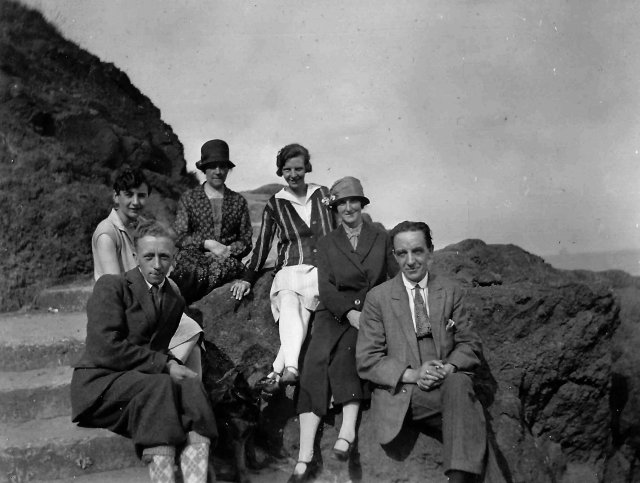
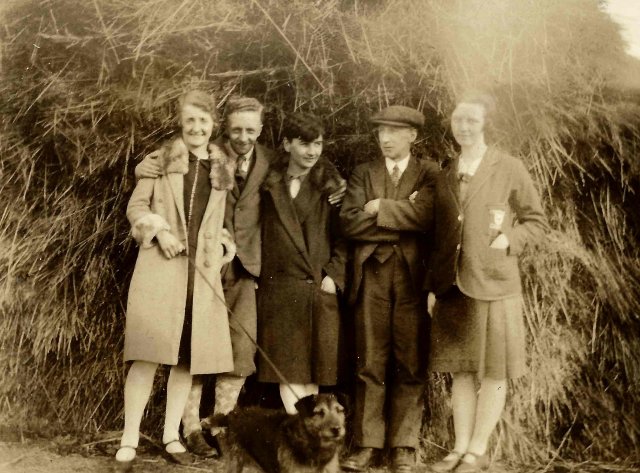
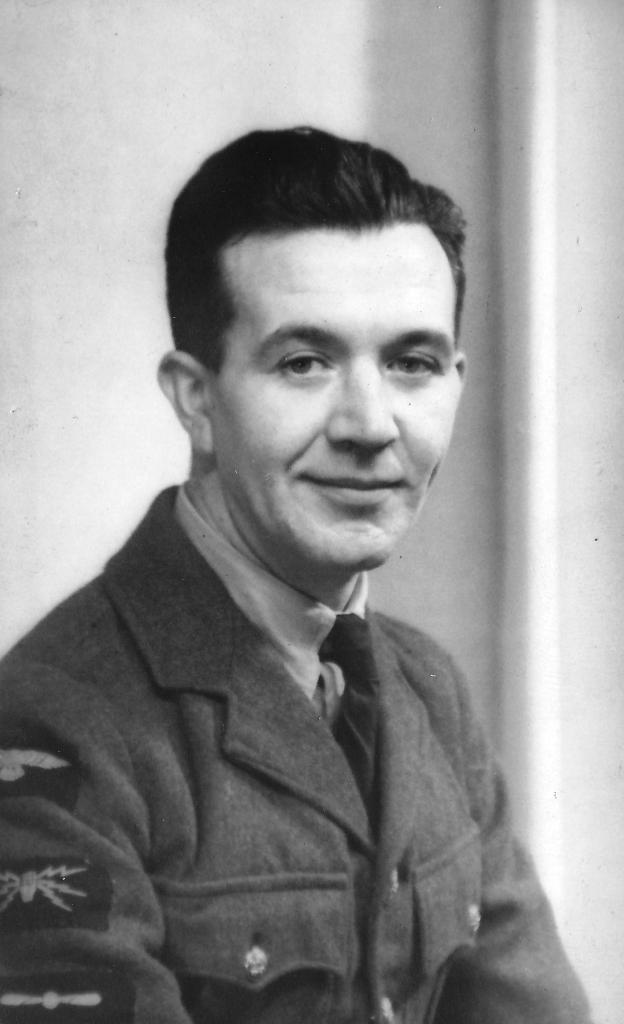

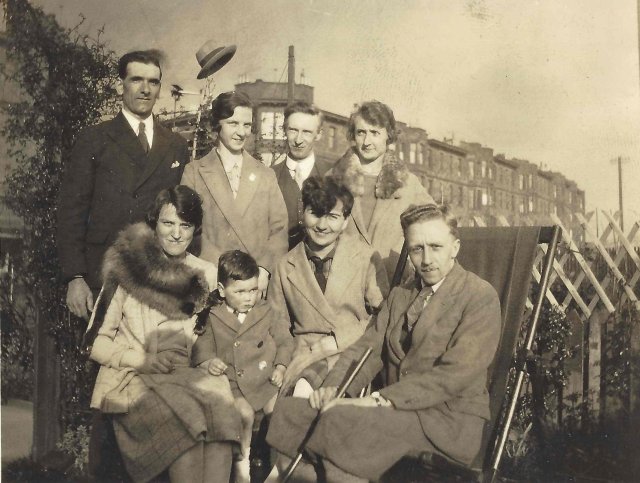
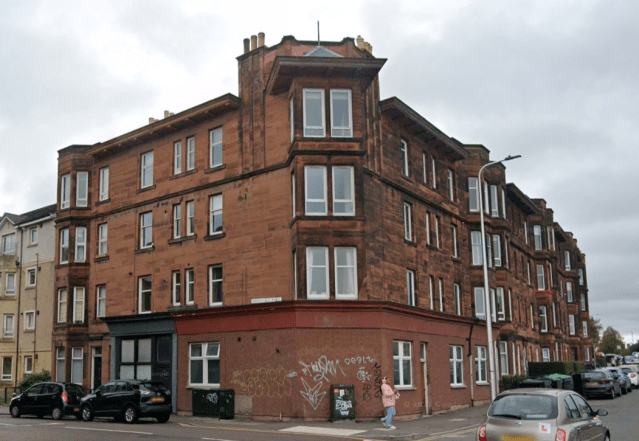
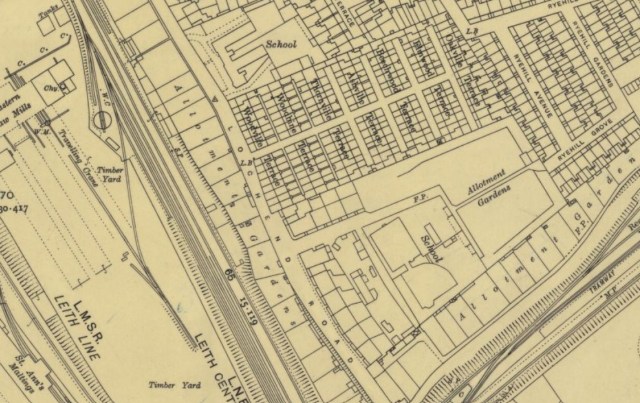
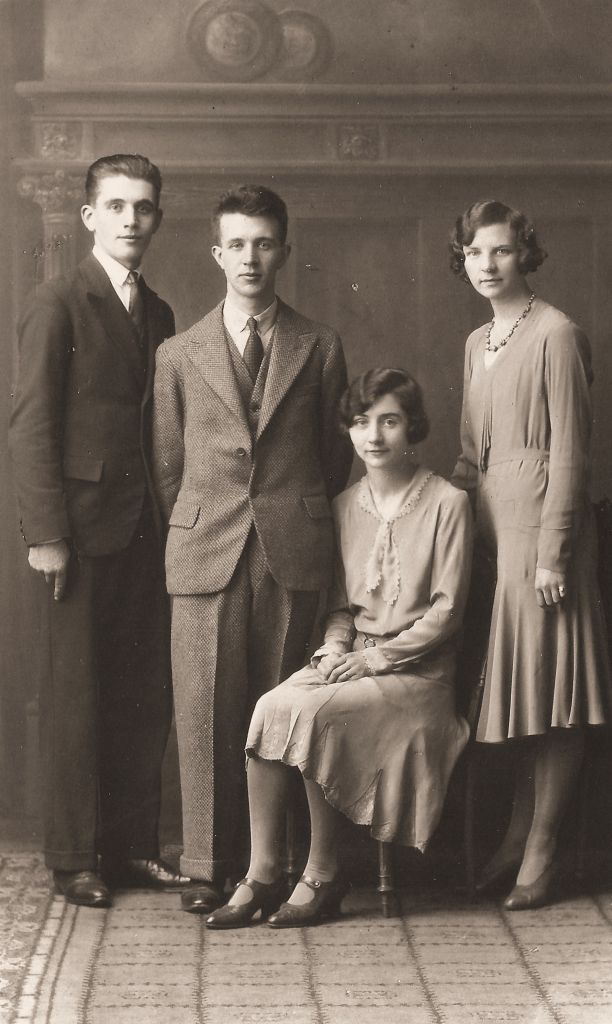
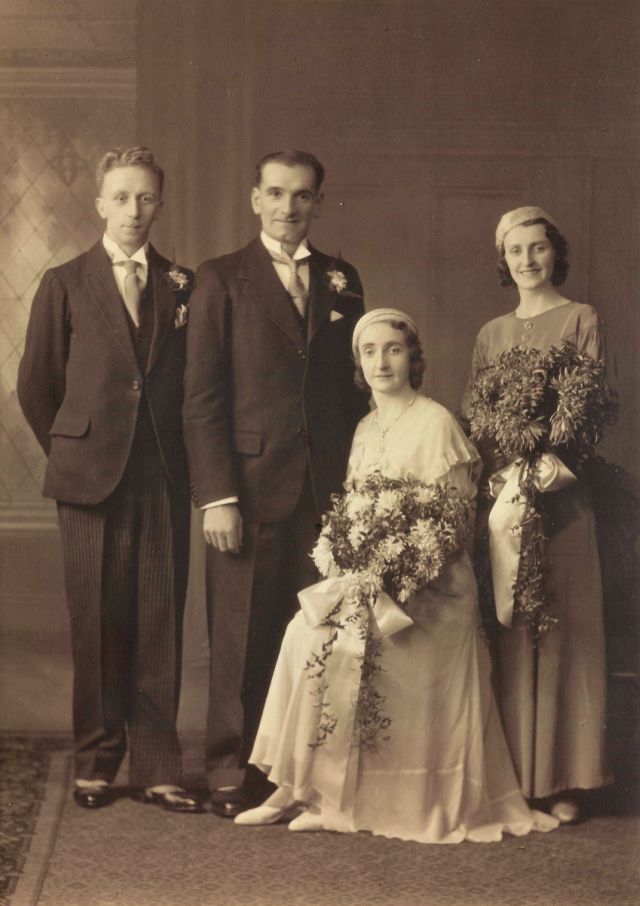
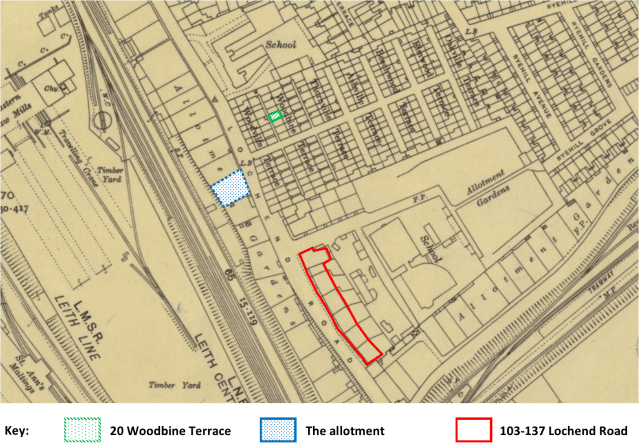



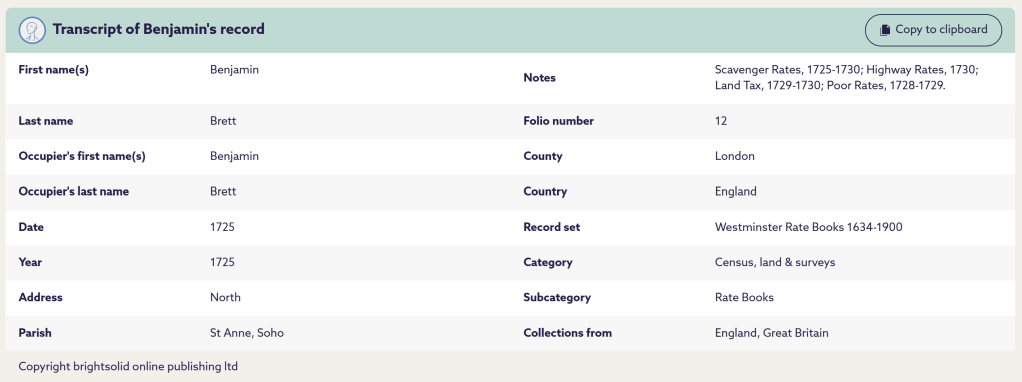

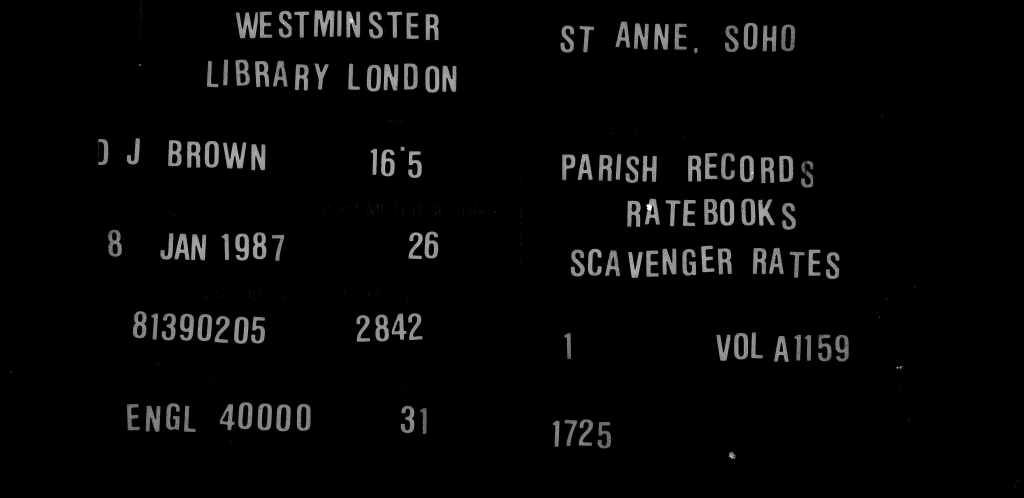


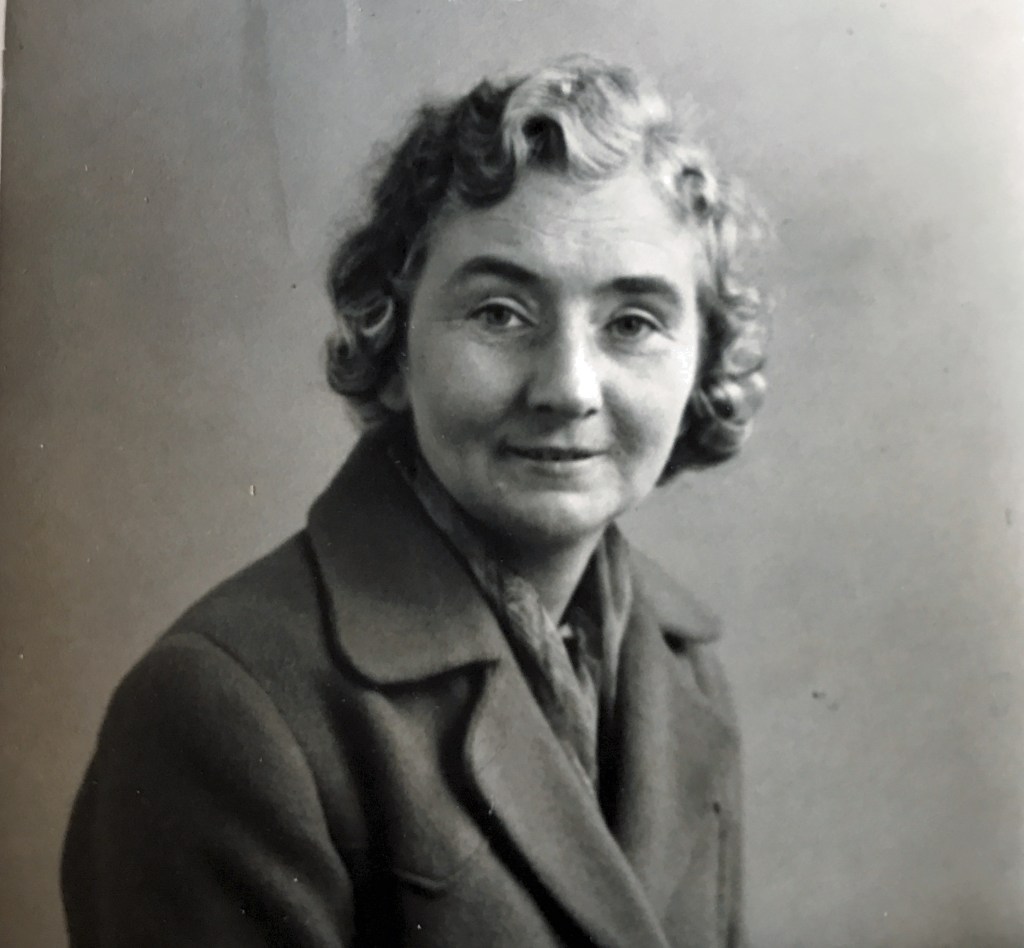

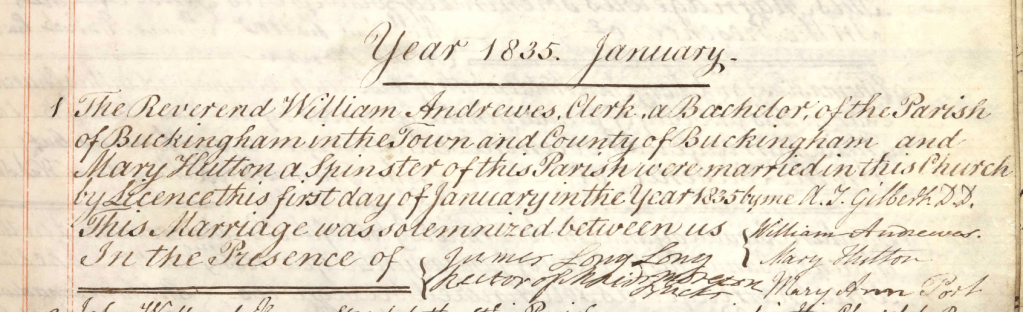


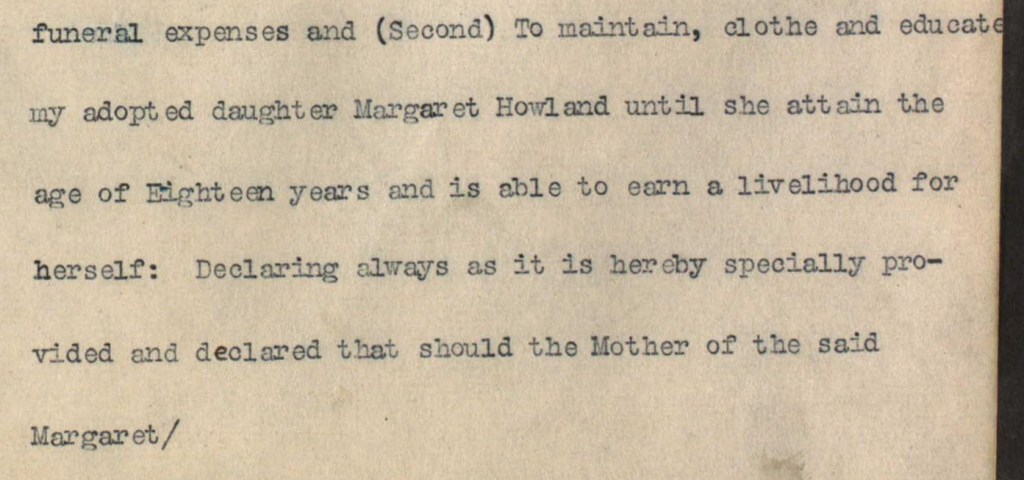




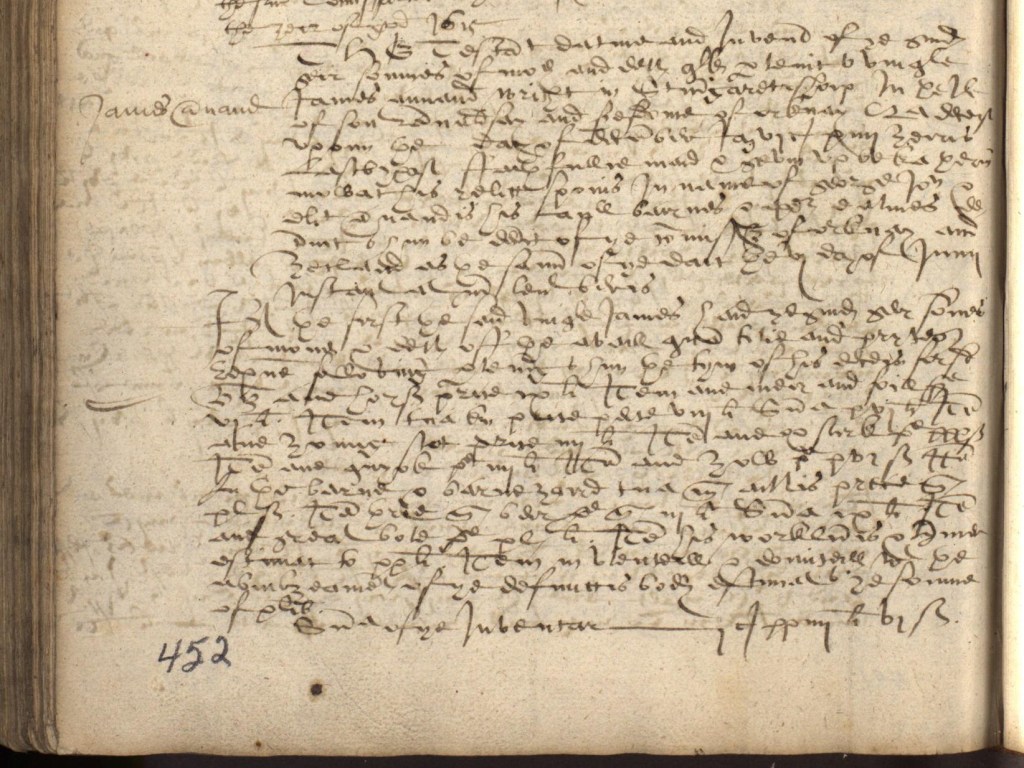
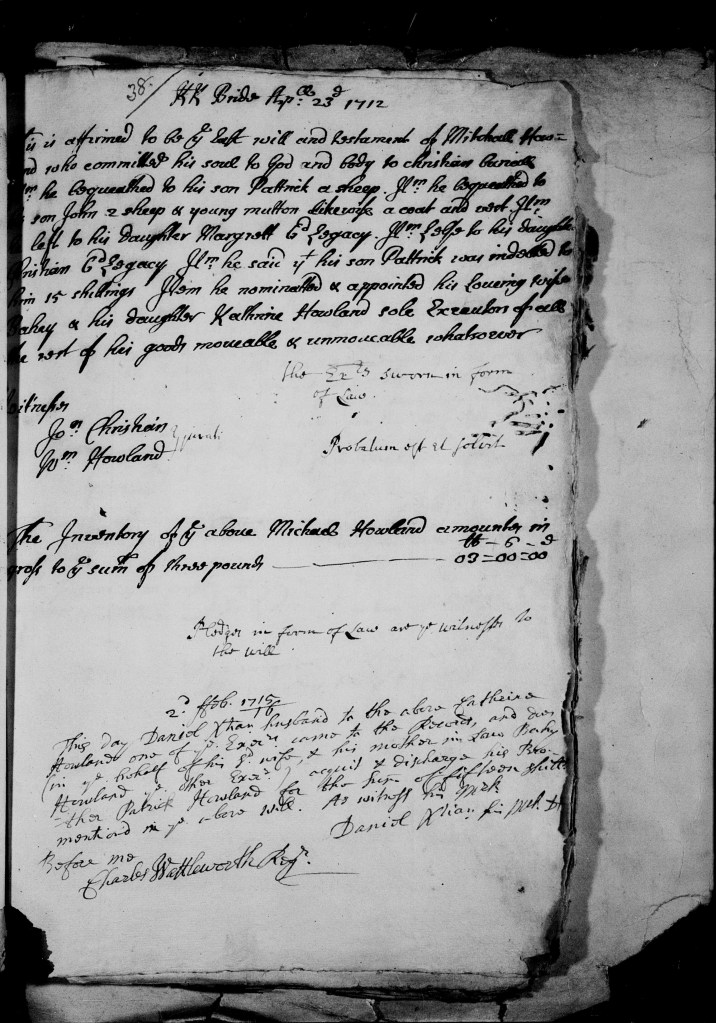


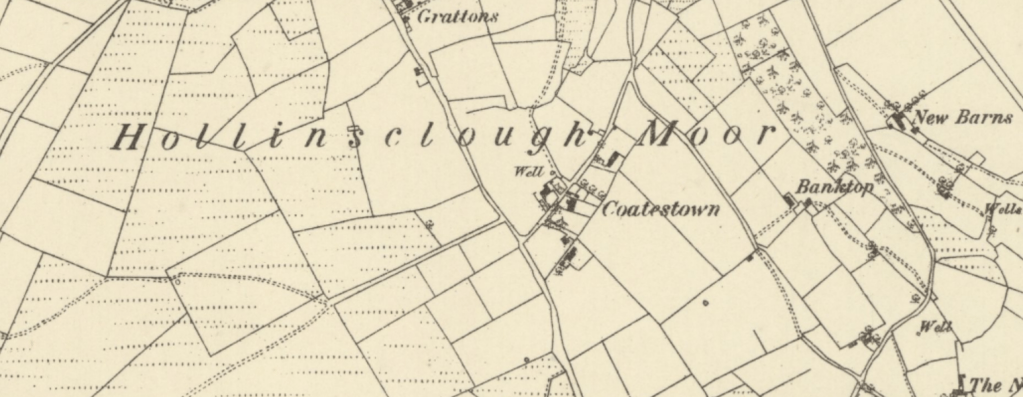

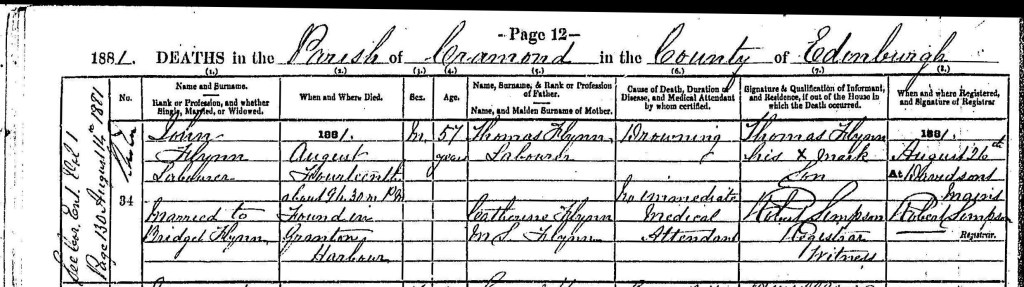

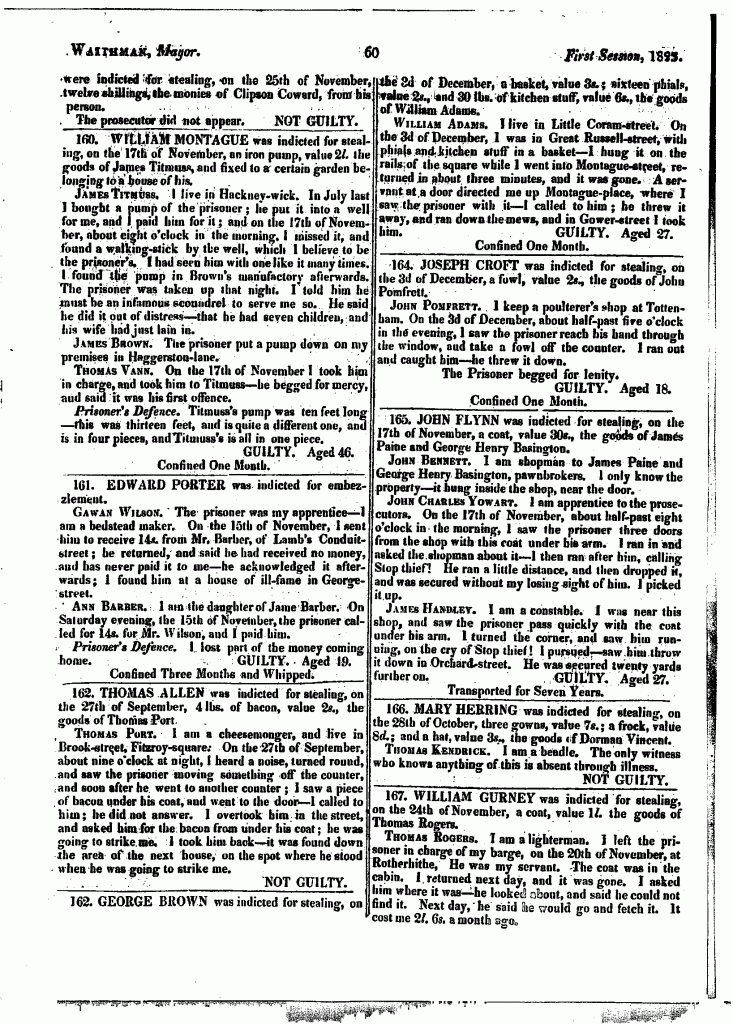
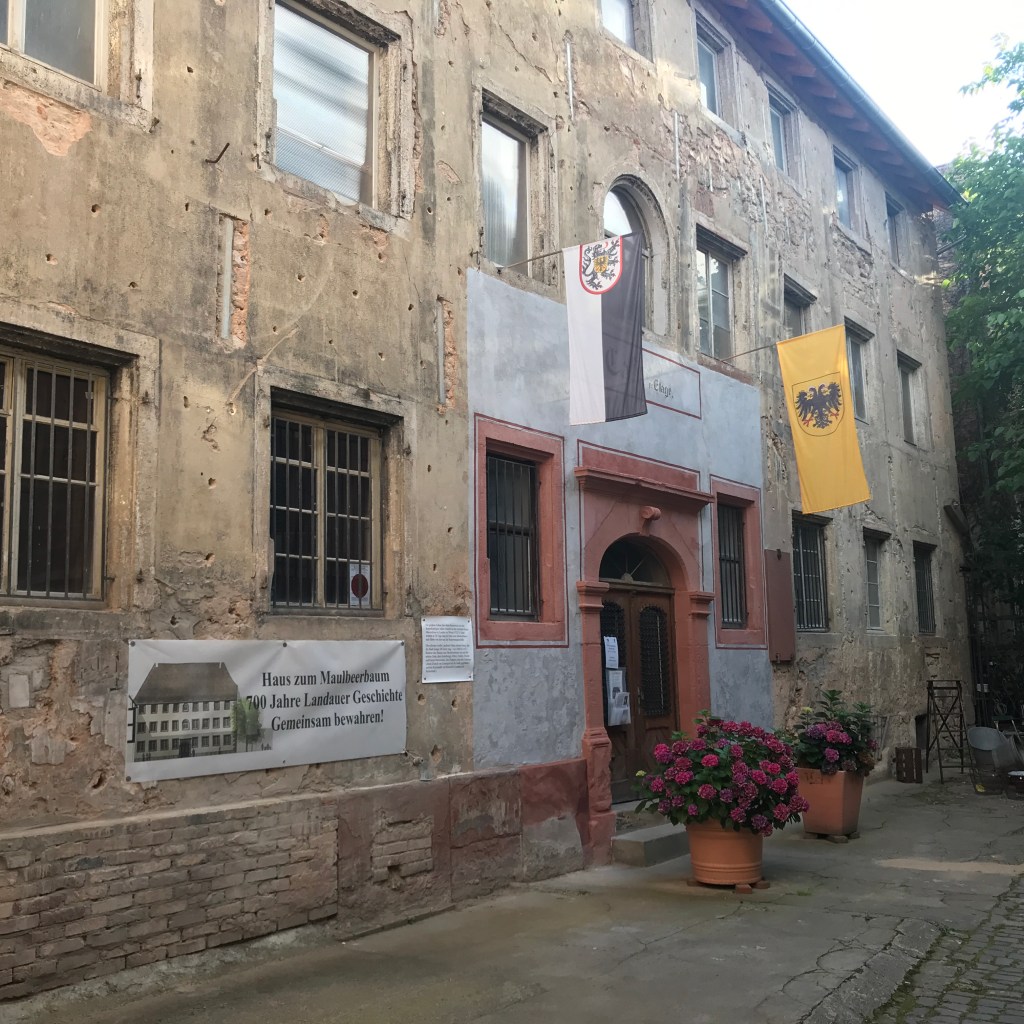


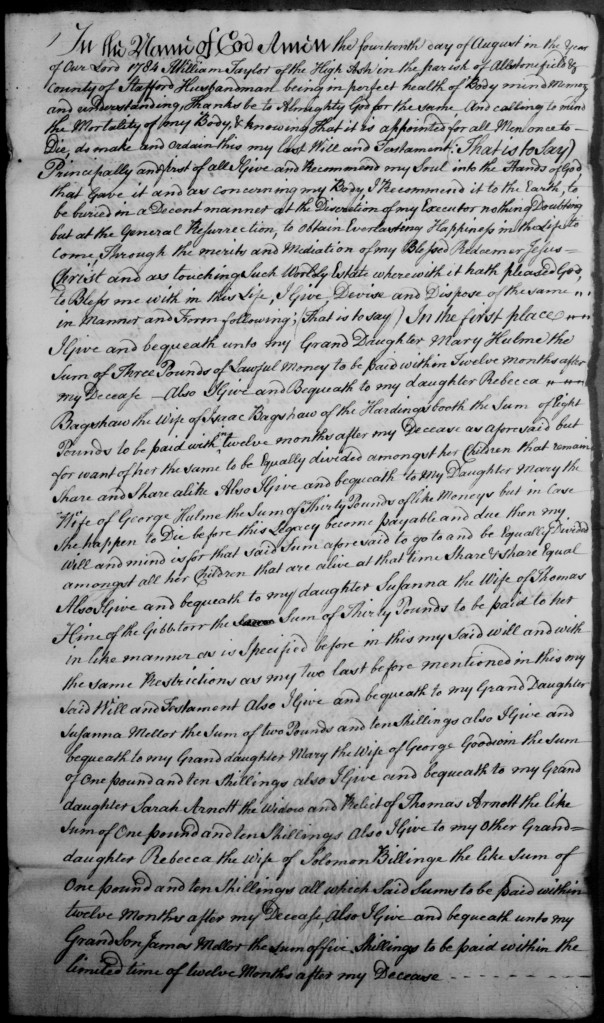


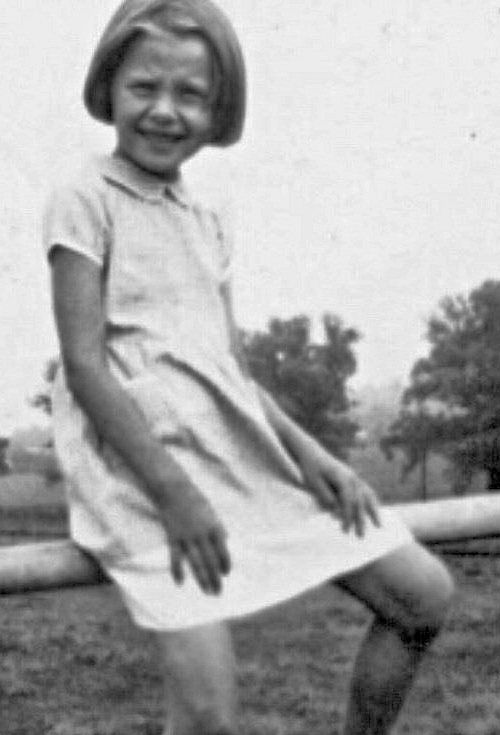
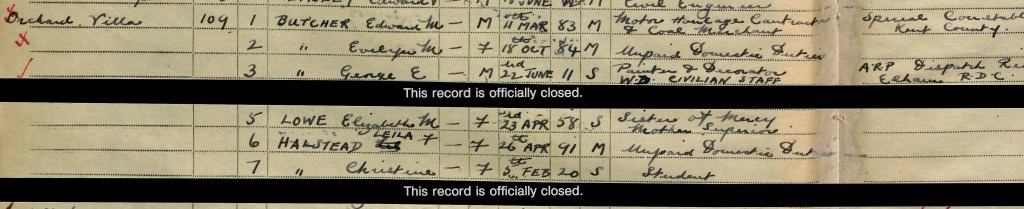






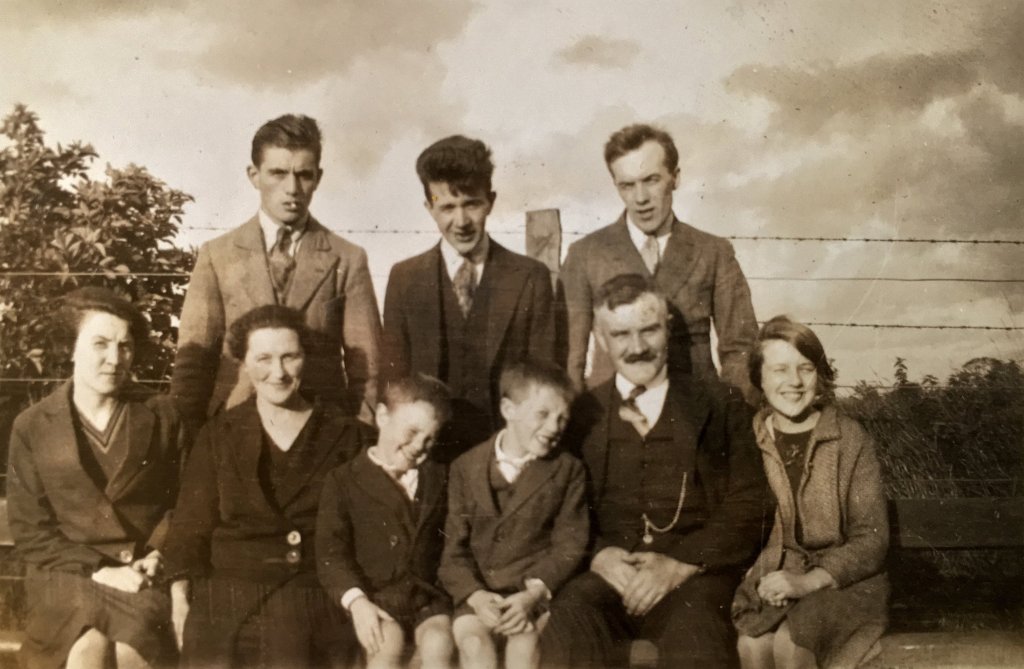


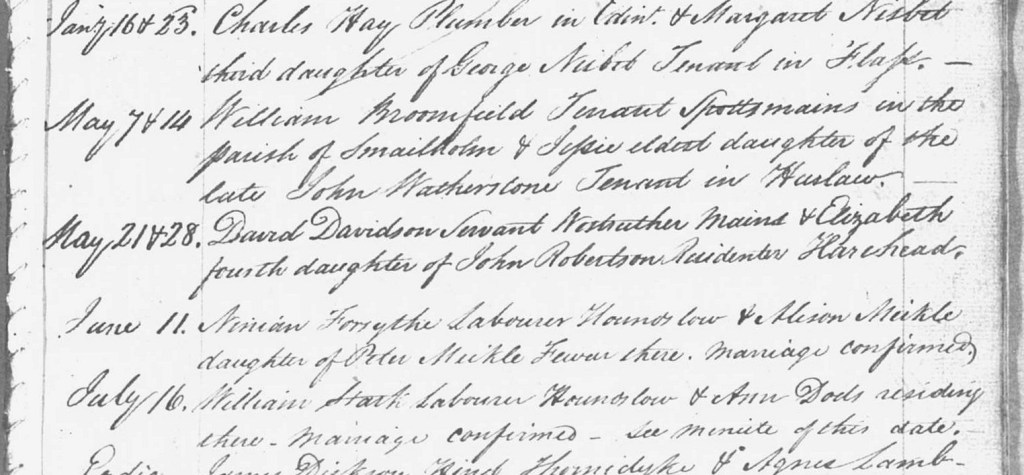
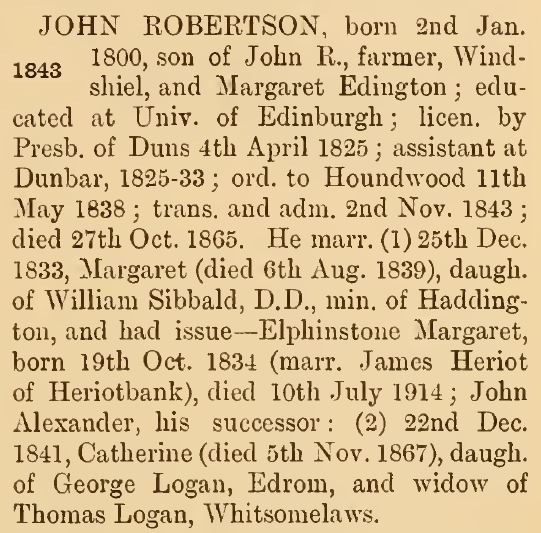

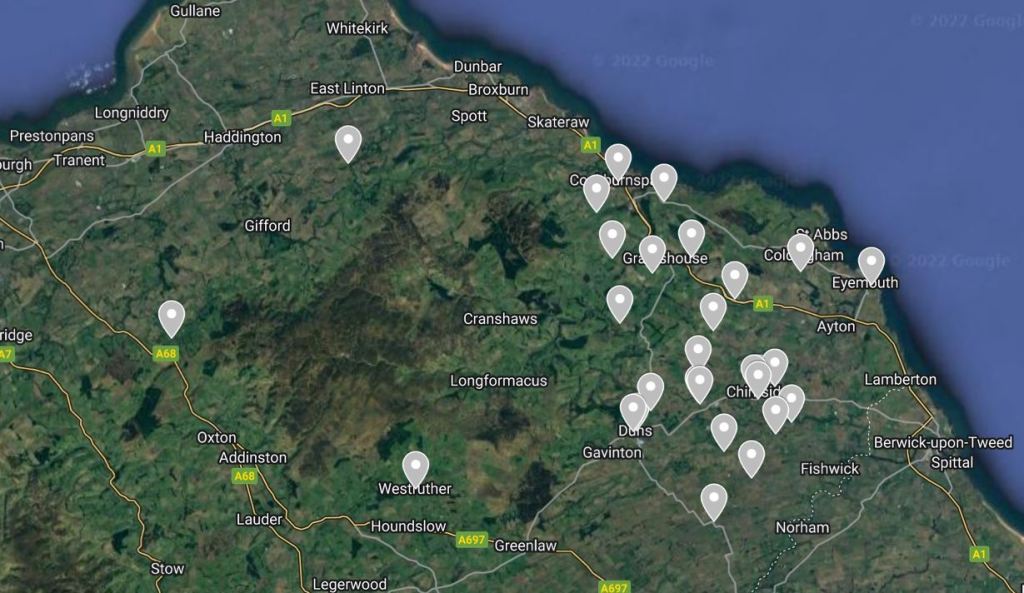
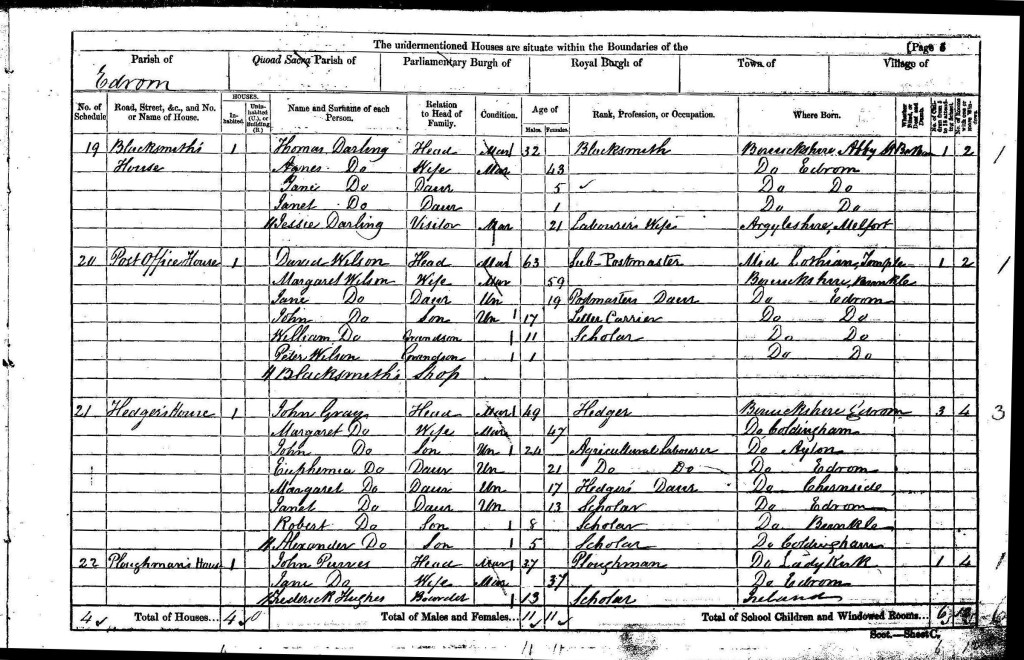

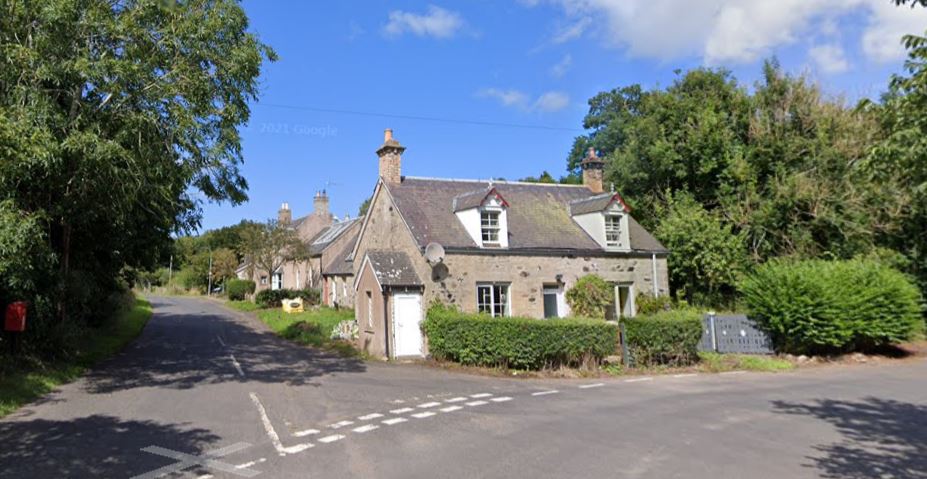
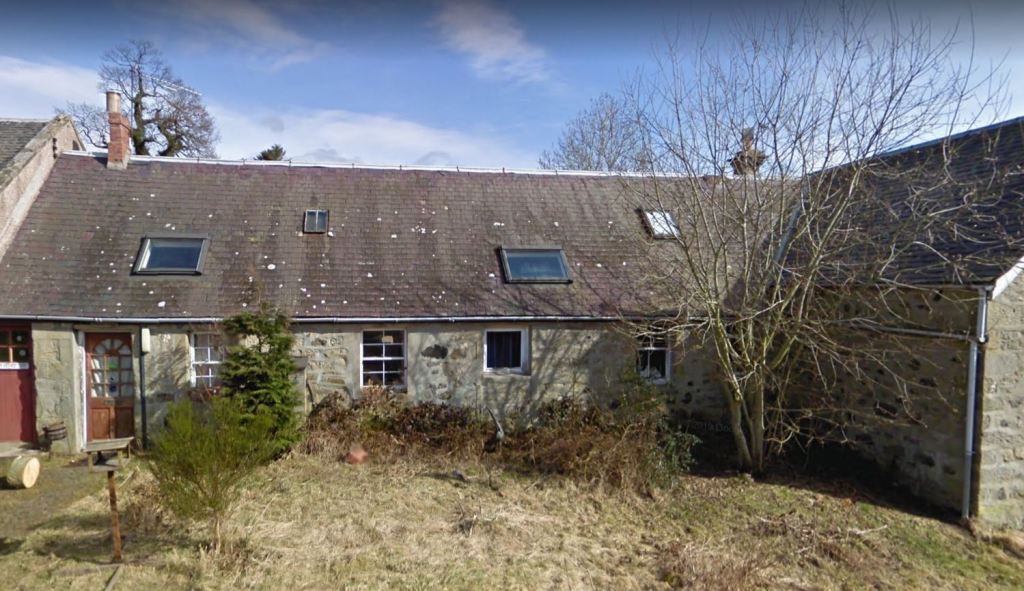


 Lifelines Research