I’ve blogged a lot in the past few years about the problems with many of the databases on the major commercial genealogical websites and in particular the various county-wide English and Welsh parish register collections. I’ve already looked in depth at the issue surrounding missing registers and the difficulties that this can cause for the websites’ paying customers, so I’m not going to go over that ground again.
Instead, I want to focus on another connected issue that all-too-regularly rears its ugly head; I’m talking about the situation where incorrect and often misleading descriptions are attached to a collection of documents. I came across a good (or rather, a bad) example of this phenomenon today while carrying out some research into my wife’s Cheshire ancestors.
I was particularly interested in viewing the marriage record of Daniel Smith and Martha Coundye (or Cundy) who I knew had married in Prestbury, Cheshire in 1804. My initial attempts at tracking down the relevant entry met with, shall we say, mixed results. I knew that Findmypast was the place to go for Cheshire parish register material and I was quickly able to find the entry in the Cheshire Diocese Of Chester Bishop’s Transcripts Marriages 1576-1906 database but I couldn’t find anything relevant in the main Cheshire Diocese Of Chester Parish Marriages 1538-1910 database.
Search results from a search for the marriage of Daniel Smith and Martha in 1804 in Prestbury, Cheshire
I really needed to see the original entry in the parish register; not only is the Bishop’s Transcript (BT) a copy of the original (and therefore lacking any original signatures) but, in this case, the BT was heavily truncated, providing us with none of that additional information which can so often make all the difference when it comes to research in this period.
Marriage of Daniel Smith & Martha Coundye as recorded in the Prestbury Bishop’s Transcripts, 9 January 1804. Cheshire Diocese Of Chester Bishop’s Transcripts Marriages 1576-1906, Findmypast
I checked the parish list which accompanies the database and this told me that the coverage for Prestbury extended from 1560 to 1910 and that 36,566 records were included in the database. (I guess that this means that there are 18,283 marriages as each marriage record generates two database entries.)
However, I was aware (from bitter experience) that these dates are, by necessity, merely start and end dates and that they can mask all manner of gaps in the records themselves. As I’ve blogged elsewhere, there are any number of reasons why there might be gaps in parish register collections so, again, I won’t go into that here.
My default policy in cases like this is to pop over to the relevant county archives’ catalogue to see what their coverage looks like for the parish in question. Cheshire Archives is one of those commendable record offices which allows you to download a comprehensive list of their parish registers, providing you with all the information you need: covering dates, archival references and microfilm references.
Turning to the entry for St Peter, Prestbury, I was quickly able to see that there were no obvious gaps in the holdings, and that there was a register (reference P 338/8504/18) covering marriages from 1803 to 1810.
Detail from Cheshire parish register list. Cheshire Archives & Local Studies
Cheshire Archives clearly had the register I wanted, so why was I unable to find the record on the Findmypast database?
It took me the best part of an hour to sort out what was going on and rather than give you a blow-by-blow account of the exhausting process I went through, I’ve summarised my findings in the following table:
Summary list of marriage registers for St Peter, Prestbury together with descriptions on Findmypast
So, as far as the Findmypast Cheshire Diocese Of Chester Parish Marriages 1538-1910 database is concerned no marriages at all took place at Prestbury between 1748 and 1828. In fact, the records are all there but about two thirds of them have been incorrectly assigned to the parish of Saltersford cum Kettleshulme while the remainder haven’t been assigned to any parish at all. So, if you’re searching the database for marriages in Prestbury in this period, you won’t find them.
I really don’t think it should be too hard to do something like this and to do it properly. Each of the sections of digital microfilm is preceded by the familiar title page which describes exactly what’s on the pages that follow; in the case of the register that I was looking for, Prestbury Parish Church Marriages from 1803 to 1810.
Description page at start of Prestbury marriage register (1803-1810)
I just can’t understand how it’s possible to fail to assign a placename to the marriages in this clearly-marked Prestbury parish register (likewise in four others) as Findmypast have evidently done. Even harder to understand is how the many thousands of marriages which are recorded in the Prestbury registers between 1754 and 1786 and between 1812 and 1828 have ended up being assigned to the tiny parish of Saltersford cum Kettleshulme.
The job of the commercial genealogical website here is a simple one; to take the material provided by the archive and to make it available to the paying customer via a suitable name index. It seems to me that creating the name index is the difficult part: making sure that all of the material you were provided with is actually accessible and that it’s fully and properly described is (surely!) relatively straightforward.
In the case of the Prestbury marriage registers we’re dealing with nearly 15,000 marriages over an 80-year period which are either incorrectly described or effectively not described at all.
If this was an isolated incident, it would be a simple enough task to report the problem and trust that it would quickly be sorted. But experience tells me that it’s anything but. These collections are full of errors like this and they all go towards making our jobs as researchers that little bit harder.
Or … How The Major Commercial Genealogical Websites Are Killing Family History Research
As a full-time professional researcher, I depend heavily on the resources that I’m able to access online, particularly those databases provided by the major commercial websites. Without the 24-hour-a-day access to census returns, parish registers, wills (and so much more!) that my subscriptions to the major commercial websites offer me, I simply wouldn’t be able to do my job. I am, as I’m always happy to make very clear, a huge fan of digitisation. The problem is that all-too-often, the commercial websites don’t make a particularly good job of what they’re supposed to do, and as a result, I seem to spend an enormous amount of my time criticising them…
My particular bugbear at the moment is Ancestry’s apparent obsession with user-submitted content. We’re reaching the point where the sheer volume of public family trees on the site is beginning to eclipse the primary sources; you could say that we can no longer see the records for the trees!
Unfortunately, a lot of the trees are full of errors and inconsistencies – which wouldn’t be too big a problem if it wasn’t for the fact that Ancestry make it so easy for users to copy the details from other people’s trees into their own.
It’s all too simple. You see a name that matches the one you’re looking for and a minute later that person has become your ancestor.
At no point in the process is any genuine research required. No exploration of source documents, no critical examination of what the record might be telling you (was there even a record?) and no analysis of alternative sources. One click and she’s on your tree, just waiting for other researchers to do the same…
A few days ago, I was researching the life of a man called, John Poole. I’d found out quite a lot about him but I was struggling to find a record of his death or burial. After carrying out a few basic searches without finding anything particularly promising, I decided to see what others had found out so I had a quick look at Ancestry’s public family trees. What I discovered made me feel so despondent and so depressed about the way that online research is going that I felt inspired to write this blog…
The John Poole that I was working on features in at least 14 Ancestry public family trees. There’s a lot of conflicting information from tree to tree and much of it is clearly and demonstrably wrong, but I just want to focus here on the details that are recorded regarding John’s death/burial.
Seven of the 14 trees don’t include any information about John’s death at all. (This is fine; John may not be a crucial person on these trees and there’s always a limit to what we have the time to research in detail.) Of the remaining seven, three give a year of death of 1813 (or ‘about 1813’) while the other four give it as 1818 (or ‘about 1818’).
Of those that give a date of any sort, only two reference a specific event. One family tree links the burial of John Poole at St Mary, Whitechapel on 24 November 1813 to our John, while another suggests that John was buried on 9 March 1818 in Bolton.
Let’s just ignore for a moment, the unlikelihood of a Londoner like John dying in a Lancashire cotton town! What matters is that it’s really not hard to show that neither of these burials can possibly relate to our John. All we need to do is a bit of proper research.
John was married to a woman called Juliana Draper (all of the 14 family trees record this detail) and they had at least four children. The two youngest (Sarah and Henry John) both died young and were buried in the City of London parish of St Mary, Aldermanbury in 1811 and 1810 respectively. [1]
St.Mary Aldermanbury Church, City of London, Postcard (1904). Public Domain.
A bit of digging reveals that John and Juliana had moved to the parish sometime around 1807, the year in which John’s name first appears in the Land Tax registers, paying tax on a property in St Mary, Aldermanbury. John continued to be listed in the registers at the same address up to and including 1813. The registers would probably have been compiled towards the end of the previous year but nevertheless, we can be fairly confident that John didn’t die too long before the last few months of 1812.
We also know that he had died sometime before 25 July 1813 when his widow, Juliana, married her second husband, George Furness[2] (again, it’s not hard to find this record) so we have a fairly narrow timeframe during which John must have died – let’s say November 1812 to May 1813. The November 1813 and March 1818 burials are therefore evidently not ours.
It’s clear from the Land Tax registers that John was still living in the parish of St Mary, Aldermanbury at the time that he must have died. So it’s not surprising that a manual search of the burial register for that parish quickly turns up the expected entry. John Poole was buried at St Mary’s on 13 April 1813.[3]
Burial of John Poole, St Mary, Aldermanbury, City of London. London Metropolitan Archives LMA P69/MRY2/A/01 Ms.3572/3 p.1
So, why hadn’t my previous searches for John’s burial turned up this record? Well, once again, we can lay the blame at the database provider’s door. John’s name has been transcribed as ‘John Poole Buch Church’. When you look at the entry, you can see what’s happened. The ‘Name’ column in the burial register has been used by the clerk to record the place of burial as well as the deceased’s name and it seems that John was buried in the ‘Back Church Yard’. The fact that the transcriber has managed to come up with this quite frankly laughable piece of work and that the transcription has been allowed to slip past whatever quality control process Ancestry have in place suggests… well, it suggests that they don’t have any sort of quality control process in place at all. If we’re being kind we might conclude that their quality control process is inadequate…
The point here is that a little bit of genuine research will quickly provide you with all the clues you need to demonstrate that John would almost certainly have been buried at St Mary, Aldermanbury. But rather than making things easier, the way that the information has been provided actually prevents you from finding the right record – or at least it makes it easier for you to find the wrong one.
Perhaps the most frustrating aspect of this is that the record of John’s burial is right there in Ancestry’s database. The record office entered into an agreement with them to make their records available online and, as part of that process, to provide access to them via a searchable index. Their failure to get this bit right – and it’s probably the simplest part of the process – has evidently led to people being unable to find the record in question. Instead, they’ve either left the death/burial section blank or they’ve attached the burial record of an entirely different John Poole to their ancestor’s record. And because it’s so easy to do so, other researchers have come along and added this incorrect record to their own family trees.
This is, of course, not by any means an isolated incident. Ancestry’s family trees are full of errors like this – and much worse! Speak to any experienced researcher and they’ll give you plenty of examples. Those examples are out there right now and they’re multiplying every day.
DVD screenshot of Captain Kirk half-buried in Tribbles. From: wikipedia.org/wiki/The_Trouble_with_Tribbles
It genuinely makes me despair for the future of family history research. And I haven’t even touched on the related issues of unexplained gaps in the data collections, poor descriptions of record sets and wrong references attached to records. It’s a mess and it seems to me that it’s getting worse.
[1] Burials of Henry John Poole & Sarah Poole, Christchurch, Newgate Street & St Leonard, Foster Lane, London, 1810 & 1811. LMA reference: P69/MRY2/A/001 Ms.03572/2
[2] Marriage of George Furness & Juliana Poole, St Dunstan, Stepney, 1813. LMA reference: LMA P93/DUN/054 p.77
[3] Burial of John Poole, St Mary, Aldermanbury, London, 1813. LMA reference: LMA P69/MRY2/A/01 Ms.3572/3 p.1
Thomas Port, my great great grandfather, was born on 22 August 1822 in St Pancras, London. There is, however, no official record of his birth or baptism – at least none that I have ever been able to find. The information I have is taken from two separate sources: Thomas’s date of birth is entered in an old family bible, while the place of birth is recorded in the 1891 census.
I only discovered the entry in the family bible a few months ago, as a result of a contact made through the Ancestry website. I’d known about the bible for over 20 years – Thomas mentioned it in his will along with his ‘portrait in oils’ (which I’ve never managed to track down) – but it was a real thrill to see it for the first time, even if it was only in the form of a digital photo.
The absence of a record of Thomas’s birth led me on a prolonged research journey, lasting more than 20 years, as I sought to find evidence of his birth. My theory that he was the illegitimate son of Mary Ann Port, who worked as a governess in Buckingham in the early decades of the 19th century, was all but confirmed when I found that I had a DNA match with a descendant of Mary Ann’s grandmother.
I know nothing about Thomas’s childhood. In fact, the first 25 years of Thomas’s life are a complete blank as far as documentary evidence is concerned; most frustratingly, I have been unable to find him in the 1841 census.
I suspect that he grew up in Buckingham although I have no hard evidence to support this. He must have gone to school – he was clearly an educated man – and he probably served an apprenticeship. But I have no idea where he went to school or where he learnt his trade. He would have been apprenticed to a draper and I would expect Thomas to have completed his seven-year term in 1843 at the age of 21.
Market Place, Buckingham
Mary Ann Port died in Buckingham in 1846 and the following year, Thomas married for the first time. The marriage certificate gives Thomas’s occupation as a draper and his residence simply as ‘Buckingham’ but there’s a blank space where we would expect to see the details of his father. His bride was a local woman called Mary Layton, the daughter of Benjamin Layton, a carpenter. Thomas and Mary were married at the Independent Chapel (the ‘Old Meeting’) in Well Street, Buckingham. Mary’s father had died in 1835 and it was her brother George who acted as one of the witnesses. The other witness was a woman called Mary Biss, a member of the Independent congregation in Buckingham.
The names of Mary Biss and Thomas Port appear regularly in the minute book of the Buckingham Independent (Congregational) Church’s Sabbath School. Thomas’s wife was also a member of the congregation, having been baptised at the chapel in Well Street in 1815. Thomas’s name first crops us in the minutes on 13 January 1847. It’s clear that he was closely involved with the church for a number of years, taking an active role in organising and running the school’s library. Thomas was later (in January 1850) elected Superintendent of the school.
Old Meeting Sabbath School minute book [Buckingham Congregational], 1842-1850 Buckinghamshire Archives reference: NC/4/1
Thomas must have been quite well known in the town. His marriage to Mary ‘Leighton’ was announced in the Oxford Chronicle on Saturday, 5 June 1847:
June 1, at the Old Meeting House, Buckingham, by the Rev. W. D. Rowe, Mr Thomas Port to Miss M. Leighton, of Church Street, Buckingham.
We get an address here (the marriage certificate simply gave their ‘Residence at the Time of Marriage’ as Buckingham) but it’s not entirely clear whether it was Mary or Thomas who lived in Church Street, or indeed both of them.
This was certainly the address at which their first two children (Kate Mary Elizabeth and Frederick Thomas) were born in February 1849 and July 1850 respectively. But by the time of the 1851 census, just eight months after Frederick Thomas was born, Thomas and Mary had uprooted themselves and moved 50 miles away to the booming industrial city of Birmingham.
1851 census, 56 Stafford Street, Birmingham The National Archives reference: HO 107/2057 f.60 p.39
Thomas and Mary first settled at an address just to the north of Birmingham city centre. An 1852 trade directory lists Thomas Port, a draper, at 56 Stafford Street. The family were soon on the move again but they would move to their new home with just one child; Kate Mary Elizabeth died in October 1851 following an outbreak of smallpox in the area.
The Junction of Lichfield Street & Stafford Street, Birmingham. Painting by George Warren Blackham (ca.1890). Birmingham Museums Trust
The Ports’ second shop in Birmingham was located in another busy shopping area; Sherlock Street was one of the main roads leading into the city from the south. Thomas Port, draper, is recorded at 191 Sherlock Street in a number of trade directories between 1852 and 1858 and this was also the address at which two more children (Mary Emma and Annie) were born.
Thomas and Mary stayed a bit longer at Sherlock Street than they had at Stafford Street (around six years) but their next move saw them leave Birmingham itself to settle in the industrial town of Smethwick, then a hamlet within the ancient parish of Harborne and some three miles from Birmingham.
We don’t know precisely when they moved to Smethwick but we know that they were there by December 1859 and the move seems, at first at least, not to have been a particularly happy one. Lucy Ann Mary Port, Thomas and Mary’s fifth child, was born at the family’s new home in Mill Lane, Smethwick, on 7 December 1859, but just twelve days later, her mother died. Not, as you might suspect, as the result of complications from the birth, but from a disease that was a killer in Victorian Britain: bronchitis.
Mary Port was the first member of the family to be buried in the new family plot at Key Hill Cemetery in Birmingham. She was soon to be followed by her recently-born daughter, Lucy Ann Mary, who died in April 1860. Kate Mary Elizabeth, the daughter who had died soon after the family’s arrival in Birmingham had been buried nearby in a public grave in October 1851 but her name was later added to the gravestone.
The 1861 census finds the family living at Windmill Lane in Smethwick. The precise address isn’t recorded but from other records I’ve been able to work out that the Port’s home, and the location of their draper’s shop, was 1 Windmill Lane. The address is frequently given as Six Ways, the name of the junction at which Windmill Lane and five other roads met. The Port’s shop was on the corner of Windmill Lane and Lower Cross Street. Nothing remains of the old Six Ways today; the whole area was redeveloped in the late 20th century and is now a modern housing estate and the junction, a large urban roundabout.
Ordnance Survey 25″ Map, Staffordshire sheet LXXII.3 (detail) – National Library of Scotland Showing Windmill Lane leading south-west from the junction at Six Ways and Upper Grove Street, Smethwick.
The family at Windmill Lane in 1861 consisted of Thomas, aged 38, a linen draper, his three surviving children – Frederick T, Mary E and Annie – and his sister-in-law, Ann Layton. Ann is listed in the census as a housekeeper and had evidently come up from Buckingham to help Thomas with the children. The household is completed by George L Simmons, an apprentice of Thomas’s and a 13-year old servant called Harriet Beech. Although not stated in the census, George Layton Simmons was also a relative; he was the nephew of Thomas’s late wife, Mary, the son of her sister, Elizabeth.
A few months after the census was taken, Thomas married for the second time. His second wife was Mary Anne Berrill, who, at the time of the 1861 census had been listed as the proprietress of a ‘ladies seminary’ in Smethwick. It’s likely that she and Thomas had met through their involvement in the local Congregational Church, where they were married on 4 July 1861.
The Ports were to remain in Smethwick for over 30 years. Thomas was to have another eight children with Mary Anne; three boys and five girls, born between 1862 and 1875.
Sometime around 1867, having worked as a draper for over 20 years, Thomas gave up the shop at Six Ways to become a soda manufacturer. I’ve been unable to find a precise definition of this but I believe that it was a chemical process involving the manufacture of caustic soda. It seems like a strange career change for a man who had worked his whole life as a retailer and it’s difficult to envisage precisely what his role was. Was Thomas doing the work himself or was he simply an employer with a business which made the soda? As a man of means in his mid-40s, I assume that it was the latter, although there’s no evidence of him owning a business; there’s certainly nothing in the local trade directories.
I found an intriguing entry in a newspaper dating from 1864 (at a time when we know that he still had his draper’s shop at Six Ways). A notice was published on 4 October 1864 in the Birmingham Daily Post, announcing the dissolution of a partnership between Thomas Port and James Anderton who had been ‘carrying on Business at Smethwick, in the county of Stafford, under the style or Firm of “PORT and ANDERSON,” as Crystallised Soap Manufacturers’. The manufacture of soap was closely connected to the manufacture of soda and in at least one record, Thomas was described as a ‘soap manufacturer’. I need to find out more about this, particularly as it relates to Smethwick itself.
After the Ports gave up the shop at Six Ways they moved to a new home in Upper Grove Street, a short distance to the south and close to the Anglican parish church of St Matthew. The family were still living there at the time of the 1871 census. Thomas is described as a soda manufacturer, as is his oldest son (my great grandfather, Frederick). The oldest daughter, Mary Emma was working as a teacher in the British School; several of her younger siblings were also to become teachers.
1871 census, Upper Grove Street, Smethwick The National Archives reference: RG 10/3086 f.73 p.16
By the time that Thomas and Mary Anne’s youngest daughter, Bertha Lilian, was born in 1875, the family had moved again. Their new home was at 4 Windmill Lane, just a few doors away from their old draper’s shop. Thomas was still working as a soda manufacturer but he was soon to retire from business. His name appears in an 1880 directory under the ‘Private Residents’ section and the 1881 census describes him as a ‘Retired Chemical Manufacturer’.
Sadly, four of the children from Thomas’s second marriage died young (all four are buried at Key Hill Cemetery), but the others married and provided him with grandchildren. Five were born in his lifetime and another six after he died. Two documents from the late 1880s describe Thomas as a house proprietor. He continued to live at 4 Windmill Lane and he and Mary Anne, along with five of their children, are listed there in the 1891 census. Thomas’s ‘occupation’ was given as ‘Living on his own means’; he clearly had an independent source of income.
Then, sometime in the mid-1890s, Thomas and Mary Anne left Smethwick to spend their retirement years in the small Worcestershire village of Chaddesley Corbett, where their daughter, Nellie, was the head teacher of the local board school.
Thomas was to die in Chaddesley Corbett a few years later. The local newspaper, the Smethwick Telephone carried a short piece on 20 January 1900:
The Smethwick Telephone, 20 January 1900, page 3, column c British Library Newspapers
Thomas died on 18 January. He was buried five days later in the family grave at Key Hill Cemetery, the seventh member of the family to be interred there. The grave was to be opened two more times; once on 12 November 1904 when Mary Anne was reunited with her husband and then 38 years later when their daughter Nellie died.
I visited Key Hill Cemetery for the first time in June 2017, having discovered just a few months earlier that this was my great great grandfather’s final resting place. Finding the plot proved to be an emotional event, but the actual moment of discovery was tinged with the disappointment of realising that the stone itself was in a terrible state. It had fallen and was lying on its back in pieces. Much of the text is illegible, the face of the stone having crumbled away many years ago.
Port family gravestone, Key Hill Cemetery, Birmingham Photographed by the author, June 2017
The cemetery was neglected for many years but since 2004, the Friends of Key Hill Cemetery & Warstone Lane Cemetery have been working to maintain and restore the two historic burial grounds. A recent crowdfunder successfully raised the money to restore 15 damaged gravestones in the two cemeteries and a new ‘stretch target’ has just been announced which would allow for another 5 stones to be rescued. It would be great if the Ports’ stone was one of those considered most ‘at risk’ but even if it’s not, it’s a great and worthwhile cause and all donations are greatly appreciated.
A couple of weeks ago, I was searching for some baptisms on Ancestry’s London Parish Register Database, when I noticed something odd. I’d just done a basic search for anyone with the surname ROGERS and the parents’ names William and Mary, within five years either side of 1800 – and it didn’t produce any results.
It’s the sort of search that I do several times a day and I was surprised that it had drawn a blank. Particularly as, in this case, I knew there were some records that should have come up – records that I had previously found on this same database. After checking that I hadn’t included any rogue data in the search I tried a few other similar searches and got the same (lack of) results. I was confused.
So I tried a different approach. I moved the focus of the search from Birth to ‘Any Event’ and restricted the Record Type to Baptism.
And this is what I got…
So, what was going on?
I tried some searches in some other databases and the post-1812 London Baptisms Database quickly threw up something enlightening. Searching on a Birth date of 1820 +/- 5 years, I got just three results:
But the same search using ‘Any Event’ produced 36 hits – including the three above.
So what was different about those three?
You may have worked it out by now – I just about had! The three St Giles in the Fields entries included the actual dates of birth as well as the date of baptism. So what the Ancestry database was doing when I was searching using the date of birth was filtering out the 33 results which only recorded the date of baptism and didn’t show a date of birth. It’s almost as if it was saying ‘we don’t know when those 33 were born so we’re not going to show them in a list of births…’
I tweeted about this a couple of times, tagging Ancestry in the hope that they might see it and respond. They haven’t so far. Why am I not surprised…?
What I was more concerned about was that several people who did respond didn’t seem to grasp the enormity of this. 280 characters isn’t really enough to get the subtleties of a point like this across, so I decided a short blog post might do the trick instead.
It’s around 20 years now since the first major commercial databases appeared on the scene and changed the way that we do things – mostly for the better! One of the firm principles established early on was that you could search across a variety of collections using a single interface. This allowed you to search on a number of different data items at the same time, but the cornerstone of it all was that you could search the records looking for details of an ancestor’s birth, marriage or death.
Of course, in most cases, before the introduction of civil registration anyway, what we’re actually looking at – the records that the databases are guiding us towards – are records of baptisms, marriages and burials. But that’s fine. Research has shown that the gap between birth and baptism gradually increased from the 16th century when parents were expected to baptise their children on ‘the Sunday, or other Holy day next after the child be borne’ to the early-19th century when 75% of children were baptised within 64 days of birth. (For obvious reasons, burials have always taken place with days of death so the death v burial question isn’t really an issue as far as searching for records is concerned.)
So even towards the end of our pre-1837 period of interest, the vast majority of children were being baptised before they were a couple of months old and it’s not unreasonable to conclude from these figures that well over 90% would have been baptised within a year. That’s certainly the impression I have from more than 40 years of looking at these documents.
We can see then that baptisms of adults and older children were the exception and it’s therefore quite acceptable for the commercial websites to have equated birth with baptism when it came to developing their databases.
Naturally, we need to allow for the possibility that our ancestor had a non-infant baptism. We’ve all come across examples of people being baptised as adults and there’s no doubt that these can be more of a challenge to find – particularly for the inexperienced researcher. But to treat baptism as a separate event for search purposes or, even worse, to make the date of baptism the primary focus of the search, really doesn’t help anyone.
Ancestry have only changed this recently and my hope (and my suspicion too) is that it’s happened accidentally; that someone has disconnected the link that tells the system that a baptism on 13 February 1792 should be treated for search purposes as a birth about 1792, and that the switch can quickly be flicked back into its original position.
It certainly hasn’t happened on all of Ancestry’s parish register databases. The West Yorkshire Database for example seems to produce the same results whether you use Birth or Any Event (restricted to baptism).
Our research should be much more than just collecting names and dates but without the key facts – the borns, marrieds and dieds – we’re always going to struggle to tell the stories. We need the basic structure – the timelines – to allow us to see how our ancestors’ lives chimed with what was going on around them.
We rely on the databases to help us to identify these facts and when something like this happens it just makes it that much harder. How many thousands of unsuccessful searches have been carried out over the past few weeks? How many times have people looked for a record of their London ancestor’s birth and found nothing – even though a record of their baptism is right there on the system? And how long will it be until Ancestry do something about it…
The date is Tuesday, 29 January 1895 and Edinburgh is in the grip of a snowstorm. In fact, the whole country is suffering; snow fell uninterruptedly for 12 hours in Birmingham yesterday and London is experiencing temperatures of 15° Fahrenheit (-10° Celsius).[1] According to the official Met Office report for 29 January a ‘hard frost occurred last night over Great Britain’.[2]
Conditions in the poorer parts of late-Victorian Edinburgh are grim at the best of times but in this extreme cold weather many families are in severe distress. To make matters worse, Roderick Coyne, the Superintendent of Works for the Edinburgh and District Water Trust, has announced that ‘the water would have to be turned off again’ due to a burst main.[3]
Data on the ‘Health of Edinburgh’ is published every week and last week 110 deaths were reported including three to scarlatina, nine to measles and one to hooping-cough.[4] The ‘intimations’ for the week suggest that 336 people are known to be suffering from measles – not exactly epidemic proportions but representative of a population living side-by-side with deadly disease.
To the inhabitants of Bedford Street in Edinburgh’s Stockbridge district it was a trying time but to one family in particular, 29 January would prove to be the darkest of days…
Edinburgh Evening News, 26 January 1895, page 3, column d. British Library Newspapers,
My great grandmother, Margaret Philip (the surname was often written as Phillip or Philp), was born on 26 July 1859 in Davidson’s Mains, a small village to the west of Edinburgh, historically part of the largely rural parish of Cramond but now right on the edge of Edinburgh’s urban sprawl.
Margaret’s parents, James Philip and Margaret Glennie had married in Cramond on 23 December 1853. They went on to have at least nine children, the oldest two almost certainly born before they were married, and the youngest born in January 1870. Margaret was to die on 16 June 1870, just five months after her youngest child was born; according to the death certificate she had been suffering from typhoid pneumonia for 14 days and from ‘debility’ for a year.
James had lost his father to typhus just 12 days earlier and he was now left on his own with eight children, all under 20. Jane, the oldest girl, was 14 and might have been expected to take on the running of the household but she also died (of typhus fever) on 18 July 1870. I think we can see a theme developing here…
The 1881 census finds James living at West Pilton Cottages, to the east of Davidson’s Mains but still in the parish of Cramond, but by 1891 he had moved into Edinburgh and was living at 5 Church Place in the parish of St Stephen. Church Place was a narrow courtyard, leading off the west side of Church Street (now Gloucester Street) in the Stockbridge district, less than a mile from Edinburgh’s fashionable New Town.
Also living with James were his youngest son, Richard, his daughter, Margaret, and an assortment of five grandchildren; James and Elizabeth, the two children of his widowed son, Robert, and Margaret’s three illegitimate children, John, James and Margaret.
Sometime before his death in 1896, James had moved to Bedford Street, just across the Stockbridge on the other side of the Water of Leith, no more than 10 minutes’ walk from Church Place. He died of bronchitis and chronic phthisis (TB), a reflection of the damp, unsanitary conditions that the family were living in.
Bedford Street, Stockbridge, Edinburgh
We’re right between two census returns here so it’s difficult to get an accurate picture of the family at the time. We know that Margaret and her four children (Susan had been born in 1893) were living at 4 Bedford Street and it seems that Robert’s two children were also there (Robert himself had died in May 1893). The 1895-96 Edinburgh electoral register lists Andrew Philip, a labourer, as one of four tenants occupying 4 Bedford Street.[5] Andrew was James and Margaret Philip’s seventh child. I’ve been unable to find any later trace of Richard, who had been living with the family in Church Place in 1891.
Despite apparently bringing up her children on her own, Margaret in fact had a long-term partner in the shape of my great grandfather, John Flynn. John had lived two doors away from Margaret in West Pilton Cottages in 1881 and he was almost certainly the father of all of Margaret’s children but they don’t seem to have been living together at this time. Later, Margaret would openly lie to the authorities, claiming on a number of occasions to have been married to John. In fact they never married.
6-year old Margaret and her little sister, Susan, had been suffering from measles for just over a week and both had recently developed catarrhal pneumonia. Dr. Charles Kerley, writing in 1903 suggested that:
Catarrhal pneumonia, on account of its large mortality and because of its frequent appearance as a complication in almost every disease of infancy, is one of the most formidable ailments which we are called on to treat.[6]
Kerley recommended fresh air and ventilation to combat the worst effects of this form of pneumonia and bemoaned the ‘marked tendency to coddle, to wrap, to overclothe pneumonia patients’.
Given the conditions in Edinburgh at the time, it’s perhaps understandable that the Philips would have been doing everything they could to keep the temperature in their home above freezing. The idea that opening the windows might actually be beneficial to the girls was probably not something that would have instinctively occurred to them.
Their mother sat up with them on Monday night doing whatever she could to make them comfortable – even if she was doing all the wrong things. Or perhaps the family took it in shifts. Was Andrew living there? Was Margaret’s father too old and infirm to help? Her nephew, James (Robert’s son) was 19 and his sister Elizabeth was 17; they would surely have helped to tend their young cousins. And perhaps Margaret’s two boys, John and James would have wanted to play their part as well.
But Susan was getting weaker and at 2 o’clock in the morning she lost her battle; she was just 21 months old. Dr. McLaren[7] was sent for and he confirmed that she had died of measles with catarrhal pneumonia as a secondary cause.
The doctor examined young Margaret and he could see that she was gravely ill. He gave her medicine and offered the family advice about how best to care for her.
Later that day, cousin James set off for the registrar’s office, a twenty minute walk at the best of times. With freezing temperatures and snow still thick on the ground it would have been a struggle as he made his way along the Queensferry Road and over the Dean Bridge, crossing Shandwick Place at the west end of Princes Street before eventually arriving at the office in Lothian Road. Then, after providing Mr Aitchison[8] the registrar with the necessary details of Susan’s death and signing the register – James Philip Cousin Present – James headed back to Bedford Street to see what news there was of his cousin Margaret.
Death certificate of Susan Philip. National Records of Scotland reference: 1895 Deaths 685/1 136
She wasn’t doing well. Her condition was worsening by the hour and at 11 o’clock at night – just 21 hours after her sister had passed away – she too succumbed.
Once more Dr. McLaren was sent for. His diagnosis was the same; measles and catarrhal pneumonia.
The following day, cousin James returned to the registrar’s office to notify them of young Margaret’s death. This time, he was met by the assistant registrar, Mr Aitchison junior who took the details down and, for the second time in 24 hours, James was asked to sign the register – James Philip Cousin Present.
Death certificate of Margaret Philip. National Records of Scotland reference: 1895 Deaths 685/1 149
The family must have been crushed by this second death within 24 hours. Margaret, in particular, would have been devastated by the loss of two children on the same day to the same killer disease. And there was an added complication, because Margaret was about seven or eight months pregnant at the time. Just five weeks later, on 5 March 1895, she gave birth to her fifth child, Peter. It seems like a miracle that he survived. He was registered as the illegitimate son of John Flynn and Margaret Philip – John’s role in all of this being acknowledged for the first time.
They were still living in Bedford Street in August 1896 when James Philip senior died there (the death was registered by his grandson, ‘cousin’ James) but by the following year Margaret, now with her ‘husband’ John Flynn as a permanent member of the household, had moved out of Edinburgh into rural Linlithgowshire. John had found work on the Dalmeny Estate just across the River Almond from Cramond Village and when a second Margaret was born at East Craigie in Dalmeny on 26 March 1897, Margaret and John claimed to have married on 29 June 1883 in Edinburgh. Which is, of course, a complete fiction.
By the time of the 1901 census, which finds the Flynn family living at Hill House, Dalmeny, John and Margaret have two more children; Charles (my grandfather, born in 1898) and a second Susan (born around 1900). The births of Charles and Susan weren’t registered – at least there is no record of their births – and the next reference we have to the family comes in November 1903 when Susan died. The entry in the death register names her as Roseanna Flynn but it’s clear from the age at death (i.e. 3) that she’s the same person who was listed as Susan in the 1901 census.
There was one more family tragedy still to come. On 7 February 1907, Peter Flynn died of periostitis of the superior maxilla and gangrene, aged just 11. Peter was the child that Margaret had been pregnant with in January 1895. He’d survived the most challenging of introductions to the world only to suffer what must have been a painful and horrific death at a distressingly young age.
We’ll leave Margaret, John and their family there. Their lives seem to have gradually improved and at the time of their deaths (in 1924 and 1933 respectively) they were living in relative comfort but the events of that day in January 1895 must have stayed with them for the rest of their lives. The re-use of the names Margaret and Susan was surely done in memory of the two children who died on that dark winter’s day…
[3] Edinburgh Evening News, 29 January 1895, page 3, column i. British Library Newspapers, accessed via Findmypast
[4] Edinburgh Evening News, 26 January 1895, page 3, column d. British Library Newspapers, accessed via Findmypast
[5] Register of Voters, Burgh of Edinburgh, 1895-96, No.III St Bernard’s Ward, p.9. Edinburgh City Archives ref: Sl56/41. Accessed via ancestry.co.uk
[6] KERLEY CG. Management of Catarrhal Pneumonia in Infants. The Journal of the American Medical Association. 1903;XL(25):1720–1725. doi:10.1001/jama.1903.92490250028001h
[7] Dr. John Shaw McLaren. MB, FRCS (Edinburgh), 1858-1935.
[8] John Aitchison, Registrar of St George’s district, Edinburgh, 1828-1912.
Brickwalls are an inescapable component of every family historian’s world. If you think about it, every line you’ve ever researched starts (or ends, depending on which way you look at it) with an individual whose parentage is unknown. So, for example, if you’ve traced each line of descent back as far as your 4x great grandparents – and no further – you effectively have 64 brickwalls on your hands! One generation further back and you’ve got 128 … and so on. In fact, whenever you break down one of your brickwalls, you instantly create two more!
But isn’t that what makes family history research so fascinating? It’s the challenge of discovery; the detective work; the intellectual process of exercising our enquiring minds. It’s what keeps us interested and after all, we wouldn’t want it all handed to us on a plate, now would we? We wouldn’t want it all to be as easy as certain websites might try to persuade us that it is. “You just type in your name and out come your ancestors!” That’s not the way it is and it’s not the way we want it to be…
I’ve spent a lot of the last 40 years of my life attempting to break down brickwalls, both as an enthusiastic hobbyist working on my own family history and as a professional researcher working for many hundreds of clients and I’ve learnt a lot of tricks on the way.
It’s fair to say that we can get stuck at just about any stage of our research. Tracing a line back to medieval times is perhaps the aim of most genealogists but the reality is more often that we come to a grinding halt sometime in the 17th or 18th century. Our brickwall might even be much more recent – we probably all know someone who’s struggling to find details of a grandparent – but by far the most troublesome period is the 30 or 40 years prior to the introduction of civil registration (in 1837) and the establishment of the name-rich decennial census returns (in 1841). It was a period of great upheaval in the population; the Industrial Revolution was in full flow and people were moving in their thousands from their rural ancestral homelands into the (mostly northern and midlands) towns and cities, desperate to find work in the factories and mills.
All of this can make it particularly difficult to trace people in the records. We might, for example, have an ancestor who married in Manchester in the 1820s and then died before 1837 – or at least before 1851 – leaving behind next to nothing in the way of clues to their origins. How do we begin to find out where they came from?
Over the years, I’ve developed a methodology that helps me to work through the trickiest problems. Clearly, every case is different, each with its own distinct range of challenges, so I have to be flexible in my approach and adapt as I go, but what follows is a brief summary of the process that I use when I set out on the quest for one of those elusive early 19th century ancestors.
1 Evaluate
The first step is to assess what we actually know about the person whose origins we’re trying to trace. Ideally, we want to know as much as we can in the following three areas:
when they were born
where they were born
who their parents were
If we’re lucky, and they married after 1 July 1837 and/or went on to appear in the 1851 census, we should have some good, solid information to work with. We might only know their father’s name and not their mother’s but this would at least help us to identify any potential birth records, and combined with an approximate age and place of birth it might be all we need.
We may find that the evidence we have for someone’s age is contradictory, with different sources giving us conflicting information, and the same can happen with birthplaces. In that case, the best we can do is assess the evidence and keep an open mind about what we know. We might, for example, have five pieces of evidence, four of which (roughly) agree; experience tells me to question the ‘outliers’ when it comes to someone’s age but to pay close attention to an unexpected birthplace.
The less we have to go on, the harder our job is going to be but we can make some intelligent guesses based on whatever limited information we have. We can theorise that our early 19th century ancestors would have married in their early 20s – the grooms, generally, slightly older than the brides – so if we know when they married, we can estimate when they might have been born. And we can use the names of our ancestors’ children as clues to their parents’ names. If the surname is at all uncommon we might even be able to work out which part of the country they’re likely to have come from. Lots of English surnames (and even some forenames) have quite specific regional origins.
The Village Wedding by Sir Samuel Luke Fildes, 1883
2 Investigate
Of course, what we’re really looking for is a record of baptism – birth records prior to 1837 (in England and Wales anyway) are relatively uncommon – but most people were baptised (if they were baptised at all) within a few months of their birth so in most cases we can use the information we have about their age to search for baptismal records.
Step 2 is all about identifying possible candidates. A well-constructed search on your genealogical website of choice, using the information you’ve gathered in Step 1, will, hopefully, present you with a potential record of your ancestor’s birth. More likely you’ll have more than one candidate or you might have none at all (see Step 5). Each of these eventualities leads to its own research path which we’ll look at next.
3 Eliminate
The most likely outcome from Step 2 is that you’ll end up with a list of two or more potential candidates and you’ll need to begin a process of elimination. I like to think of this in terms of chickens and eggs. Stay with me on this…
Our ancestor is the chicken, a fully-formed adult, and our challenge is to find the egg that they hatched from. We need to look at the eggs in our basket and attempt to eliminate each of them, one at a time. The first thing to look for is records of burial. If we can show that one (or more) of the candidates on our list was buried as an infant, we can instantly eliminate them from our enquiries. If they died aged 3 months, they can hardly be our ancestor. We can then attempt to trace each of the remaining candidates forward in time, looking for marriage records and entries in census returns. If we can find an alternative future for them – evidence that they grew up and became a different chicken! – then we know that they can’t be ours.
Ideally, this process will leave us with just one candidate (or maybe we started with just one in the first place) and we can move onto Step 4. Alternatively, we might have eliminated all of our candidates and we can go to Step 5.
Moving On by Sir Hubert Herkomer, 1881
4 Assimilate
The fact that we only have one candidate doesn’t, by any means, suggest that this is the person we’re looking. We’ve got a long way to go before we can reach that sort of conclusion.
Step 4 is all about a process known as Family Reconstruction (or Family Reconstitution). The idea is that you attempt to find out everything you can about the family of your potential ancestor.
You might start by looking at the baptisms of their siblings, and the marriage and the burials of their parents – and you’ll definitely want to see if any of them left wills. You’ll want to follow up each of the siblings to find out what happened to them. So often you’ll find references to family members in later documents; they might appear as witnesses on marriage records, or as beneficiaries in wills, or they might just turn up unexpectedly on a census return.
You’re looking for just about any clues; perhaps an unusual name given to a child which also occurs in your family – or a distinctive occupation or a link to a familiar address.
Putting all of the available information together in a logical and organised way can help to make sense of what, at first sight, can seem to be a jumble of names and dates. This process helps us to see individuals as part of something much bigger; a family, with links and connections that can last for several generations. Aunts, uncles, cousins, nephews and nieces; they’re all part of the story and they all have the potential to provide that vital clue.
5 Speculate
There’s nothing more frustrating in genealogy than when your well-constructed search turns up … absolutely nothing! It’s as if you’ve stepped on a stair that isn’t there.
It’s important to bear in mind that there are any number of reasons why the record of your ancestor’s birth may not turn up as the result of a simple online search. The relevant record may not have been digitised and you may have to go to an archive to search actual physical records or microfilm (you really CAN’T do it all online) or the transcription may be so bad that the record is effectively unrecognisable. The record you’re looking for may not even exist – the register may have been damaged or lost entirely – or it may never have existed.
There’s a danger that we become too fixated on finding records of our ancestors’ births when what we really need is evidence of their birth, or, at least, evidence of their parentage and this evidence can come from a wide variety of documents, such as census returns, wills, manorial documents, poor law records etc.
My first step in cases like this is to look for any other references to the surname in the area that I’m focussing on. It’s about looking for gaps in the records. Perhaps there’s a family producing children every two years but there’s a gap of four years between two of them. Could the person we’re looking for have been born in that gap? I’d want to look at the register itself and not rely on a transcript. Perhaps a page is missing or damaged, or the entry is there but has been missed or mistranscribed. It’s surprising how often the answer is something as simple as that.
Again, it’s about family reconstruction. By piecing together the story of our potential family, we can start to understand them not as random individuals but as a structured group and we can begin to speculate about how our ancestor might fit in.
What we’re trying to do in all of his is to develop a theory that this person or that person might be our ancestor. And then we try to disprove the theory – finding ‘negative proof’ is always easier than finding ‘positive proof’. It’s the tried and tested process used by scientists and mathematicians and if it’s good enough for them…
The final message is to persevere. Sometimes the best option is to put it to one side for a while and come back to it with fresh eyes – you may have missed something obvious. Chip away at it; think outside the box and spend time off the beaten track looking at some less-obvious sources.
Most importantly, don’t give up. The answer is out there!
The pressures of society weighed heavily on our ancestors; in particular, the expectation that they should live good, God-fearing lives and that they should conform to the beliefs and values of the Anglican church, particularly when it came to matters concerning marriage and legitimacy.
Sometimes, those pressures must have seemed unbearable. And while the picture painted by the Christian Victorian patriarchy was usually one of immoral degenerates, refusing to conform, the truth of the matter is that, more often than not, it was the very rules imposed by an uncaring society which prevented our ancestors from ‘doing the decent thing’.
Family history research rarely makes me angry but the story of James and Frances Philpot really struck a nerve. It’s an example of a working-class couple just trying to get by, but failing – through no fault of their own – to live up to the standards expected of them, and being made to suffer as a result.
The story begins with the births of two girls in the early years of the 19th century. Mary and Frances, the daughters of William and Mary Ralf (or Ralph), were born in the Kent parish of St Mary, Little Chart on 27 September 1803 and 4 January 1806 respectively. The family later moved to Bekesbourne before settling in Pluckley sometime before 1820.
William was a native of Bedfordshire, while his wife, Mary came from Dartford, some 30 miles away, so neither were local to the area. The family were labourers; Mary stated on a later census return that she was ‘formerly a dairymaid’ and William appears in the returns for 1841 and 1851 as an agricultural labourer. There’s no suggestion that they were particularly poor – William is listed in the 1837 Tithe Commission records, occupying a cottage and garden in Rushbrook as well as a thin strip of pasture land measuring 3 acres – but life would probably have been a struggle for the Ralfs, at least by today’s standards.
The Ralf’s former cottage in the parish of Pluckley, Kent. Google Maps, accessed 7 April 2021
On 24 April 1822, not long after the family arrived in Pluckley, Frances, the second daughter, married a man called Jonathan Dale. Jonathan had been born in Ospringe in 1803. They were married in the parish church of St Nicholas, Pluckley; Frances was just sixteen at the time, Jonathan about two and a half years older. Over the next seven years, four children were baptised at Pluckley; Sarah (1824), William (1826), Anne (1827) and James (1829). Anne died young.
The minister of Pluckley, who married Jonathan and Frances in 1822 and baptised their four children was the Reverend Cholmeley Edward John Dering. Cholmeley also happened to be the son of the major local landowner, Cholemely Edward Dering, the 6th Baronet of Surrenden Dering, and the man who owned the house and land on which the Ralfs lived.
Mary, meanwhile, had also married. The record of the marriage of James Philpot and Mary Ralf appears in the Pluckley parish registers on 13 October 1823. At least it should do but for reasons unknown the bride’s name is entered as ‘Frances’ instead of Mary. This must surely be a simple mistake – the ‘day book’ kept by the parish records the bride’s name (correctly) as Mary Ralf – and as both the bride and groom were unable to sign their names (and therefore, probably, illiterate) they weren’t able to spot the error.
James Philpot was a local man, the son of John and Susanna Philpot, and had been baptised at St Nicholas, Pluckley on 15 May 1802. He and Mary had just two children, John (baptised 1826) and James (1828). Then, the year after James was born, Mary died, aged just 26. She was buried in the churchyard at Pluckley on 27 December 1829; we can only imagine how difficult that Christmas must have been for the family.
James found himself widowed at the age of 27 and with two young (very young) children to look after. His mother and two sisters lived in the area but any care that they could provide would only be short-term. What James needed, and needed quickly, was a new wife. Given the hazards of child birth at the time, it was a situation that thousands of young men found themselves in, and the person they so often turned to was the sister of their late wife.
The practice of men and women marrying their sisters-in-law and brothers-in-law has a long and complex history. Marriages between a man and his deceased wife’s sister or his deceased brother’s wife, and between a woman and her deceased’s husband’s brother and her deceased sister’s husband, were forbidden as a result of the ‘Prohibited Degrees of Kindred’ listed in the ‘Table of Kindred and Affinity’ in the Anglican Book of Common Prayer.
The very commendable aim here was to prevent relationships between close blood relatives but the inclusion of certain relationships by marriage led to a degree of resistance, and many simply ignored the directive. The legal position was that marriages within the ‘Prohibited Degrees’ were voidable, as opposed to automatically void. In other words, such marriages could be declared invalid in a court of law if challenged but were otherwise valid.
The situation came to a head with the passing of the Marriage Act in 1835 under the terms of which these marriages were absolutely prohibited. At the same time, any marriages within the ‘Prohibited Degrees’ which had taken place prior to 1835 were retrospectively validated. It took a number of passionate campaigns over a period of more than 70 years before the Deceased Wife’s Sister’s Marriage Act was finally passed in 1907 removing the prohibition, and it was to take a further 14 years before the equivalent Act was passed enabling marriage between a man and his deceased brother’s widow.
So, when James Philpot married his deceased wife’s sister, Frances, on 29 October 1833, it appeared that there was no serious obstacle to the wedding taking place. James and Frances were married at the parish church of St Mary, Chatham. James was described as a widower and Frances ‘Dail’ as a widow.
Marriage of James Philpott & Frances Dail, St Mary, Chatham. Medway Archives P85/1/55 p.2
But we have to ask why they would choose to travel some 20 miles from their home parish in order to get married. They were accompanied by a man called Joseph Else, a fellow-resident of Pluckley, who acted as one of the witnesses.
There would have been a great deal of effort involved in travelling that distance in the 1830s; it wasn’t something they would have done lightly, particularly when it involved taking a day off work (James and Frances were married on a Tuesday). So why did they decide to do this and, more importantly, why did the local parish authorities in Pluckley (apparently) fail to acknowledge the marriage?
The Pluckley parish registers tell only a small part of the story. Ten months before the marriage, on 9 December 1832, George Philpot, the son of Frances Dale of Pluckley, was baptised. Frances is described as a ‘Labourer’s Wife’ while young George was entered in the register as ‘B. B.’ [i.e. baseborn].
A further six children were born to James and Frances over the next eight years. No baptism has been found for Edward (born c.1834) but the entries in the Pluckley baptismal register for the other five tell an intriguing tale:
Baptised
Name
Parents
Quality, Trade,orProfession
By whom the Ceremonywas performed
15 Jun 1835
Joseph
Frances Dale
Labourer’s Wife
Cholmeley Edwd. Dering Rector
17 Jul 1836
Stephen
James & Frances Philpot
Labourer
C Boukhardt Offg. Minister
11 Jul 1838
Henry
James & Frances Philpot
Labourer
J Mossop
12 Jan 1840
Stephen
Frances Dale
Labourer’s Wife
Jn Wm Horsley Curate
21 Mar 1841
Jane
Frances Dale
Labourer’s Wife
Jn Wm Horsley Curate
Baptisms of children of James and Frances Philpot, St Nicholas, Pluckley. Kent Archives and Local History P289/1/B/2
It’s interesting to note that the three children born after the introduction of civil registration in July 1837 were registered under the name Philpot, showing the mother’s maiden surname as Ralf/Ralph.
The first Stephen died young. He was buried on 23 July 1837 by the rector, Cholmeley Edward Dering. The entry in the register reads ‘Stephen Dale’.
It’s difficult to say exactly what was happening here but it seems that certain clergymen (the Reverend Cholmeley Dering in particular) were not about to allow James and Frances to baptise their children legitimately, while others took a more liberal view – or perhaps simply believed James and Frances when they told them that they were legally married.
But were they? Well, no. A little more digging reveals that the 1833 marriage was anything but valid, for the simple reason that Frances’s husband, Jonathan Dale, was still alive. And this provides the answer to most of our questions. It explains why James and Frances travelled half way across Kent to get married. The Reverend Cholmeley Derring definitely wouldn’t have agreed to marry them and most of their friends and neighbours would have known that Jonathan was still alive. And when Cholmeley Dering and his curate John William Horsley baptised James and Frances’s children under the surname Dale and recorded Frances as a ‘labourer’s wife’ the labourer in question was Jonathan, not James.
So, if Jonathan was still alive, where was he? The answer is that he was on the other side of the world, in the penal colony in Van Diemen’s Land (Tasmania).
As early as 1820, Jonathan Dale was in trouble with the law. He was sentenced to 14 days’ hard labour at the July Quarter Sessions in Canterbury for stealing a whip. Marriage to Frances appears to have had a good influence on Jonathan as he doesn’t appear in the criminal records again until 1828 when he was sentenced to 7 days’ imprisonment for poaching. He was acquitted of burglary at the Kent Assizes in the summer of 1829 but he was back in court again just six months later on a similar charge. And this time he was found guilty and sentenced to 14 years’ transportation.
Kentish Chronicle, 22 December 1829 p.2 col.c British Library Newspapers
After sentencing he was transferred from Maidstone Gaol to the Prison Hulk Retribution and then, on 23 June 1830, he began a four month journey to Van Diemen’s Land on board the Southworth.
Jonathan was assigned to work with a man named George Marshall. His convict record lists a number of instances of ‘disorderly conduct’ and neglect of duty for which he received 25 lashes in September 1832 and 50 more in November the same year. Nevertheless, he was granted a Conditional Pardon in January 1842 and a ‘Free Certificate’ in 1845.
Jonathan seems to have spent the rest of his life in Tasmania. He died on 1 February 1866, in Liverpool Street, Hobart where he had been working as a general dealer.
Meanwhile, back in England, James, Frances and the eight surviving children were living in the Thorne district of Pluckley at the time of the 1841 census. James was a 40-year old agricultural labourer and no occupations were given for any of the others. A closer look reveals another four people listed at the same address but in a separate household. Sarah, William and James Dale, Frances’s three surviving children from her relationship with Jonathan Dale and a 15-year old called Louisa Day, probably working as a servant.
In December 1841, just nine months after their youngest daughter Jane had been baptised (once again, the church authorities refused to recognise their marriage and insisted on her being given the name Dale) James and Frances left Pluckley for ever, travelling across the Atlantic to settle in America.
We can’t know exactly what drove them to leave their homes; to leave the only life they knew and start over again in the USA. Was it the constant reminders that their ‘marriage’ was invalid and that they were living ‘in sin’? Was the refusal to baptise Jane as their legitimate child the last straw?
What did Cholmeley and his kind expect James and Frances to do? They had lived together for at least 10 years. And they’d even tried to ‘do the decent thing’ by going through a formal marriage ceremony. The only thing stopping them from getting legally married was that Frances was married to a man who lived on the other side of the world – a man who she was never likely to see again – and their separation, let’s face it, was hardly something that she had chosen. Of course Jonathan knew the risks involved in his criminal activities but it’s not unreasonable to assume that he was driven to commit the crime through a lifetime of poverty and hardship.
James and Frances needed each other and they were able to provide for each other. Apart from anything else, their mutually beneficial relationship ensured that neither they nor their combined eleven children would become a burden on the poor law authorities, and therefore the rate payers. But Victorian society was too rigid and would rather routinely victimise them and treat them – and thousands of other couples in the same situation – as an underclass. Life for our working class ancestors was, surely, hard enough without this…
An investigation into the early history of the Annal/Annand family in South Ronaldsay, Orkney
The Annal surname appears to have originated separately in two parts of Scotland; in Orkney (specifically the island parish of South Ronaldsay) and in Fife (St Andrews and the East Neuk). In both cases, the name seems to be a corruption of the name Annand or Annan.
My aim is to explore the origins of the family in South Ronaldsay (from which I am descended) and, in particular, to examine the story that the family are descended from the Reverend James Annan or Annand, Commissioner of post-Reformation Orkney and his supposed son, James Annan, a wright of South Ronaldsay.
The earliest reference I have found to the surname Annal in the records of South Ronaldsay, Orkney, is in a rental of the lands of James Stewart, dated 1735[1]. Amongst the tenants listed is James Annall of Smiddie (i.e. Smiddy, a farm in the Grimness district). His name does not appear on any earlier lists of names including an inventory (dated 1711) of ‘Lands & Estate of Sir James Stewart of Burray’. However, this earlier list includes the name of James Annan in Pool. Pool is the farm immediately to the north of Smiddy and although there is no firm evidence for this, I feel quite certain that James Annall of Smiddie and James Annan of Pool are the same person (or, possibly that they are father and son) and that the name Annal is simply a variant of Annan.
Further rentals from the late 1740s and early 1750s[2] include the name of James Annal of ‘Upper & Neither Smidie’ and it seems likely that Pool was also known as Upper Smiddy. The geography of the area would certainly support this theory.
Ordnance Survey map 25 inch sheet CXX.16, 1882, South Ronaldsay, Orkney (detail), National Library of Scotland
A simple analysis of various surviving lists of South Ronaldsay names and other documents such as parish registers, testaments and inventories reveals that the name Annan(d) is found regularly on the island up until 1711 but not at all after that. In contrast, the name Annal(l) does not appear until 1735, yet by the time of the 1821 census (the earliest complete listing of the inhabitants of South Ronaldsay) it has become one of the most common surnames on the island, with nearly seventy individuals listed. This would be a quite remarkable increase if we are to believe that the name was new to South Ronaldsay just 86 years earlier. The logical conclusion is that the name Annal was not new to South Ronaldsay in the early eighteenth century but that it is a corruption of the well-established name Annan(d).
The parish registers for South Ronaldsay were poorly kept until the late eighteenth century. Nothing survives before this apart from two tantalising blocks; the first covering the years 1657 to 1669 and the second, starting in 1749 but petering out by the late 1750s/early 1760s and only returning to something approaching full coverage by the late 1780s.
The 1750s are, therefore, well covered and the parish register includes records of the baptisms of two children of James Annal (Annel) of Grimness; William in 1751 and Margaret in 1754. This is surely the James of Upper and Nether Smiddy who is listed in the later rentals. It seems unlikely that the man who was paying rent in 1711 was still fathering children in the 1750s so I think that we have two different people here, probably father and son. The James Annal listed in 1735 could be either the father or the son.
Baptism of William Annel, South Ronaldsay parish register, 18 July 1754 National Records of Scotland 29/2 p.14
The evolution of the surname from Annand to Annal has a direct precedent, provided by another South Ronaldsay surname. While it might seem strange that a name with a ‘hard’ ending such as Annan(d) should evolve into the much softer ending in Annal, we can point to the same ‘shift’ happening a hundred or so years later with the name Russland. The surname had been fairly common in South Ronaldsay in the eighteenth century, but gradually evolved to Russell, first in its pronunciation and eventually in its spelling.
It’s worth noting that the same evolution from Annan(d) to Annal occurred (independently) with the name in Fife.
Alexander ‘Sandy’ Taylor Annal (1907-2007) had a remarkable knowledge of the history of the inhabitants of his native South Ronaldsay. He wrote a number of articles on the subject and had an enormous store of information which he imparted in personal discussions and via local radio broadcasts. Sandy appears to have spent much of his youth listening to the tales of his ancestors, many of which were related to him by his grandfather, Peter Annal (1830-1923). As an oral historian, Sandy didn’t tend to give sources for the family histories that he passed down to us, but it is clear that, despite a tendency to exaggerate and a propensity for allowing his own political and social opinions to influence his take on historical events, his interest in the subject was genuine and intense. It’s also clear that he had a keen and inquisitive mind and a desire to disseminate his findings and conclusions.
Alexander ‘Sandy’ Taylor Annal (1907-2007)
In the text of an article intended for broadcast on Radio Orkney and dated April 1983[3], Sandy made his feelings known about a book ‘recently … published by a certain Gregor Lamb, giving his interpretation of Orkney family names and from where they originate.’ He was evidently not impressed:
A very large proportion of his interpretations of the Orkney names are false; in fact just rubbish.
The book that Sandy was referring to was Gregor Lamb’s Orkney Surnames[4], in which the author gave the following interpretation of the origins of the Annal name:
Annal: John Annal, South Ronaldsay, 1715: although not recorded in Orkney before 1700, this surname is included because its first recorded appearance is very close to 1700 and also because the surname is very interesting: locally it is believed that the surname is a corruption of Annand (Anynd) another surname which formerly existed in Orkney but this is unlikely since the surname Annal existed in Fife in 1550, more than one and a half centuries before its first recording in Orkney: most probably from the old medieval trade of enamelling (Middle English ‘anelen’, to enamel) and therefore related to the English surname Ambler: since, in those days enamel was a blackening process, the surname might be a nickname for a dark or swarthy person: Annal is not a common surname in Orkney today: confined to South Ronaldsay.
In his 1983 article, Sandy Annal gave his own version of the derivation of the name.
Tradition of our family says that the Annals were descended from a minister. They were very blonde in appearance and originated from Annandale in Dumfries. Well, at the time of the reformation two ministers reformed all of Orkney except the church in Westray. They were the Reverend Gilbert Fowlsie and the Reverend James Annan. The latter was minister of Papa Westray, Sanday, Eday, Stronsay and North Ronaldsay. He was in Orkney by 1550. His name is to be found on a great many charters and title deeds. He was on very good terms with Robert Stewart (half-brother of Mary, Queen of Scots) Earl of Orkney. So it’s not surprising that his son, James Annan, became clerk and factor to Earl Patrick Stewart, the infamous earl who was executed at Edinburgh in 1614, for his cruelty to Orkney udallers[5]. The earl’s factor, James Annan is accused in history of acquiring udal property for the earl simply by writing out new titles in Earl Patrick Stewart’s name…
This same James Annan was my direct ancestor…
1614, when a detachment of soldiers was sent to arrest Patrick Stewart and his son, Robert, they along with his bodyguard of 35 men, held out at Kirkwall castle for six weeks. By that time the castle was demolished by the cannon fired from the Kirk Green. And so the end was near.
James Annan with Patrick Hacker [Halcro?], a South Ronaldsay man, the earl’s Sergeant-at-Arms, negotiated with the army commander and handed over the earl for their freedom.
The next we hear of James Annan states in 1614 that he was admitted to communion in St Mary’s Church [South Parish, South Ronaldsay] and described as a fugitive from justice, residing at Graemston. There was a mansion house there at that time. I have before me, in clear writing, a photocopy of the Reverend James Annan’s signature. But for some reason the last letter is clearly the letter ‘l’.
…he’s a member of the Auchterellon Annans.
Sandy’s statement that the Reverend James Annan(d) was his direct ancestor requires further investigation. On the face of it, the idea that the Earl’s ‘clerk & factor’ ended his life as a wright[6] (‘wricht’) in St Margaret’s Hope seems a bit far-fetched but, nevertheless, the theory that the Annals of South Ronaldsay are descended from the wright is entirely convincing[7].
The signature of the Reverend James Annand was published in Craven’s History of the Church in Orkney[8]; the final character is, despite Sandy’s reading of it, quite clearly a ‘d’.
Signature of Jacobus Annand, Chancellor History of the Church in Orkney (1558-1662), Rev. J B Craven (1893) p.36
The Annand family were settled in the Aberdeenshire parish of Ellon as early as 1428 when John de Annand ‘lord of Auchterellon’ was described as the baillie (or estate manager) of the Prior of Torphichen. References to the family as major landowners in the area continue until the early seventeenth century[9]. A large monument to Alexander Annand who died in 1601, survives in the churchyard at Ellon. The family of Annand of Auchter Ellon appears in Burke’s Landed Gentry[10]where a further link to the Annands of Annandale is suggested.
There can be no doubt that the Reverend James Annand was an Auchterellon Annand. He is named in a 1558 deed relating to the “lands of Aucheterellane and Cukiston, with the mill thereof…”. James was acting on behalf of “Alexander Annand, son and heir of the late Thomas Annand of Aucheterellane”[11]; it is likely that he was Thomas’s brother, or possibly his cousin.
Perhaps the strongest evidence for James’s link to Auchterellon comes from one of the nine copies of Hector Boece’s Scotorum historiae a prima gentis origine held by the National Library of Scotland[12]. Formerly owned by the Reverend James Annand, the copy was, according to the description on the National Library’s catalogue, “bound for him with his motto ‘Sperabo’ stamped on both boards” – Sperabo is the motto of Annand of Auchterellon.
James Annand’s life is quite well documented. The Fasti Ecclesiae Scoticanae gives a brief summary of his career as a minister in the reformed Church of Scotland:
1567 JAMES ANNAND, perhaps the student of that name of whom mention is made at a visitation of King’s College, Aberdeen, in 1549, and he may be “Dominus James A.” who witnessed a deed relating to the Dempster family, in 1547, as recorded in the Register of the Diocese of Brechin; belonged to the family of Annand of Auchterellon, Aberdeenshire; was a priest in the Romish Church holding the prebend of St John at Kirkwall previous to 1560; became chancellor of Orkney and had the benefices of Lady and Cross in Sanday, St Mary’s in Westray, Papa-Westray, and North Ronaldsay. Conforming to Protestantism he was appointed by the General Assembly in 1576 co-comissioner with Gilbert Foulzie for the planting of churches wherever necessary. He resided in Kirkwall in what of old was known as the “Laverock” [now Victoria Street], and was alive in 1605. He was pioneer of the Reformed Church in Orkney[13].
If a connection between the South Ronaldsay Annals and the family of Annand of Auchterellon can be established, we would be able to trace a line right back to the 11th century and the first Robert Bruis (or Bruce) ‘a noble knight of Normandy’ who came to England with William the Conqueror and was given lands in the north of the country. His son, also, Robert, was in Scotland by the 1120s and by 1129 was in possession of the Lordship of Annandale.
My own family line can be traced back to James Annal of Grimness; his son, William, is my 4x great grandfather. James was probably born around 1710 but, if he is the man listed in the 1735 rental he could have been at least ten years older. It seems likely that his father was the James Annan who was living at Pool in 1711 and it’s possible that this older James was the son of yet another James Annan.
With an almost complete absence of conventional parish register material for South Ronaldsay prior to the mid-eighteenth century, reconstructing the various branches of the Annan/Annal family is fraught with difficulty. There are a number of documents (rentals etc.) listing the names of the inhabitants of the island, usually with the name of the farm or lands on which they are paying rent, and using these, it is possible to come up with some theories about relationships. Fortunately, four seventeenth century testaments have survived relating to the Annan family of South Ronaldsay[14] which are altogether more useful.
The earliest testament is that of James Annand, the ‘wricht’ (wright) of St Margaret’s Hope who died on 1 December 1614. His wife is named as Catherine Mowat, and the following children are mentioned: George, John and Elizabeth Annand.
Opening lines of the will of James Annand ‘Wricht in St Margarets Hop’, Commissary Court of Orkney National Records of Scotland reference CC17/2/2
The testaments of John Annan(d) (died April 1668) and his wife Agnes Omand (died 1 November 1663) name the following children: James, Robert, John, Elspeth and Barbara. I strongly suspect that this John is the son of the above James Annand. James and Robert are only mentioned in Agnes’s testament (not John’s) but there’s no evidence to suggest that they had died in between Agnes’s death and John’s. In fact, the marriages of Robert Annand to Elspet Gunne (26 December 1666) and of John Annand to Helen Aikers (5 February 1669) almost certainly relate to John and Agnes’s sons.
The last testament relates to a man called James Annane who died in May 1687; his testament names his wife, Mareone Stewart and his children, James, Mareone, Ka[the]rene, Marg[are]t, Barbara and Ursulla. (The surname Allane is used in the testament for the children but this is presumably an error.) The details clearly tie in with the marriage of James Annand and Marrione Stewart as recorded in South Ronaldsay’s earliest surviving parish register, on 7 April 1668. Unfortunately, the register ends in 1669 (followed by an 80-year gap) so we don’t have a record of the baptisms of any of James and Marrione’s children. James is almost certainly the son of the above John Annan and Agnes Omand. His son, James, is probably the James Annan/Annal of Grimness listed in the 1711 rental.
We therefore have a potential line of descent from James Annand, the wright of St Margaret’s Hope, down to James Annal of Grimness and we can draw up a (highly speculative) family tree.
We can also say with some confidence that the Reverend James Annan was a member of the Auchterellon family. The major question that remains to be answered is whether or not the Reverend was the father of James Annand, the wright. It is this crucial link in the chain which I intend to focus on in the next phase of my research.
[7] In a later (undated) ‘Errata and Addenda’, Gregor Lamb conceded that the name Annal was ‘probably a corruption of Annand: James Annand, wright, St, Margaret’s Hope, died 1641 [sic]’
[8]History of the Church in Orkney (1558-1662), Rev. J B Craven (1893) p.36
[9]Records of the Parish of Ellon, Thomas Mair (Edinburgh, 1876)
[10]Genealogical and Heraldic Dictionary of the Landed Gentry of Great Britain & Ireland (1847)
[11]The Protocol Book of Gilbert Grote (1552-1573), Scottish Record Society (Edinburgh, 1914)
[13]Fasti Ecclesiae Scoticanae, Volume VII (New Edition) (Edinburgh, 1928) p.276
[14] National Records of Scotland: 6 June 1615, James Annand, Wright of St Margaret’s Hope, CC17/2/2 17 January 1665, Agnes Omand, Wife of John Annan of South Ronaldsay, CC17/2/10 24 November 1668, John Annand, Cleat, South Ronaldsay, CC17/2/10 15 March 1688, James Annane, Lythes, South Ronaldsay, CC17/2/14
To mark International Women’s Day I wanted to have a look at the key records that we use to research our English & Welsh family history, and to consider how those records routinely under-represent the roles played by our female ancestors, both in domestic settings and in the workplace. This under-representation can be seen as a natural consequence of the patriarchal society in which our ancestors lived but it’s also sometimes the direct result of the legislation behind the creation of the records themselves.
It’s not difficult to find examples of this phenomenon. The very nature of the English legal system sees women habitually defined by their relationship to their male next-of-kin – ‘the wife of…’, ‘the widow of…’, ‘the daughter of…’ etc. – but we also need to examine the tendency to under-record evidence of women’s employment in the records.
Parish Registers
Prior to the mid-18th century, the legislation concerning the keeping of parish registers by the Church of England offered little in the way of guidance about what should actually be recorded in the registers. The legal requirement was simply to keep records of the baptisms, marriages and burials taking place in the parish and it was largely left up to the officials in each individual parish to decide how much information should be recorded.
The amount of detail varied greatly from parish-to-parish but while there was a marked improvement over time it’s not at all uncommon for baptismal registers in the 16th, 17th and 18th centuries to record only the name of the child’s father. Similarly, with infant burials, on those relatively rare occasions where any parental details are recorded, it’s most often just the father’s name that appears in the register. The – let’s face it – rather important role of the mother here is effectively suppressed. At best this is an example of lazy record keeping; at worst it’s a denial of the pain and grief experienced by women who had suffered the loss of a child. Perhaps the cruelest example of this particular phenomenon is where the burials of stillborn children are recorded with phrases such as “The abortive daughter of John Smith…”.
Burial of the ‘abortive’ daughter of John Smith, St Edward, Leek. Staffordshire Record Office reference. D1040/5/1. Accessed via Findmypast
Other examples can be found throughout the Church of England’s parish registers, notably the custom of recording the burials of married or widowed women as ‘the wife of Thomas Brown’ or as ‘Widow Evans’, denying these women even the simple dignity of a forename.
The introduction of printed registers under the terms of Rose’s Parish Register Act of 1812, together with the earlier Hardwicke’s Marriage Act which specified the details to be recorded in marriage registers, saw the end of some of the worst practices in this area.
Census Returns
It’s very easy when looking at 19th century census returns to get the impression that most women lived a life of leisure and that in the majority of households, men were the sole means of financial support for the family. Yet we know from countless other contemporaneous sources that this is far from being the case.
In order to understand what’s going on here, we need to look at the instructions issued to the census enumerators. The following notes appeared in the instructions issued in 1841:
The profession, &c., of wives, or of sons or daughters living with their husbands or parents, and assisting them, but not apprenticed or receiving wages, need not be set down.
This policy was not advocated in later censuses but it’s possible that a principle had already been established. A long list of ‘Instructions for filling up the Column headed “RANK, PROFESSION, or OCCUPATION” was printed on the reverse of the householders’ schedules in 1851. The final item on the list was headed ‘WOMEN AND CHILDREN’ and included the following directions:
The titles of occupations of ladies who are householders to be entered according to the above Instructions. The occupations of women who are regularly employed from home, or at home, in any but domestic duties, to be distinctly recorded.
However, despite these clear instructions, it’s obvious, even from a cursory glance at the returns, that women’s employment is, by and large, under-recorded in the 19th century censuses.
1851 census, Aldenham, Hertfordshire. The National Archives reference: HO 107/1714 f.7 p.7. It is extremely unlikely that Mary was not working with Henry, preparing leather, stitching, finishing etc.
Civil Registration
The introduction of civil registration of births, marriages and deaths in July 1837 led to a significant increase in the amount of detail recorded, compared with the equivalent Church of England parish registers.
The new civil birth registration records effectively granted women full ‘archival’ equality. In fact, whereas the mother of the child is always recorded, it’s the father whose name is occasionally missing from the certificates, specifically in the case of (some) illegitimate births. It’s also worth noting that mothers were frequently the informants, registering the births of their children.
But when it comes to registering the other two vital events (marriages and deaths) any sense of equality quickly disappears…
The form of the marriage certificate introduced in 1837 is still in use today. No provision was made to record details of the mothers of the bride and groom which, in addition to contributing to the invisibility of women in the records, makes researching our English & Welsh ancestors that much more challenging. Legislation to change this, and to include the name and occupation of the bride and groom’s mothers, is currently in the process of passing through Parliament and is scheduled to come into effect on 4 May 2021.
There’s a space on the standard marriage certificate to record the occupation of the bride but more often than not, this is left blank, although we know that the vast majority of working class women would have been actively employed at the time of their marriage, particularly the agricultural labourers and their urban cousins in the mills and factories.
Civil death registrations are where we see the worst manifestation of patriarchal Victorian attitudes. Married and widowed women were routinely described as ‘the wife of…’ or ‘the widow of…’ and children were described as the son or daughter of their father. And this was also the case with unmarried adult women. Perhaps the most startling example of this phenomenon is to be found on the death certificate of the nurse and statistician, Florence Nightingale in 1910. Florence is described as a ‘Spinster and Daughter of William Edward Nightingale (deceased) of Independent Means’. Florence was 90 years old and her father had died 36 years earlier.
Death certificate of Florence Nightingale, Mayfair, 1910. General Register Office SEP 1910 St George, Hanover Square vol.1a p.204
Wills
Roughly 20% of wills proved in England and Wales were left by women, but these are almost entirely those of spinsters and widows; wills of married women are conspicuous by their absence. And this is because prior to the passing of the Married Women’s Property Act in 1882, a woman’s personal property automatically became her husband’s on marriage. A marriage settlement (an agreement signed prior to the marriage) could provide some protection for a woman, but the vast majority of married women were entirely financially dependent on their husbands.
Wills can bring our ancestors to life in a way that other records, particularly those created by the Church and State, can never come close to achieving. When we read an ancestor’s will, we’re reading their words and hearing their voices. But due to the restrictions imposed by English law, around 30% of the adult population is unlikely to appear in the records, and the voices of these women are lost to us.
There’s no shortage of examples of the silencing of women’s stories in other record sets. Army service records and muster rolls, for example, give few clues to the huge contribution that women made to the regiments, providing vital services such as washing, mending and cooking. The names of these women, often the wives or daughters of serving soldiers are not recorded in the records, so their stories can’t be told.
‘Soldiers Cooking’, 1798 (c), Sepia aquatint after Thomas Rowlandson, British Army on Campaign 1798. National Army Museum, Accession Number: NAM. 1983-11-63-1 (Out of Copyright) https://collection.nam.ac.uk/detail.php?acc=1983-11-63-1
As researchers, it’s our job to familiarise ourselves with these issues and, when researching our own ancestors, to attempt to fill in the gaps; to reconstruct the lives of our female ancestors and to understand and appreciate the crucial roles that they played, both in a domestic context and in the wider workplace.
Sir Denner Strutt, Knt., was of Little Warley, of which place he was created a baronet in 1641; he suffered severely from the arbitrary exactions of the parliament in the time of King Charles the First, being compelled to pay £1,350 for the redemption of his estates, which had been seized; and he was afterwards slain in battle, fighting in the royal cause. Sir Denner leaving no surviving offspring, his brother was the ancestor of the present family.
The History & Topography of the County of Essex by Thomas Wright, Esq. (London, 1836) p.240
It’s always nice to find a reference to the person you’re researching in a printed source and thanks to websites such as the Internet Archive, Google Books and the HathiTrust Digital Library, it’s now possible to search the texts of millions of books, journals and periodicals and to find mentions of our ancestors in places we would never have thought of looking before.
Obviously, we’re more likely to find references to people from the nobility and gentry – landowners, Lords of the Manor, Knights and Baronets – than we are to labourers or tradesmen. But the way in which the books have been digitised means that any reference, however buried it may be in the most unexpected place, can make its way to the surface, and turn up in the results of a well-formulated web search.
I came across the above reference recently while researching the life of Sir Denner Strutt, who was believed to be the ancestor of a client I was working for. He’s an interesting character; Lord of the Manor of Little Warley in Essex, and, as indicated here by the antiquarian Thomas Wright, a Royalist who was compounded (i.e. fined) by Parliament during the Commonwealth Period as a ‘delinquent’. But I was somewhat stopped in my tracks by the reference to Sir Denner ‘leaving no offspring’; if that was the case, he could hardly be my client’s ancestor.
Little Warley Hall. Engraved by Henry Adlard from an original study by William Henry Bartlett. Originally produced for “The History and Topography of Essex” published in parts from 1831 onwards.
The evidence from British genealogical historiography tells us that our now easily-accessible and popular hobby was, for many hundreds of years, the preserve of gentlemen antiquarians.
Almost exclusively white, male, and of the leisured classes, antiquarians were at the forefront of the study of genealogy throughout the 17th, 18th and 19th centuries. Their works were generally held in high esteem, and treated as authoritative texts and their beautifully bound County Histories were printed and reprinted; an essential addition to any gentleman’s personal library.
In Jane Austen’s Persuasion we meet such a gentleman in the person of Sir Walter Elliot, of Kellynch Hall, in Somersetshire. Sir Walter “was a man who, for his own amusement, never took up any book but the Baronetage” where “he could read his own history with an interest which never failed.”
Sir Walter liked to ‘improve it’ by adding the dates of more recent events in his family’s history but what he was particularly interested in was “the history and rise of the ancient and respectable family … how it had been first settled in Cheshire; how mentioned in Dugdale, serving the office of high sheriff, representing a borough in three successive parliaments, exertions of loyalty, and dignity of baronet, in the first year of Charles II…”
The Dugdale mentioned here is Sir William Dugdale (1605-1686), an antiquarian and the author of The Antiquities of Warwickshire, published in 1656 and one of the earliest examples of a County History. Dugdale’s pioneering work was to play an important role in the development of genealogical research.
The seventeenth and early eighteenth centuries saw the rise of the antiquarian and a outpouring of ‘scholarly’ texts. It seems like almost every village had its own keen amateur antiquary who took an interest in the history of the local families – by which I mean Sir Walter Elliot’s “ancient and respectable” families. The families of those who were sometimes referred to as ‘the submerged‘ were of little or no interest to our gentlemen antiquarians.
There were exceptions, and we meet one of them in the opening pages of Thomas Hardy’s Tess of the D’Urbevilles. Parson Tringham, the antiquary of Stagfoot Lane, tells Jack Durbeyfield about the discovery he made while “hunting up pedigrees for the new county history.”
Plain old Durbeyfield, the haggler, was, it seems, “the lineal representative of the ancient and knightly family of the d’Urbervilles, who derive their descent from Sir Pagan d’Urberville, that renowned knight who came from Normandy with William the Conqueror, as appears by Battle Abbey Roll.”
Tess and Persuasion are, of course, works of fiction. The problem is, as you’ll soon find out when you start to explore these waters, that the text quoted at the top of this page, along with countless other similar passages in the respected and venerated works of our antiquarian friends, is also little more than a work of fiction.
Far from dying in battle, fighting for the royalist cause, Sir Denner was buried at Little Warley in 1661, ten years after the last battle of the English Civil War was fought. And the statement that he had no offspring can be quickly disproved with reference to a number of sources (including the text on a vast monumental inscription erected in memory of his second wife, and Sir Denner’s own last will and testament) which showed that he actually had had at least five children, two of whom (both daughters) survived to adulthood. And furthermore, there is no evidence whatsoever that Denner had any brothers from whom later members of the family could claim descent.
The burial of Sir Denner Strutt, recorded in the register of St Peter, Little Warley on 8 September 1661. Essex Record Office D/P 66/1/1
Thankfully, there are (and always have been) enough people around with the confidence to question the stories published in County Histories like Wright’s History & Topography of Essex. And I was delighted to come across an excellent example of critical, evidence-based research putting these myths to bed, while I was searching for more details of Sir Denner Strutt’s life.
In the process I got to know a little bit about Henry William King, an inhabitant of late 19th century Leigh in Essex and a man after my own heart.1 Volume 5 of the Transactions of the Essex Archaeological Society, published in 1873, contains a summary of a talk about the ancestry of Sir Denner Strutt, given by King at a meeting of the society in Braintree. King began, as all good historians should, by giving credit to a “learned associate”, Colonel Chester, whose research had led to the discoveries that he was about to divulge. We quickly get an indication of the general tone of the talk, when King uses phrases such as “documentary evidence” and considers the need to “destroy the vague traditions and fictions to which historians and genealogists have given currency…”. This is my sort of language!
And it gets even better; after discussing what was then known about Sir Denner Strutt and his ancestry, King (known locally as ‘Antiquary’ King) went on to mention the “modern writers of some popular repute” who “had not only assumed for Sir Denner a distinguished foreign ancestor, but had created for him a younger brother.” King promised to “assign to him a more humble and less remote origin” and to “prove that he was an only son.”
He continues:
Others, again, in defiance of the clearest evidence, have slain the gallant cavalier long before his natural dissolution. Burke in his “Extinct Baronetage” tells us that, “in 1240, when the charter of freedom was obtained by the Helvetic Confederacy, Godfried Strutz de Hinkelred, of Unter Walden, chief of the Swiss Auxiliaries, received the honour of Knighthood, but in subsequent dissensions, being upon the less fortunate side, was obliged to seek an asylum in England, where it appears he took up his permanent abode, and from him descended Sir Denner Strutt, Bart., of Little Warley Hall.” And this grave assertion of a descent is advanced in a book of some popular authority, without supplying us with one link in the chain, which must include at least twelve generations of men, without affording one scrap of tittle or evidence in support of it, and without the power of telling us even who Sir Denner’s father was.
Transactions of the Essex Archaeological Society, Volume V (1873) p.149
King asks “why any one should have sought a remote Swiss ancestor for a man bearing a plain English surname, and sufficiently common in Suffolk and in the parts of Essex bordering on Suffolk…” and then, in a phrase which is as relevant today as it was when it was written down nearly 150 years ago, he suggests that…
The conjectures of one age usually become the traditions of the next, and are often recorded as facts in that which follows…
As we might say in today’s Twitterverse…
I found several more examples of this phenomenon in my quest for information about other generations of Sir Denner’s family. His second wife’s great great grandfather, Thomas Wodehouse, was the son of Sir Roger Wodehouse of Kimberley House in Norfolk and another fascinating subject to research.
The eminent antiquarian, Francis Blomefield, writing in his early-19th century history of Norfolk2, begins his section on Thomas Wodehouse quite promisingly by stating that he was never knighted “notwithstanding what is said in the Baronetage” but quickly undoes this good work by putting together what was later described by John Wodehouse, the 1st Earl of Kimberley and a descendant of this Thomas, as a “remarkable statement”. To quote the 1st Earl, according to Blomefield’s account, Thomas Wodehouse “was slain at Musselburgh in 1547 … and was afterwards Sherriff and Member of Parliament in the reigns of Philip & Mary and of Elizabeth.”3
We owe a lot to researchers such as John Wodehouse and Henry ‘Antiquary’ King who give references for their sources and explain, using reasoned arguments, the conclusions that they’ve reached, but the sloppy efforts of others continue to cause problems right up to the present day.
Thomas Bennett married Sir Denner Strutt’s daughter, Blanch (one of the offspring that he allegedly didn’t have…). He and Blanch appear in a number of Ancestry Public Member Trees (well over a hundred) and in at least 83 of them, Thomas is said to have been the son of another Thomas Bennet; his date of birth is given as 1640 (in Wiltshire) and he is supposed to have died in Buckinghamshire in 1703.
Unfortunately, at some point, someone has confused two people of the same name; two people who came from similar social classes and who were both born in Wiltshire. It’s easily done, but by choosing to adopt one of them as the person we’re interested in without, as Antiquary King would put it, “one scrap or tittle of evidence in support of it” we’re more than likely to end up adopting the wrong ancestor. In this case, we can use the text of a Chancery Decree Roll4 and the evidence from an apprenticeship indenture5 to show that Thomas was a) the son of Andrew Bennet and b) dead by December 1685. I’m pleased to say that 58 Public Member Trees have accepted this (correct) view of events.
The danger comes with the repetition; whether it’s antiquarians repeating the stories written in earlier works, or modern family historians blindly accepting the ‘research’ of others and tacking it onto their own family trees, it’s easy to see how, over time, the conjectures become traditions and how those traditions, eventually, become accepted as facts. In our modern, virtual world, the process is speeded up so that the mistakes or false assumptions of one researcher can quickly be taken up by others and, due to the way that the websites present these things, soon become the new ‘truth’. Thousands upon thousands of these conjectures are out there right now, waiting to be thoughtlessly tacked on to yet more online family trees, repeatedly multiplying the problem.
It’s our job as family historians to see beyond this; to constantly ask questions and to seek evidence for the findings of other people’s research.
1 Henry William King’s manuscript collection is held by the Essex Record Office. https://www.essexarchivesonline.co.uk/Result_Details.aspx?DocID=102933 2 An Essay towards a Topographical History of Norfolk, Volume 2 (1805) p.552 3The Wodehouses of Kimberley, by John Wodehouse, 1st Earl of Kimberley (Privately printed, 1887) 4 Chancery Decree Roll. The National Archhives reference: C 78/749. Accessed via http://aalt.law.uh.edu/ 5 Apprenticeship indenture for John Bennet, 1685. City of London Freedom Admissions Papers. London Metropolitan Archives EL/JL/66/12. Accessed via https://www.ancestry.co.uk/search/collections/2052/

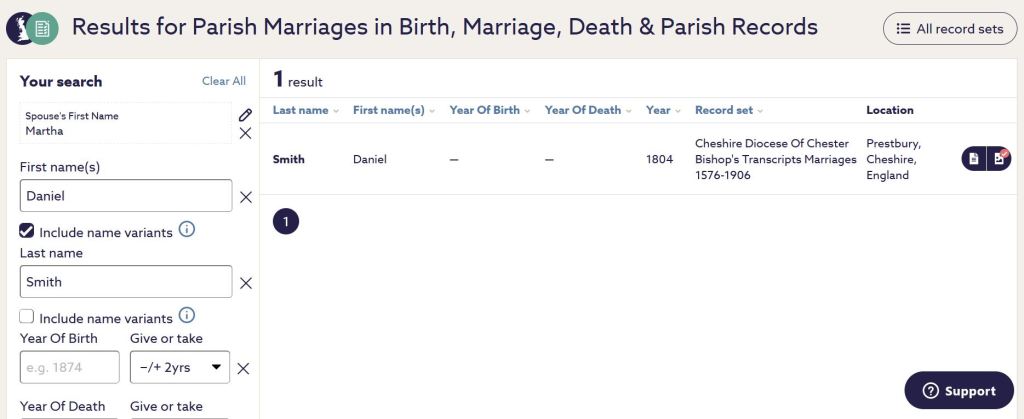
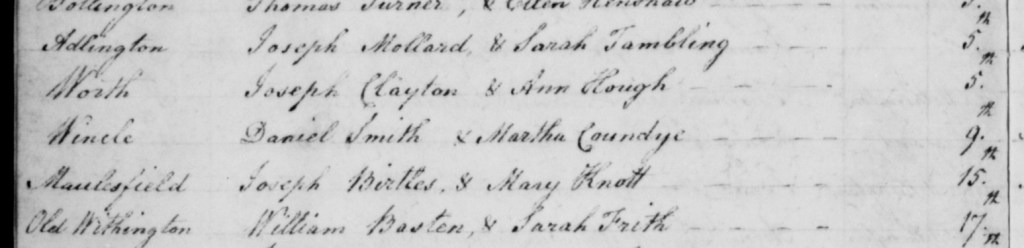
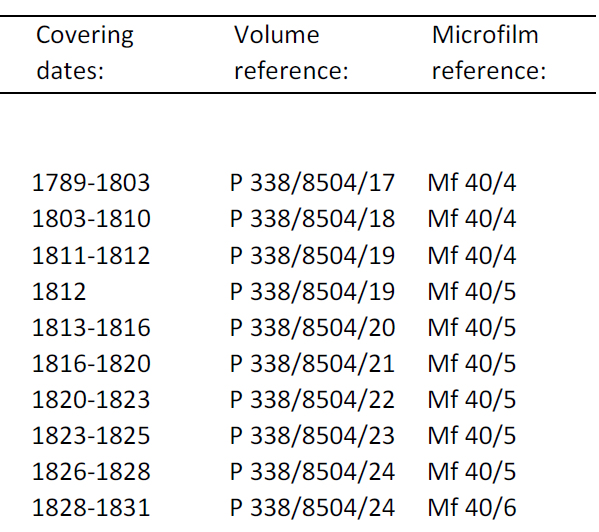
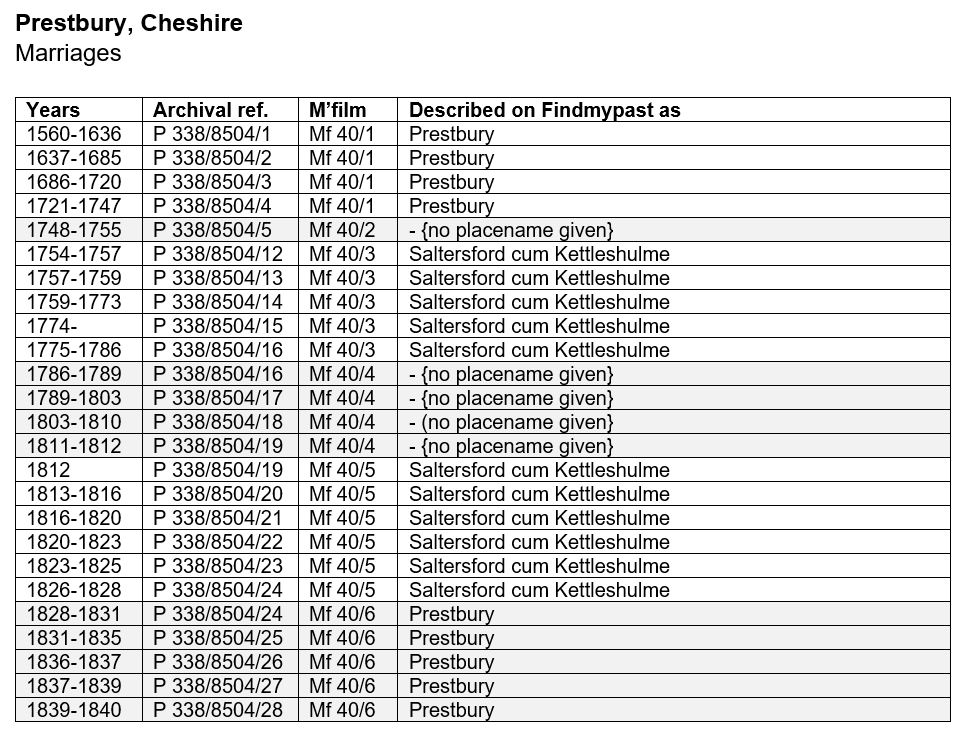
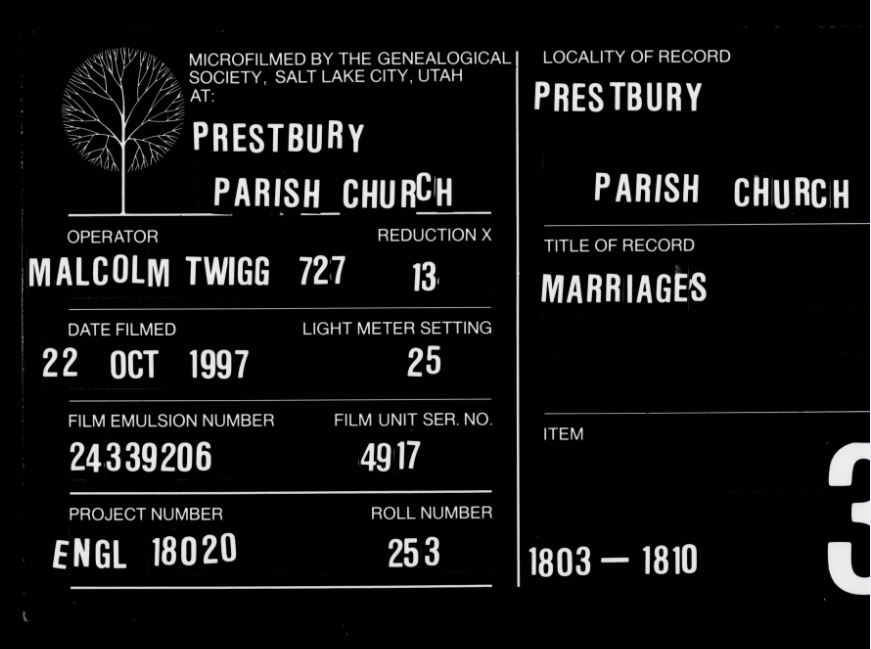




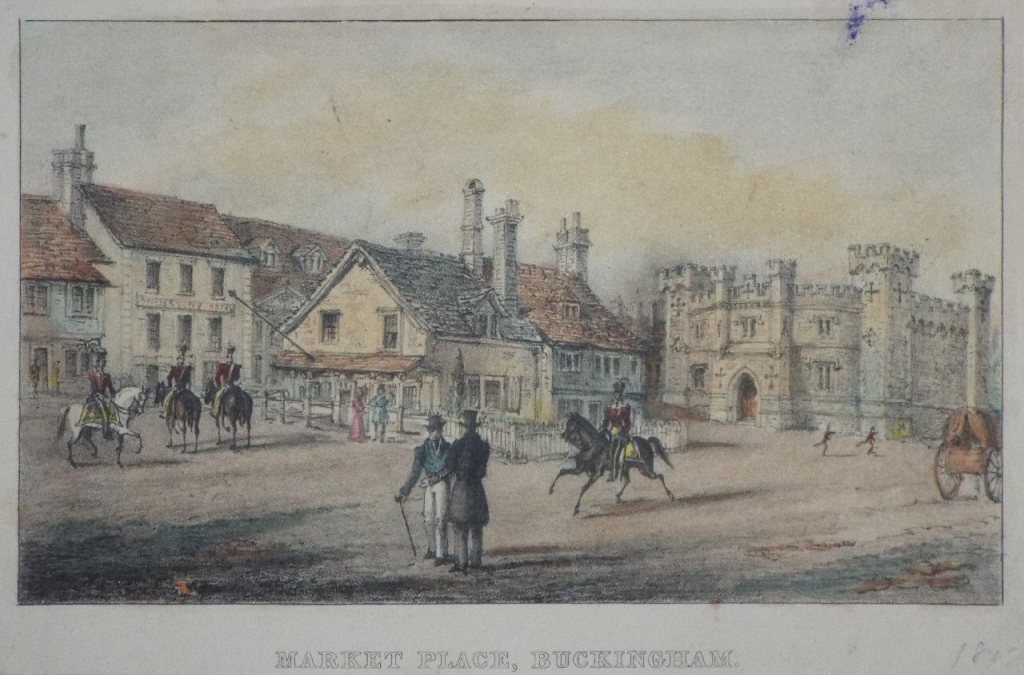
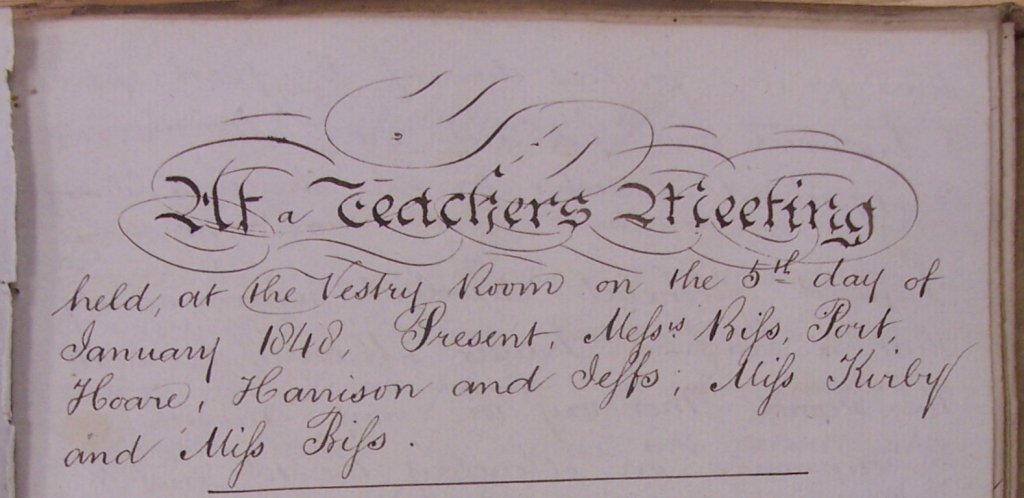

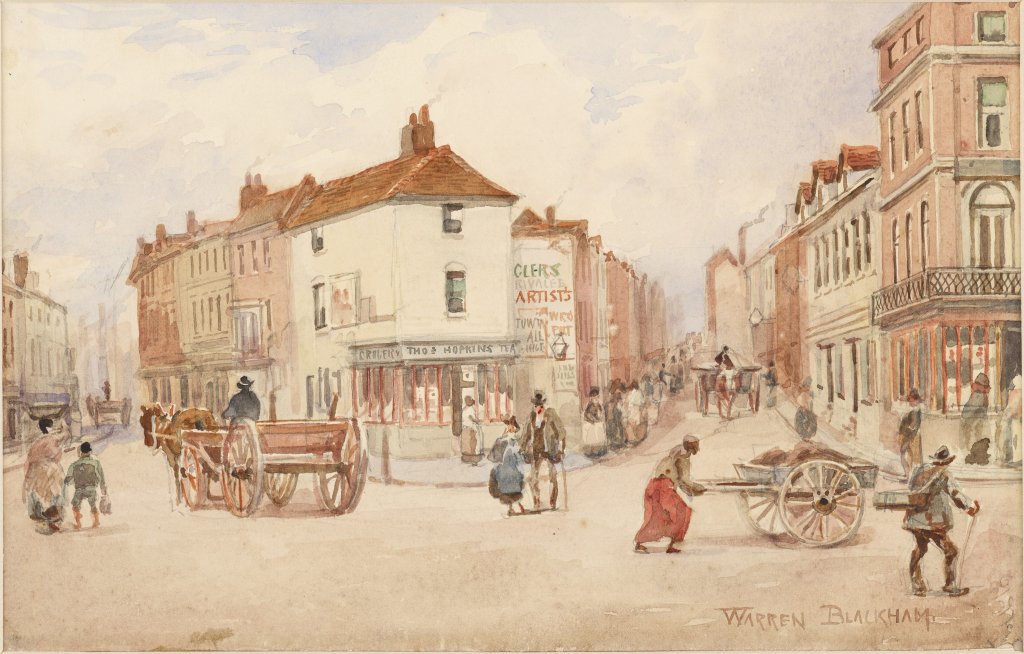
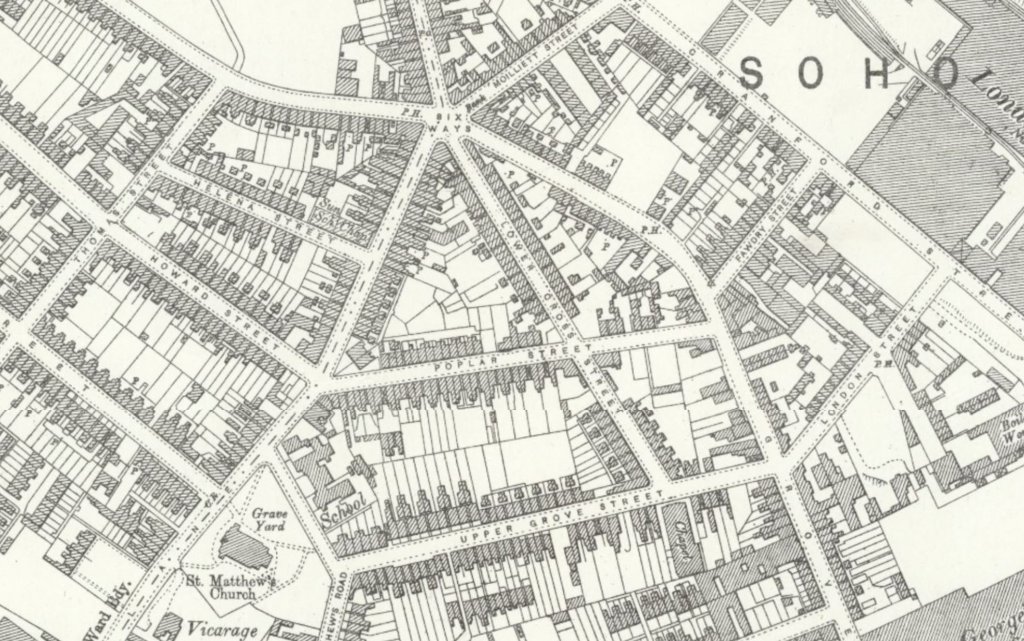

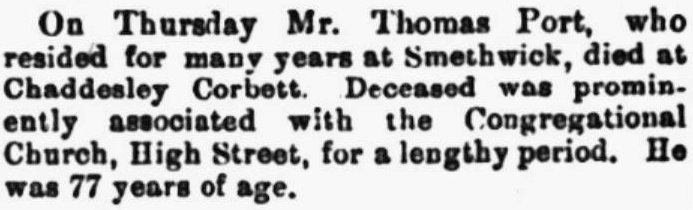
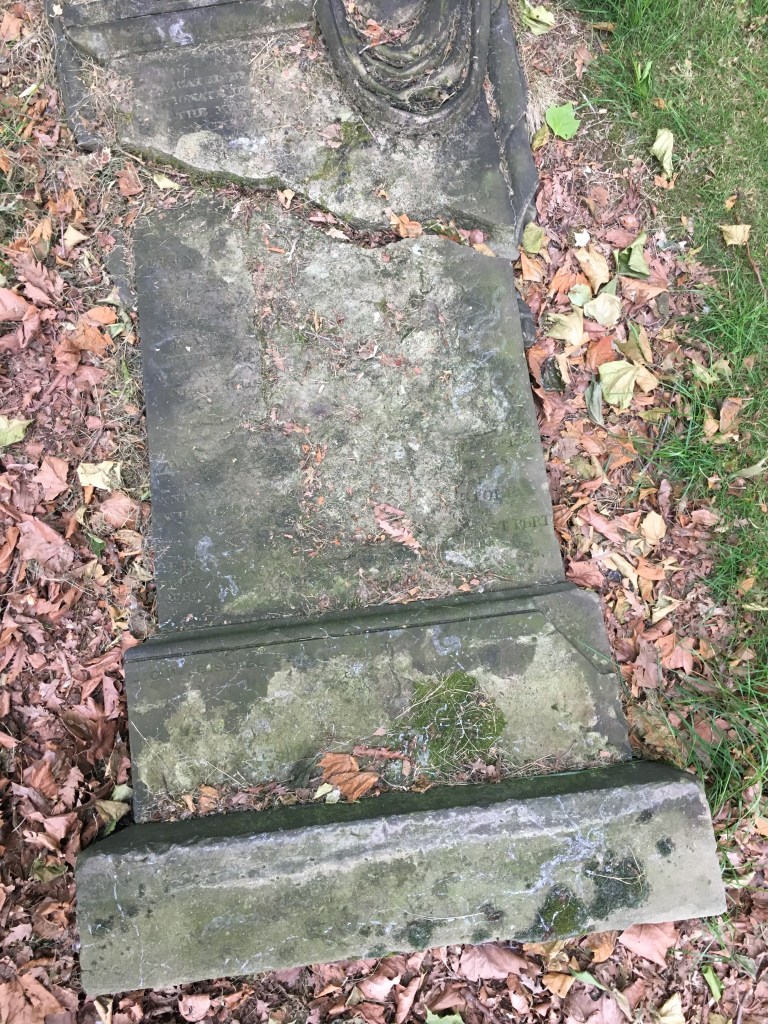
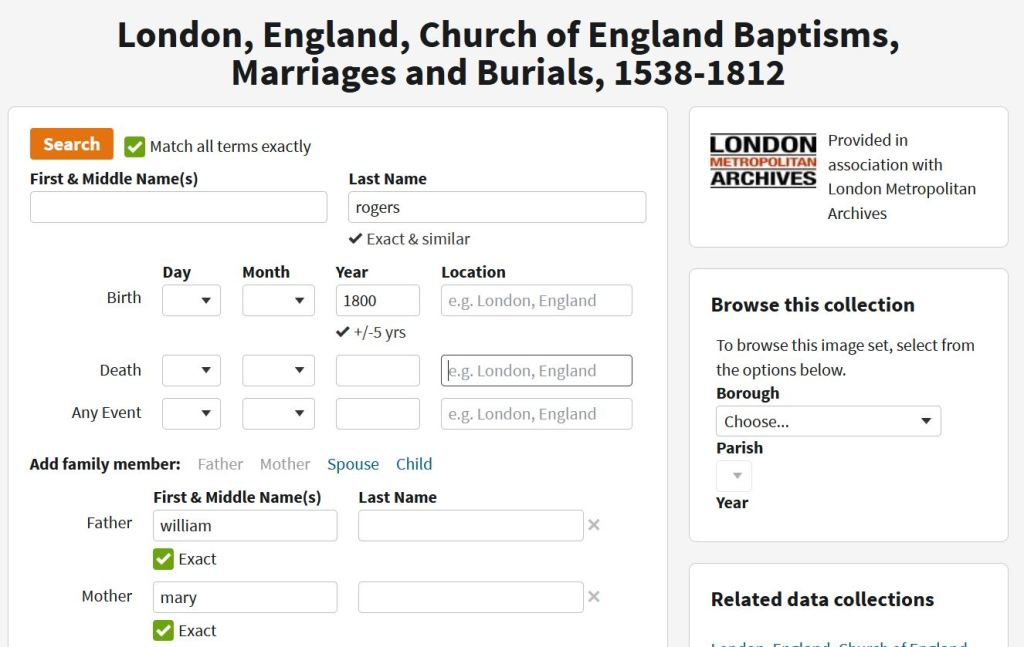
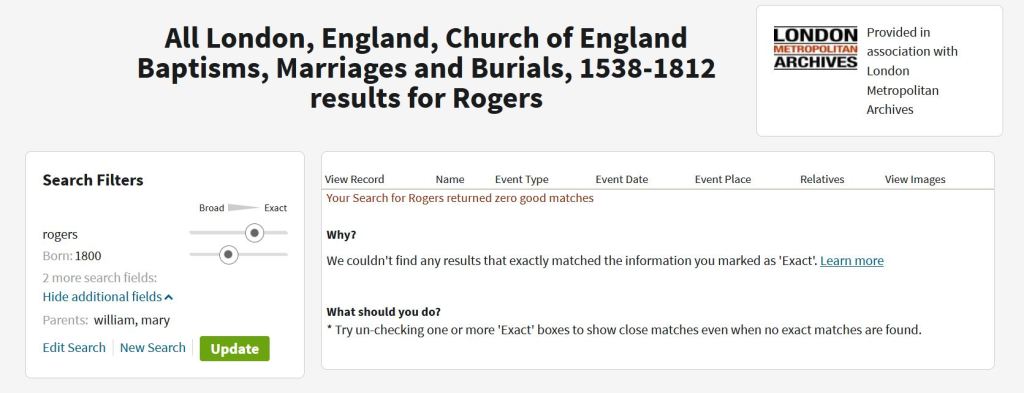

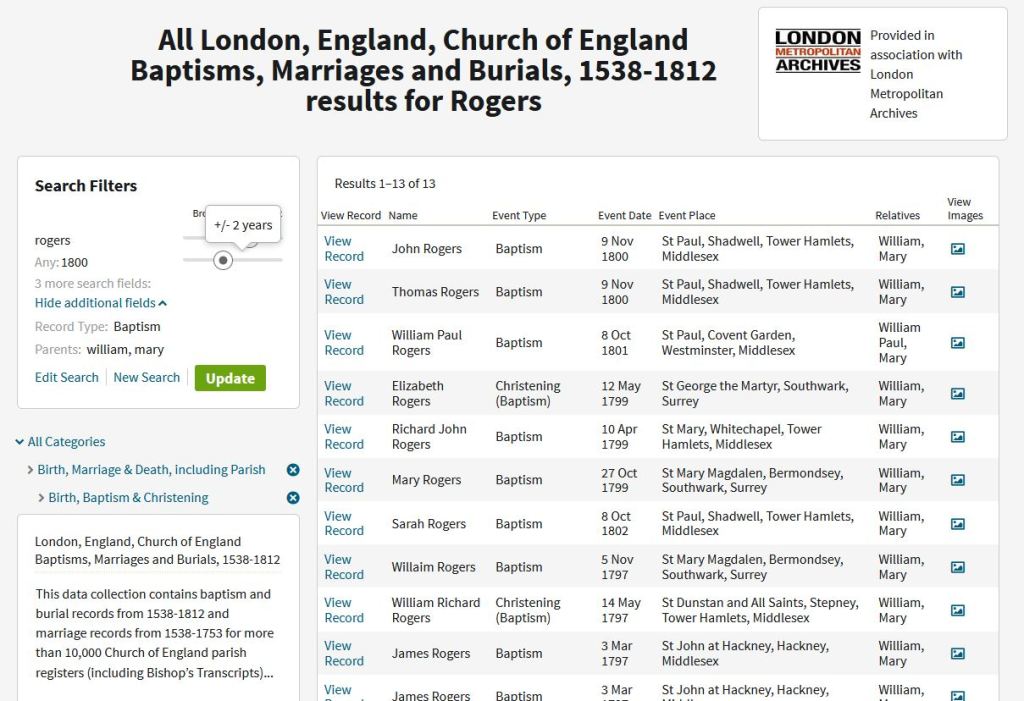


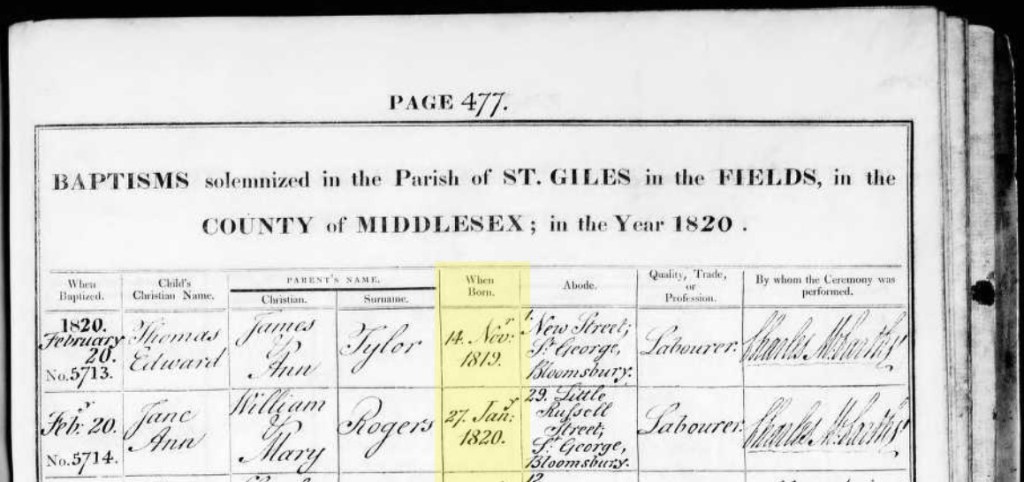

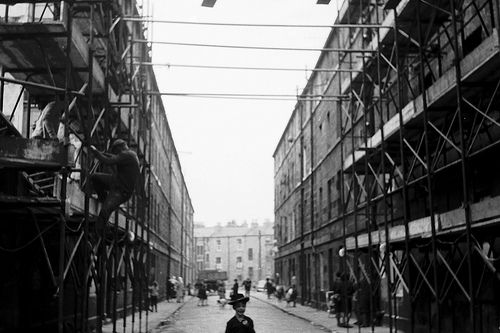


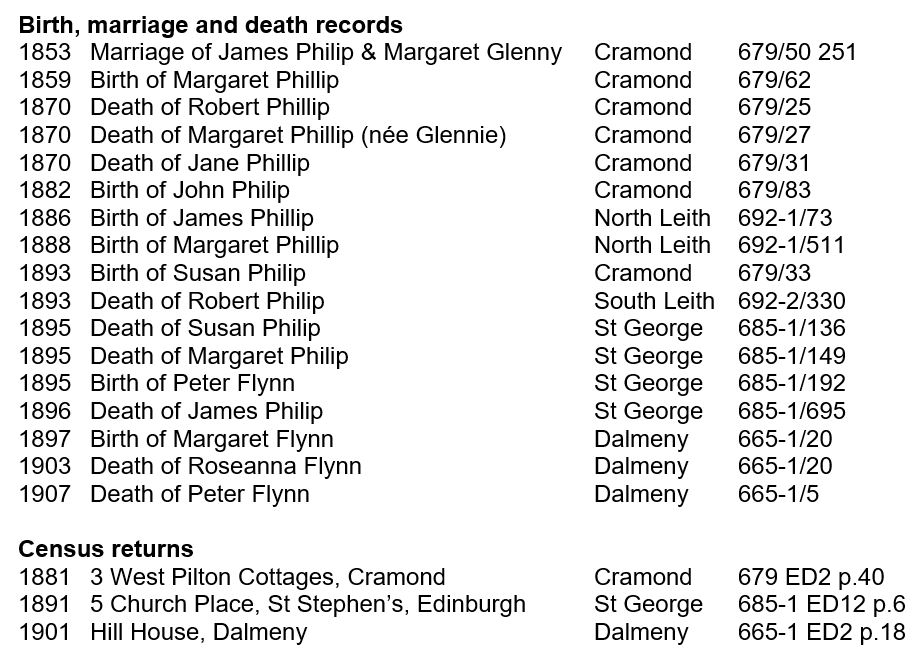
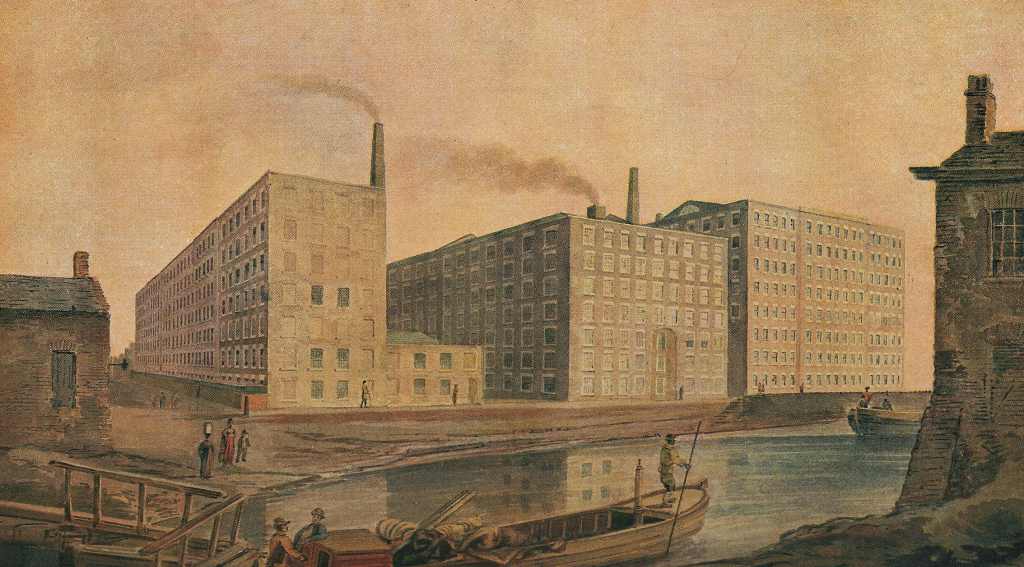
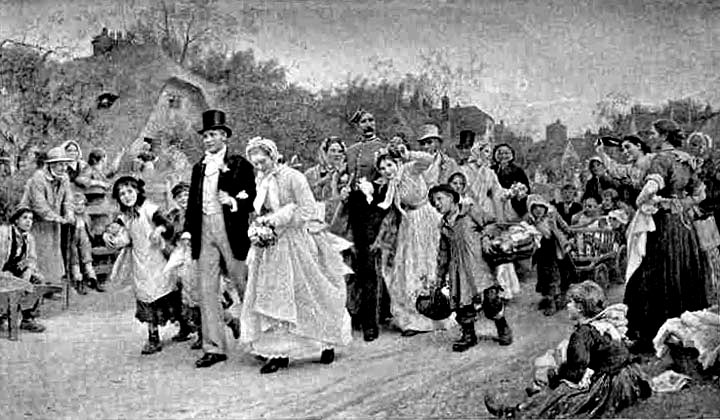
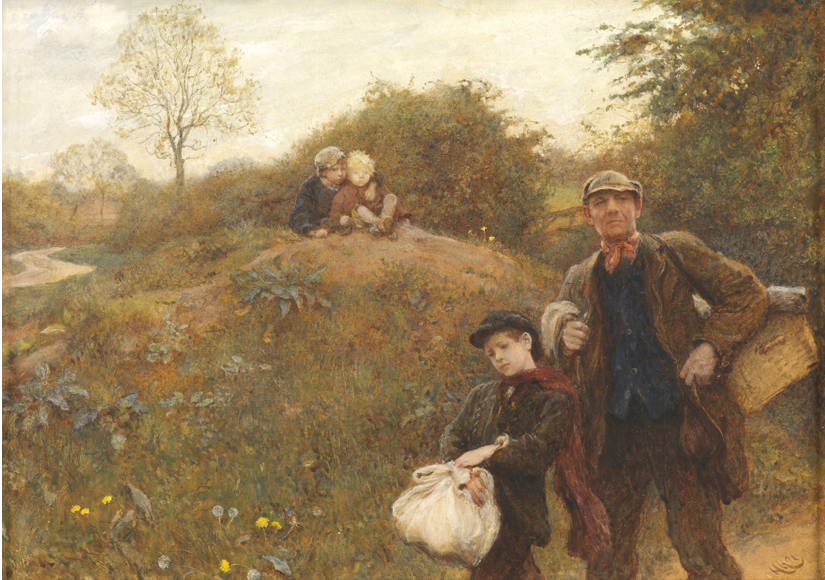


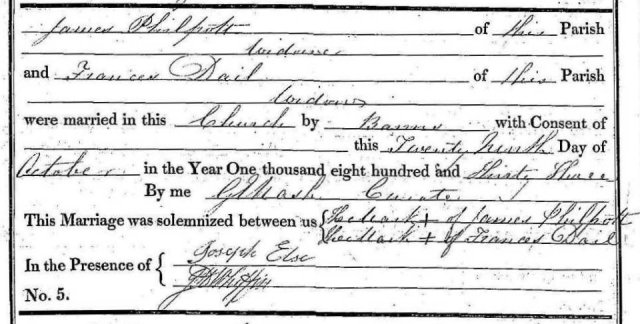






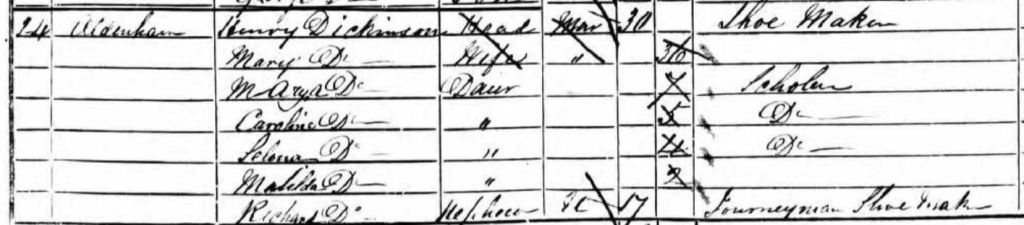

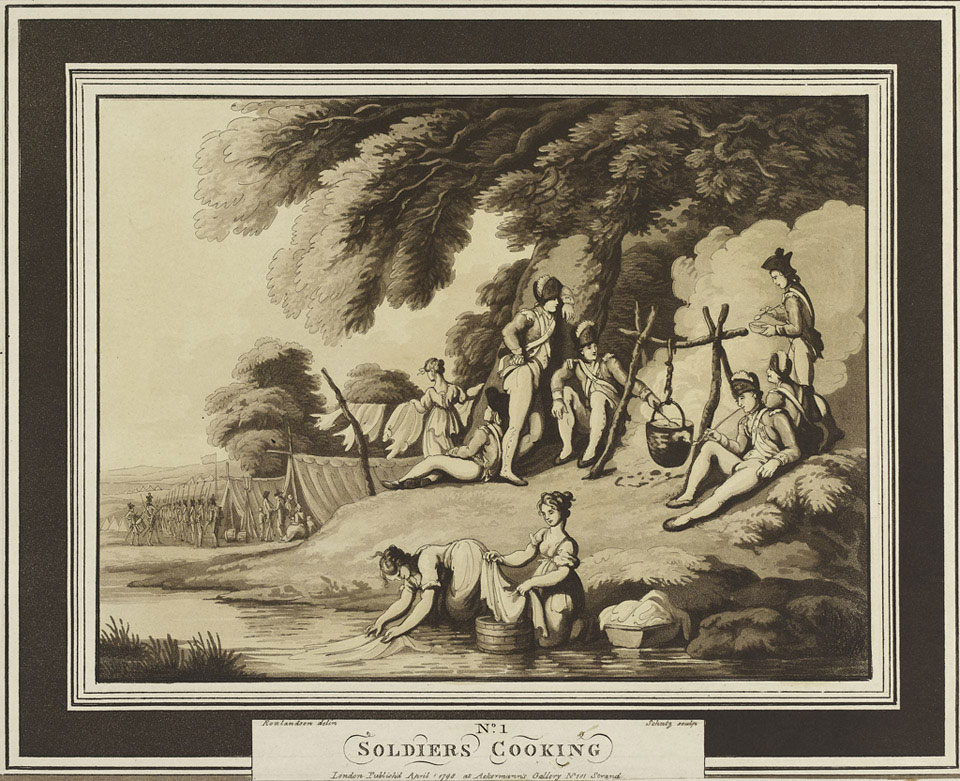
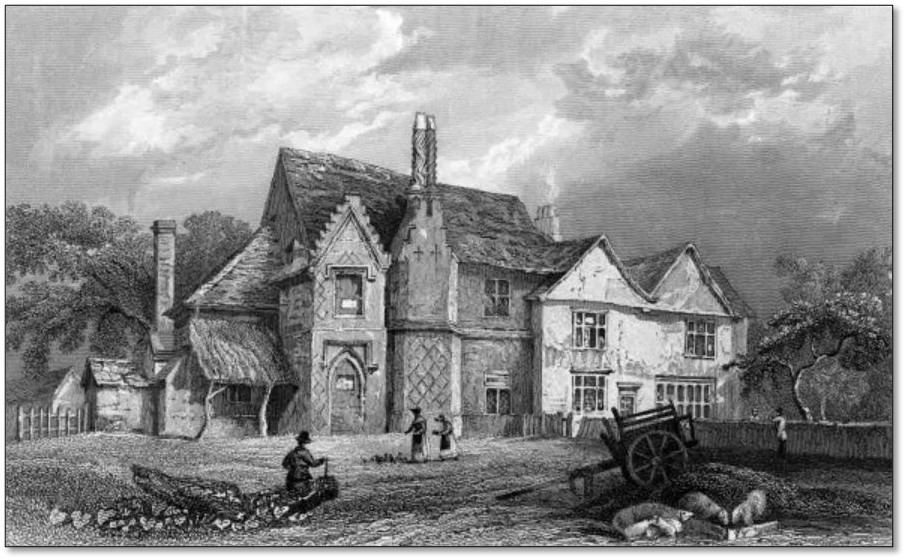





 Lifelines Research